



Smart Medicine Cabinets: Bluetooth, Defogging and Electrical Planning
Time : September 17, 2026 View : 47
A cabinet becomes harder to specify when storage, lighting, charging, audio, and anti-fog control share one enclosure. A feature list does not show whether it fits the wall or electrical plan. Buyers comparing a smart medicine cabinet should separate standard construction from selected-model options, then confirm wiring, certification, and service access.
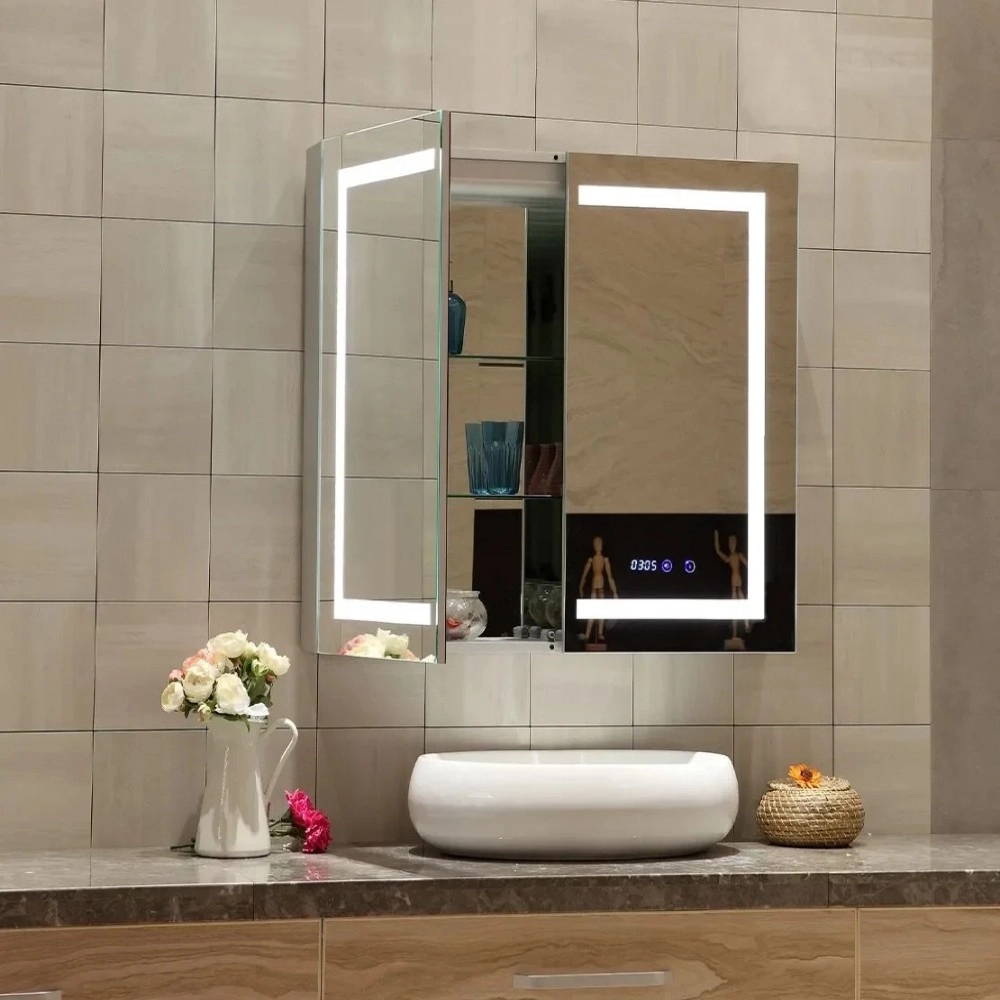
What Makes a Medicine Cabinet Smart?
A smart medicine cabinet combines concealed storage and a mirrored door with one or more electronic functions. Depending on the configuration, these may include LED lighting, touch controls, brightness adjustment, color-temperature selection, defogging, internal lighting, Bluetooth audio, USB charging, or an electrical outlet. “Smart” describes the selected function set; it does not mean every cabinet includes every option.
Start with the physical fit. Check width, depth, door count, shelf layout, mirror position, mounting method, and door clearance against the vanity and wall. A recessed model needs a suitable cavity and rough opening; a surface-mounted model adds projection. Plan electrical functions with these dimensions.
Storage, mirror use, and basic illumination define the category; Bluetooth, defogging, memory, and charging may be optional. Ask for a model-specific sheet identifying included functions and installation consequences. A smart medicine cabinet option should be judged by its documented configuration.
|
Feature |
When It May Be Worth Specifying |
What the Buyer Should Confirm |
|
LED lighting |
Face-level grooming and a cleaner wall composition |
Light location, output, CRI, color temperature, diffuser, and driver details |
|
Touch control or dimming |
Different brightness needs during morning and nighttime use |
Sensor position, dimming range, flicker behavior, and power-loss response |
|
Defogging |
Steam-prone bathrooms where a clear mirror is needed soon after bathing |
Heated area, control method, operating conditions, and service access |
|
Bluetooth audio |
Users who want phone-connected sound near the vanity |
Pairing, controls, power behavior, module access, and exact SKU inclusion |
|
USB port or outlet |
Charging or powering approved small appliances |
Outlet type, rating, location, protection, and local code acceptance |
|
Internal lighting |
Cabinets where shelf visibility matters after opening |
Door activation, independent switching, heat, and replacement access |
How a Bluetooth Medicine Cabinet Fits Daily Use
A Bluetooth medicine cabinet provides built-in audio without visible speakers, making it ideal for minimizing wall clutter. The primary benefit is convenience rather than high-end sound; always verify the volume, pairing range, and acoustic performance on the actual model.
Ask how Bluetooth is activated, whether it shares a light control, whether the module is serviceable, and what happens after power loss. Confirm humid-area separation and whether pairing is required again. Do not specify a bluetooth medicine cabinet from a catalog heading alone; the quotation should identify the module and controls.
Eternamir Bath can configure Bluetooth speakers for applicable medicine cabinet designs. We treat the speaker, controls, wiring, and service access as part of the selected configuration. A sample or technical submittal should show the exact function before repeated-use approval. Buyers can review Eternamir Bath’s customization support when preparing a configuration request.
When a Medicine Cabinet with Defogger Helps
A defogger uses a controlled heating element behind a defined mirror area to reduce condensation. Activation, warm-up behavior, and operating limits depend on the design. Confirm that the heated zone covers the area users need.
For a medicine cabinet with defogger, confirm the heated area, switch or sensor, electrical load, independent operation, and component access. Avoid claims about clearing speed or energy use unless relevant test data is provided.
The electrician needs power and wiring information; the installer needs final depth, rough opening, and access provisions. A feature that cannot be serviced without removing wall finishes is a poor project choice.
Plan Electrical Work Before Ordering
Have a qualified electrician complete electrical planning under the applicable local code and approval requirements. Different-region projects may differ on branch circuits, GFCI protection, damp or wet locations, grounding, disconnecting means, and bathroom outlet placement.
Recessed Versus Surface-Mounted Planning
Recessed installation places the cabinet body within the wall and requires coordination with studs, plumbing, wiring, cavity depth, and rough opening. The electrician and installer should use the approved model drawing, including cable entry and service access. An installation guide can help frame the questions, but the approved drawing and local code control the work. Never cut into a wall or alter a circuit from a product photograph.
Surface mounting usually leaves the cavity intact but increases projection. The connection still needs a planned route, grounding method, and accessible components. A medicine cabinet with electrical outlet may require different internal layout, rating, protection, and inspection approval than lighting alone.
Before-Order Electrical Checklist
*Confirm the destination jurisdiction and applicable electrical requirements.
*Record supply voltage, frequency, connection type, grounding method, circuit location, and control location for the approved SKU.
*Ask the qualified electrician to determine GFCI, RCD, damp-location, and other protection requirements.
*Show rough opening, cavity, cable entry, outlet position, and service access on the drawing.
*Identify whether lighting, defogging, Bluetooth, USB, and outlet functions are independent or share a circuit/control.
*Require model-specific wiring diagrams, installation instructions, ratings, and replacement-part information.
Compare Safety, Certification, and Project Fit
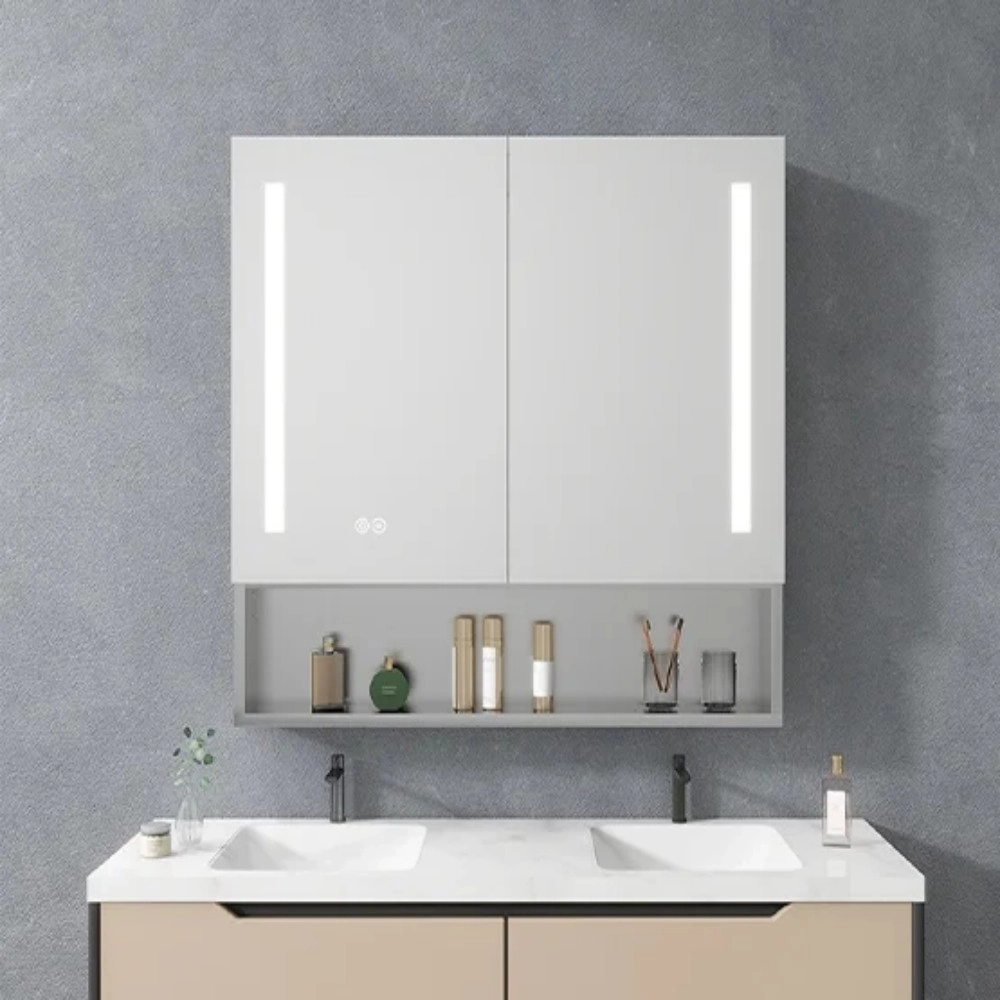
Safety review should cover the complete cabinet, not only one electronic component. Eternamir Bath subjects acquired LED strips, LED drivers, and touch sensor switches to at least 72 hours of aging testing. We perform lighting, high-voltage, and grounding checks on completed units before shipment, with regular corrosion-resistance sampling across the mirror, cabinet bottom, hardware, and screws.
Check certification at the correct level. For North American orders, ask whether the exact finished-product model is covered by UL, cUL, ETL, or cETL documentation; verify the listing number, ratings, applicant, market, and installation conditions.
For an RFQ, include size, mounting type, door configuration, shelf layout, lighting specification, CRI, color temperature, control type, defogger, Bluetooth, socket or USB, electrical ratings, wiring diagram, model-level certification, packaging, warranty, spare parts, MOQ, lead time, inspection standard, and change approval. Eternamir Bath supports custom sizes, colors, functions, packaging, and OEM/ODM medicine cabinet projects, allowing review before approval.
FAQ
Q: What is a smart medicine cabinet?
A: A smart medicine cabinet combines mirrored storage with selected electronic functions such as LED lighting, touch control, dimming, defogging, Bluetooth, internal lighting, USB charging, or an outlet. The combination varies by model. Request a model-specific sheet and confirm installation, electrical, service, and certification details.
Q: Is a bluetooth medicine cabinet useful in a bathroom?
A: A bluetooth medicine cabinet can provide phone-connected audio near the vanity and reduce the need for a separate speaker. Confirm pairing behavior, controls, power-loss response, humid-area separation, sound performance, and service access. Do not assume Bluetooth is included unless the quoted SKU states it.
Q: How does a medicine cabinet with defogger work?
A: A medicine cabinet with defogger uses a controlled heating element to reduce condensation over a defined mirror area. The clear zone, activation method, and operating conditions depend on the model. Confirm the heated area, electrical load, independent switching, service access, and available test information.
Q: What is a smart medicine cabinet’s electrical planning?
A: Recessed medicine cabinet electrical requirements depend on the model, wall cavity, rough opening, cable entry, supply, grounding, circuit protection, and local code. A qualified electrician should review the drawing and determine GFCI, RCD, damp-location, and outlet-placement requirements. Do not modify circuits from general online instructions.
Q: Should I buy a medicine cabinet with electrical outlet or USB?
A: Choose a medicine cabinet with electrical outlet or USB when the routine justifies it and local approval permits the configuration. Compare outlet type, rating, location, protection, wiring, service access, and documentation. Include the exact option in the RFQ rather than treating it as standard.
