



Top Bathroom Mirror Cabinets for Space-Saving and Style
Time : September 10, 2026 View : 58
A bathroom mirror cabinet earns its wall space when daily items gain a sensible home, and the mirror remains proportionate to the vanity. A deep cabinet can crowd a compact bathroom, while poorly arranged shelves can actually reduce the amount of usable storage space. The strongest choices begin with the room, not a fashionable feature list.
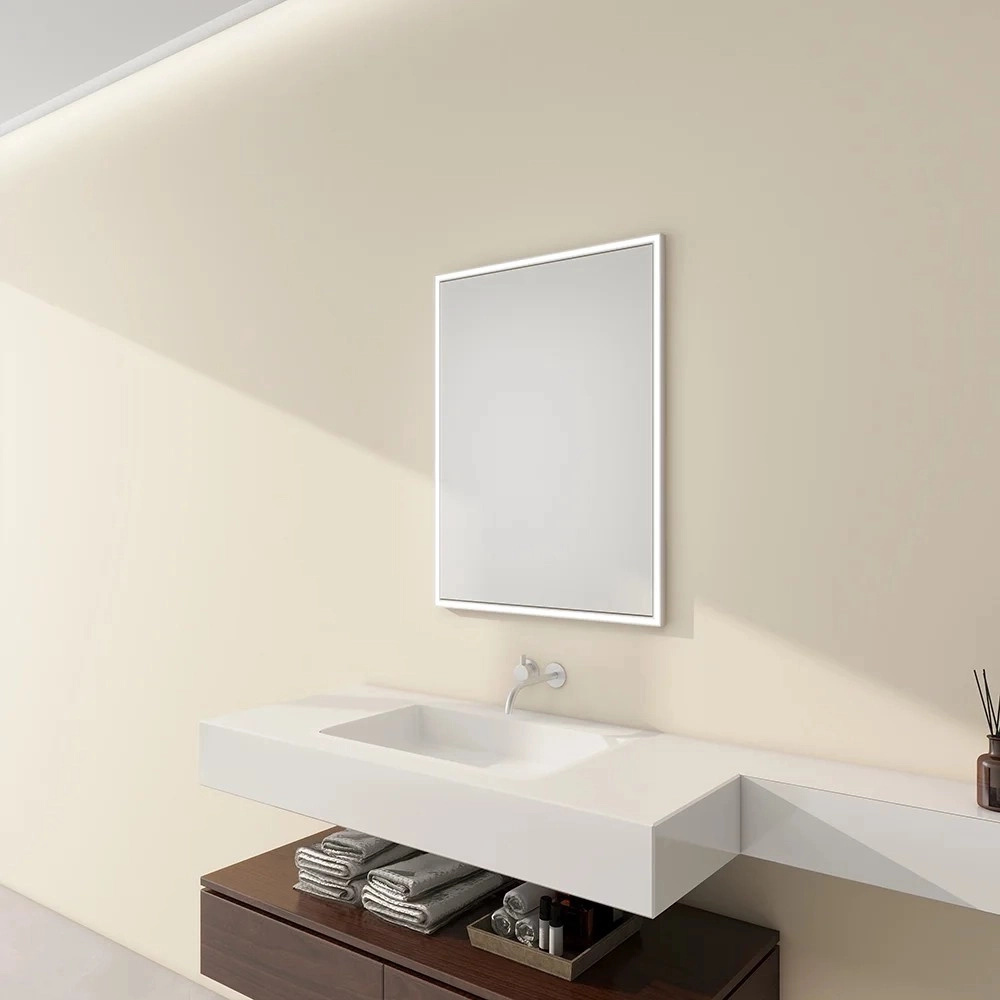
Start with the Space the Cabinet Must Solve
An attractive cabinet must fit its surroundings. Record vanity width, wall height, basin position, faucet height, nearby surfaces, outlets, pipes, studs, and wiring before installation.
Cabinet width does not have to match the vanity exactly, but the two should read as one composition. An overly wide cabinet can feel top-heavy, while a narrow one provides less mirror area and storage. Mark the proposed outline on the wall to judge its proportions from the doorway.
Check Projection and Door Movement
Depth and door movement are critical in narrow bathrooms. Check wall projection, faucet, and light clearance before installation. Choose door layouts based on vanity use, ensuring enough swing space while keeping hinges away from key viewing areas. Confirm that all doors clear nearby walls, towel rails, fixtures, and adjacent cabinets.
Choose Recessed or Surface Mounting Early
Recessed installation gives a slimmer built-in appearance, but only when the wall cavity, framing, pipes, and cables permit it. Confirm the rough opening and finished dimensions before completing the wall finish.
Surface mounting suits many renovations, although the visible side profile becomes part of the design. A surface-and-recessed configuration offers flexibility where wall conditions differ, provided the selected model supports both methods.
Match the Cabinet Format to the Bathroom
There is no universal configuration. The right format is the one that uses the available wall efficiently without making everyday access cumbersome. This comparison turns common room conditions into a practical shortlist.
|
Bathroom Condition |
Suitable Cabinet Direction |
Main Point to Verify |
|
Narrow powder room or compact ensuite |
Slim single-door cabinet, recessed where possible |
Door swing, useful internal depth, and faucet clearance |
|
Standard single vanity |
One- or two-door cabinet aligned with the basin |
Mirror proportions and shelf spacing for daily items |
|
Wide vanity or shared bathroom |
Two- or three-door cabinet |
Access from both positions and comfortable hinge placement |
|
Renovation with uncertain wall cavity |
Surface-mounted cabinet |
Projection, finished side appearance, and secure fixing points |
|
Grooming-focused bathroom |
Lighted cabinet with concealed storage |
Electrical planning, light comfort, and switch position |
|
Awkward wall or project-specific layout |
Custom-size cabinet |
Confirmed dimensions, door clearances, and approval sample |
For projects that need several formats, Eternamir Bath offers one-, two-, and three-door medicine cabinet configurations. We also offer surface, recessed, and surface-and-recessed mounting options, allowing the cabinet schedule to respond to different wall conditions without abandoning a coordinated design direction.
Test Whether the Storage Is Genuinely Useful
List what the cabinet must hold before comparing capacity: bottles, medicines, dental products, and grooming tools require different clear heights.
Favor Adjustable Shelves over Fixed Shelves
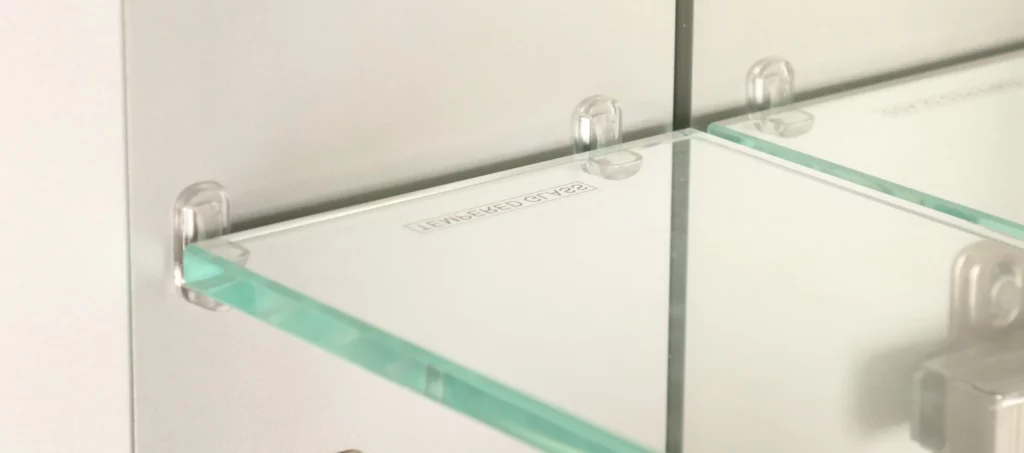
A tall cabinet with fixed shelves can waste more space than a smaller cabinet with flexible spacing. In our medicine cabinet range, adjustable tempered glass shelves create shorter zones for small containers and taller zones for bottles.
Check whether the door opens completely to remove items and whether hinges intrude into usable space. In shared bathrooms, assigning contents by door or shelf zone can simplify simultaneous use.
Inspect Materials, Hinges, and Edges
Humidity affects cabinet bodies, fasteners, hinges, mirror edges, and shelf supports. A decorative finish is not enough if moisture can reach vulnerable edges or hardware, so assess the complete assembly rather than only the visible front.
As trusted medicine cabinet manufacturers, Eternamir Bath’s mirror cabinets use a rust-resistant matte silver aluminum body, tempered glass shelves, and soft-close hinges. We also conduct material sampling for corrosion resistance across the mirror, cabinet bottom, hardware, and screws. Soft-close movement improves daily handling, but buyers should still verify door alignment, hinge stability, and consistent closing force on an approval sample.
Coordinate Storage with the Visual Style
A well-designed mirror cabinet should balance storage needs with the bathroom’s overall style. Proportions, door layout, lighting, and side profile all influence how naturally the cabinet fits the space. Single-door designs create a clean mirrored surface, while multi-door options add functional divisions that should align with the vanity and surrounding elements. Integrated lighting should provide comfortable task illumination with proper controls, wiring, and service access. Choose extra features such as outlets or digital clocks only when they support daily use. Coordinate cabinet colors and finishes with faucets, handles, and other fixtures to create a consistent design without requiring exact matches.
Make the Final Choice with a Room-Based Shortlist
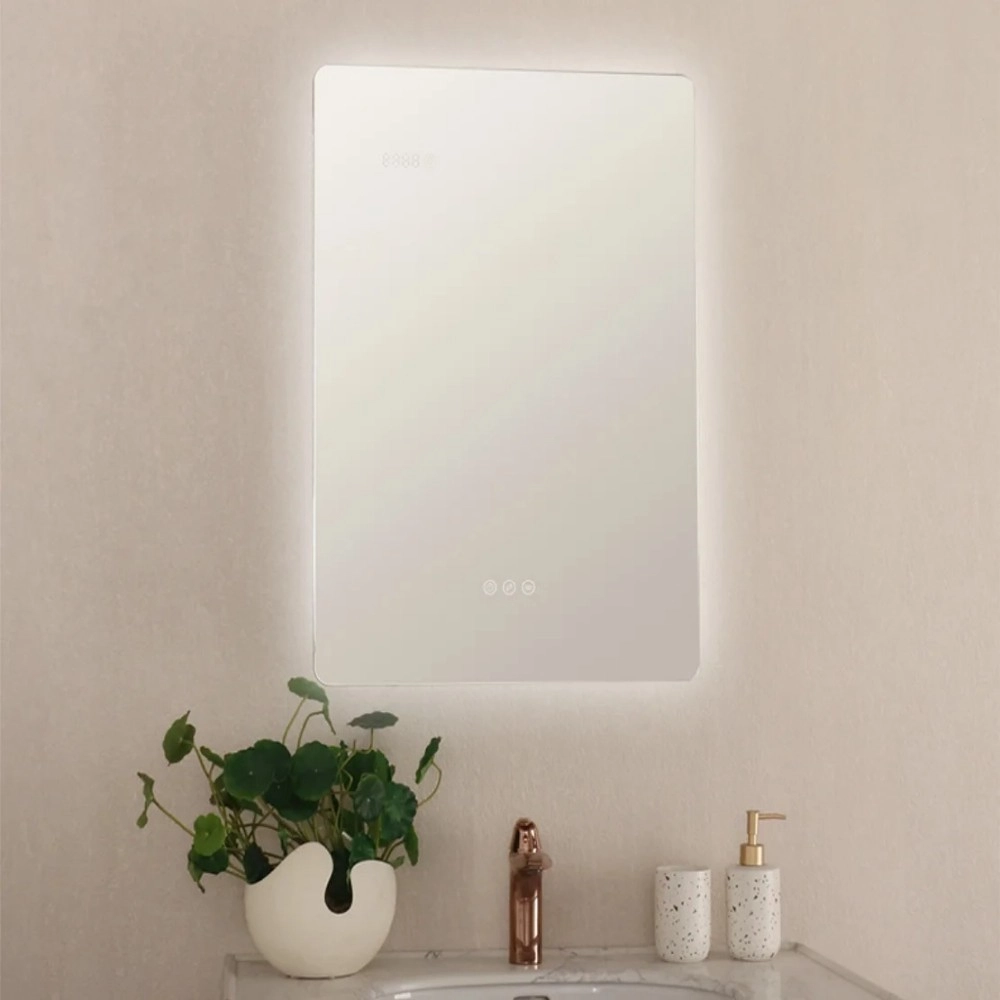
Shortlist two or three cabinets that fit the wall and installation method. Compare usable storage, door access, mirror proportions, moisture-resistant construction, lighting needs, and finish, in that order, so appearance cannot conceal a poor physical fit.
Where the wall permits it, a recessed cabinet with adjustable shelves suits many small bathrooms. Surface mounting is often more realistic in renovations. Wide shared vanities may benefit from multiple doors, while custom dimensions can resolve gaps or conflicts created by standard widths.
Approve the cabinet against the actual room conditions before production or purchase. Confirm overall size, recess requirements, projection, door swing, shelf arrangement, electrical provisions, finish, and fixing method. The top bathroom mirror cabinets are not simply the models with the most features; they are the ones whose dimensions and details make the bathroom easier to use while preserving a coherent visual composition.
FAQ
Q: Are recessed bathroom mirror cabinets better for small bathrooms?
A: Recessed bathroom mirror cabinets usually create a slimmer profile and preserve more space in front of the vanity. They are suitable only when the wall cavity has enough depth and is clear of pipes, wiring, and structural conflicts. Where recessing is impractical, a shallow surface-mounted cabinet can still work well with careful projection and door-clearance checks.
Q: How much storage should bathroom mirror cabinets provide?
A: Storage should be based on the items used at the vanity rather than a general capacity claim. List the tallest bottles, smallest containers, medicines, and grooming tools, then check shelf spacing and access. Adjustable shelves usually make shallow cabinet volume more useful because users can reduce empty vertical gaps and reorganize the interior later.
Q: Which materials make bathroom mirror cabinets suitable for humid rooms?
A: Bathroom mirror cabinets need moisture-resistant cabinet bodies, protected mirror edges, stable hinges, suitable fasteners, and shelves that tolerate routine cleaning. When considering aluminium vs stainless steel bathroom accessories, aluminum is a practical cabinet-body option for humid environments. Material choice should still be supported by inspection of joints, finishes, hardware, door alignment, and corrosion-control procedures across the complete assembly.
Q: Is it what medicine cabinets work best for small bathrooms?
A: For tight spaces, a slim, single-door recessed cabinet usually works best. This design minimizes projection and preserves more space in front of the vanity, ensuring the room remains highly functional.
