



Medicine Cabinet Materials: What Lasts in a Humid Bathroom?
Time : July 30, 2026 View : 155
A medicine cabinet may look perfect when first put in place. Its true test starts after many months of steam, water splashes, and regular cleaning. The main body counts a lot. Mirror backing, hinges, shelves, surface finishes, and mounting parts also play a key role in how long the unit lasts.
The best medicine cabinet material for a humid bathroom remains the full construction approach. This approach fits the room moisture levels, airflow, cabinet dimensions, and usual care schedule.
Why Medicine Cabinet Material Matters in a Humid Bathroom
How Steam, Splashes, and Daily Cleaning Affect a Medicine Cabinet
Warm steam lands on cool glass, metal surfaces, sharp edges, screws, and joints. The steam turns into condensation. In a bathroom with weak airflow, water often stays near door edges or inside the unit. Strong cleaning solutions can harm surface finishes over time.
Pay close attention to three main areas. First, the cabinet body must stand up to rust, swelling, or breakdown of its outer layer. Second, mirror edges and backing require solid protection from water and any accidental knocks. Third, hinges, fasteners, shelf supports, and any electrical parts need to match conditions found in damp spaces.
Every material still gains from good airflow, quick removal of any standing water, and cleaning with a soft cloth plus mild detergent.
Medicine Cabinet Materials Compared
Aluminum Medicine Cabinets: Lightweight and Moisture-Resistant
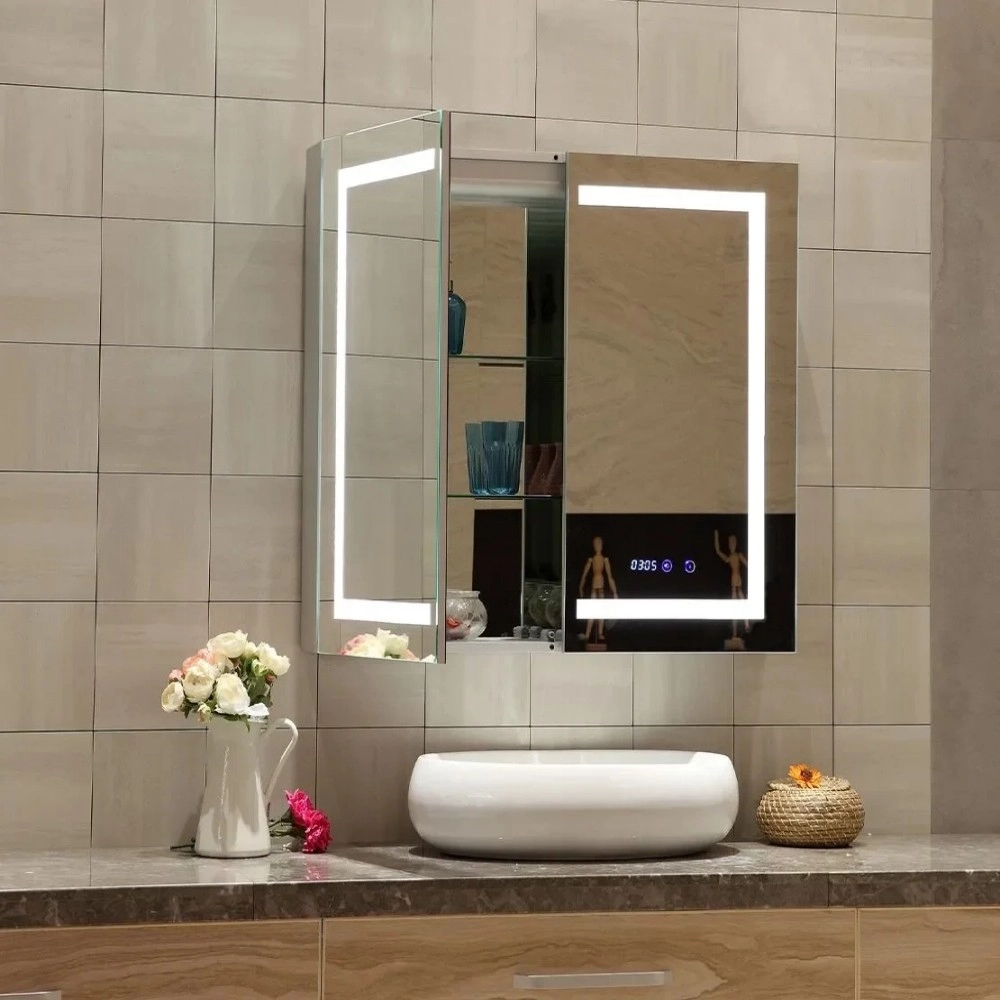
Aluminum works well for a moisture-resistant medicine cabinet. The material does not take in water and offers a good balance of strength against weight. Lower weight makes handling easier with large mirrored doors, multi-door setups, and wall-mounted units.
Clean lines from aluminum also match modern room designs. Still, aluminum by itself does not ensure long service. The quality of the finish, corner joints, fasteners, hinges, and mirror attachment must form one complete moisture-ready unit.
Stainless Steel Medicine Cabinets: Strong but Heavier
Stainless steel delivers rigidity, impact resistance, and a sharp contemporary look.
The drawbacks include added weight and extra surface care. A large stainless steel cabinet puts more load on wall framing and anchors. Polished surfaces tend to show fingerprints, soap marks, and dried water drops. Grade, fabrication quality, welds, edges, and hardware therefore need joint review.
Coated Steel Medicine Cabinets: Finish Quality Makes the Difference
Coated steel can deliver strength and solid value. Moisture resistance still rests on the protective layer. Powder coating or paint keeps the base steel away from humid air and water splashes.
Scratches, drilled holes, folded edges, seams, and exposed fasteners serve as typical weak spots for any product. Moisture moves past the coating and contacts the base metal. Moisture contact speeds corrosion. Users must avoid abrasive cleaners. Users must repair surface damage at once.
Wooden Medicine Cabinets: Warm Style with Higher Moisture Sensitivity
Wood brings warmth, texture, plus a furniture-like feel. Such qualities match traditional bathrooms. Such qualities match transitional bathrooms. Such qualities match nature-inspired bathrooms. Performance relies on wood type, moisture level during construction, base material, edge sealing, joinery, plus coating. Extended damp conditions can cause swelling. Extended damp conditions can cause cracking. Extended damp conditions can cause peeling. Extended damp conditions can cause door misalignment. Wood performs well inside rooms with good ventilation. Wood performs well inside rooms with little direct water contact.
Medicine Cabinet Material Comparison: Durability, Maintenance, and Style
No material wins in every category. This table gives a practical side-by-side view.
|
Material |
Moisture performance |
Weight |
Typical maintenance |
Visual character |
|
Aluminum |
High with suitable finish |
Light |
Wipe dry; use mild cleaner |
Clean and modern |
|
Stainless steel |
High with suitable grade |
Heavy |
Remove spots and fingerprints |
Strong and contemporary |
|
Coated steel |
Depends on coating integrity |
Medium |
Prevent scratches; inspect edges |
Versatile |
|
Wood |
Depends on sealing and airflow |
Medium to heavy |
Keep dry; protect finish |
Warm and decorative |
Also think about cabinet width, door count, mounting type, and airflow. A compact wood cabinet may work in a ventilated powder room. A large lighted model in a busy family bathroom often benefits from a lighter, corrosion-resistant metal body.
Which Medicine Cabinet Material Fits Your Bathroom?
Best Materials for Steamy or Poorly Ventilated Bathrooms
For bathrooms with everyday showers or poor airflow, aluminum or suitable stainless steel often requires less moisture control than wood. Inspect mirror edges, hinges, shelf supports, wiring access, and fasteners rather than relying solely on the material label.
Case example follows. A windowless bathroom serves four people each morning. Condensation remains on the walls. Rust-resistant aluminum body along with protected mirror construction, corrosion-conscious hardware, and tempered glass shelves offers better tolerance than wood that lacks full seals. Exhaust fan must run during showering and afterward too.
Best Materials for Warm, Traditional, or Decorative Bathrooms
Wood fits naturally with warm finishes, classic hardware, or furniture-style vanities. Coated steel can also support decorative designs when its color and texture match the room.
Before choosing wood, consider its distance from the shower, ventilation, and exposure to splashes. Sealed edges and protected joints matter more than an attractive front face. In a lower-humidity powder room, wood can deliver character with fewer concerns.
Best Materials for Large or Lighted Medicine Cabinets
Large lighted cabinets combine storage, mirrored doors, electrical components, and greater wall load. Aluminum helps control overall weight while supporting one-, two-, or three-door configurations. Stainless steel offers rigidity but needs careful structural support.
A surface-mount medicine cabinet places the full load on anchors and mounting points. A recessed model fits into a framed wall opening and requires suitable depth plus coordination with plumbing and wiring. Surface-and-recessed designs add flexibility, but installation instructions must match the chosen method.
Beyond the Cabinet Body: What Makes a Medicine Cabinet Last?
Why Mirror Quality and Safety Backing Matter
The mirror stands out as highly visible. Its construction often receives less attention. Moisture can damage poorly protected edges and backing. Dark marks then appear around the perimeter.
Copper-free mirror construction can improve corrosion resistance in damp conditions. Safety backing helps hold glass fragments together if breakage happens. Accurate door alignment also counts because repeated contact between mirrored doors can stress exposed edges.
How Hinges, Shelves, and Surface Finishes Affect Durability
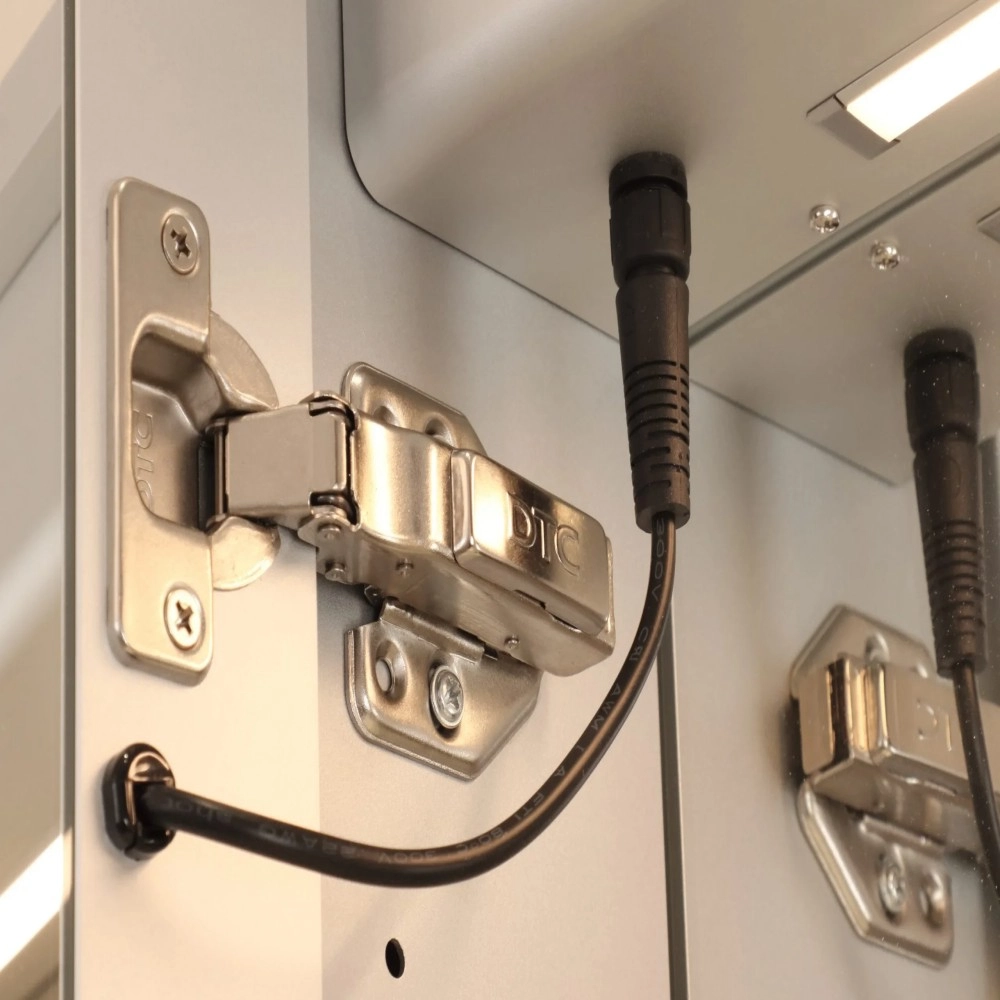
A durable bathroom mirror cabinet needs hardware that performs through repeated daily use. Soft-close hinges reduce sudden door impact. Adjustable tempered glass shelves let users change storage heights for different bottle sizes. Smooth glass surfaces stay simple to clean.
At Eternamir Bath, durability receives treatment as a system-level issue. Controls include corrosion-resistance checks for mirrors and hardware, aging tests for electrical accessories, and full inspection before shipment. This approach supports consistency across the cabinet body, lighting, grounding, door operation, and related components.
How Eternamir Bath Combines Material and Component Durability
Product selection should start with room conditions. Door count affects access. Cabinet width changes wall load. Mounting type determines whether a framed opening becomes necessary.
Our EMI.952 DS is a surface-mounted LED medicine cabinet offered in one-, two-, and three-door formats. The specified build features a corrosion-resistant aluminum body, 3 mm double-sided mirrors free of copper with safety backing, hinges that close softly, and shelves of tempered glass that adjust. Damp areas allow use. Color temperatures from 2700K to 6000K come as options.
For installation flexibility, the EMI.842 DS supports surface or recessed mounting. Double-sided copper-free mirrors include safety backing. A matte silver aluminum body resists rust. Soft-close hinges provide smooth operation. Fingerprint protection prevents marks. Hardwire compatibility allows direct wiring. Such features demonstrate the importance of evaluating cabinet material with mirror, hardware, storage, and installation details.
FAQ
Q: What is the best material for a medicine cabinet in a humid bathroom?
A: Aluminum and suitable stainless steel stand out as solid options. Aluminum and suitable stainless steel resist moisture absorption. Finish quality, mirror protection, hinges, fasteners, ventilation, and cleaning influence long-term performance as well.
Q: Is an aluminum medicine cabinet better than a stainless steel medicine cabinet?
A: Aluminum weighs less and suits larger wall-mounted or lighted designs well. Stainless steel weighs more and holds a rigid form. Selection depends on cabinet size, wall support, finish, appearance, and maintenance preferences.
Q: Can a wooden medicine cabinet be used in a bathroom?
A: Yes. Choose properly sealed wood, limit direct splashing, maintain ventilation, and wipe away water. Wood is usually better suited to bathrooms with controlled humidity.
Q: Will a steel medicine cabinet rust in a bathroom?
A: Coated steel resists moisture when the finish stays intact. Scratches, exposed edges, damaged seams, or unprotected fasteners can allow corrosion to start. Gentle cleaning and inspection remain important.
Q: Does the mounting type affect medicine cabinet durability?
A: Yes. Surface-mounted cabinets require anchors chosen with care. Recessed cabinets need an opening framed in a suitable way and alignment with pipes or wiring kept out of sight. Precise installation stops shifting, poor fit, and strain that can be avoided.
