



Lighted Medicine Cabinets: LED Features, Color Temperature and Controls
Time : September 17, 2026 View : 45
Choosing integrated lighting is not simply a choice between “bright” and “dim.” It must support grooming, fit the room, work with the electrical plan, and remain serviceable. Controls vary by model. Buyers comparing lighted medicine cabinets should separate core performance from optional conveniences, then verify configuration, certification scope, and installation requirements. The same discipline applies to home, hotel, or importer RFQs.
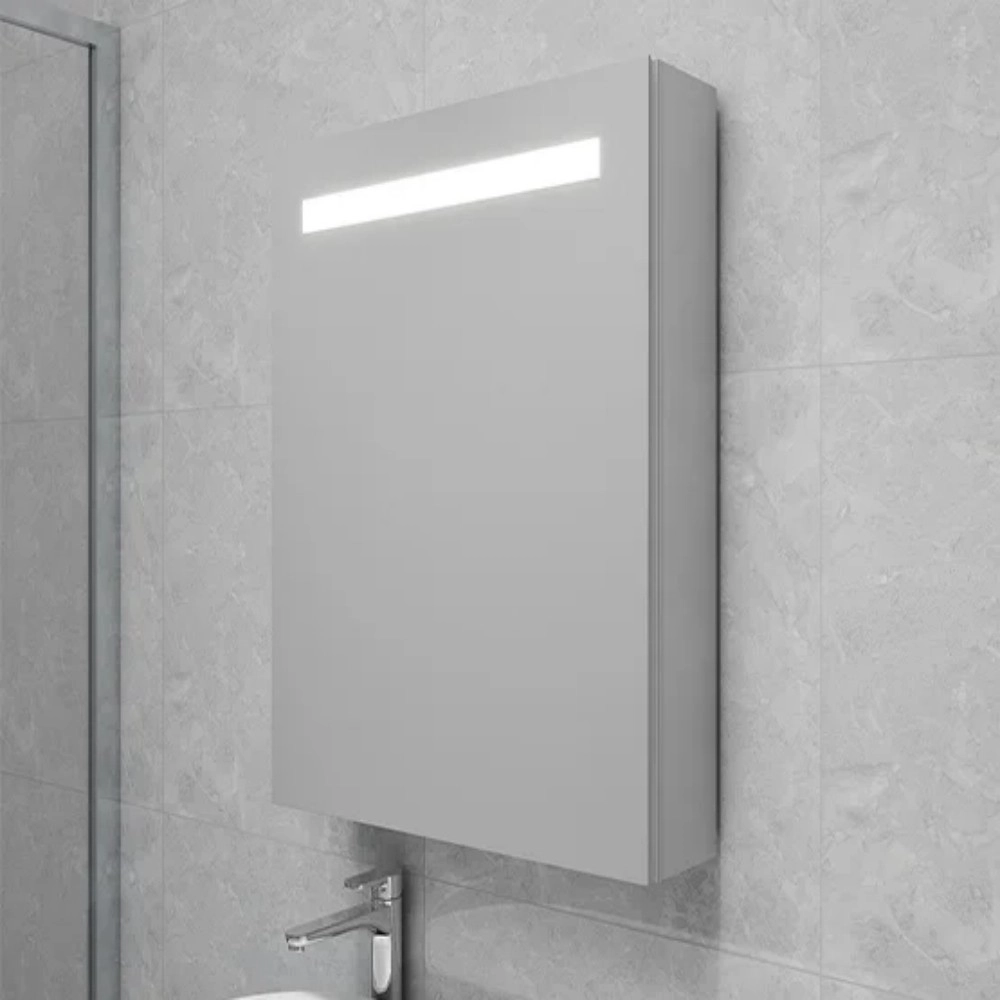
What a Lighted Medicine Cabinet Actually Combines
A lighted medicine cabinet integrates a mirror, storage, and LED illumination. Lighting may appear on the mirror face, behind it as a halo, or inside the cabinet. Mounting may be surface, recessed, or dual-purpose.
The product can reduce clutter and place light near the face, but it does not replace bathroom lighting. Ambient fixtures serve the room; cabinet light serves mirror tasks. Interior lighting improves shelf visibility when open.
Before comparing controls, establish fit: cabinet dimensions, door swing, faucet and sconce clearance, wall construction, storage layout, and wiring access. A feature-rich model is wrong if its doors collide or electrical connection cannot be serviced.
Evaluate LED Quality Before Adding Smart Features
LED performance in lighted medicine cabinets starts with usable light, not a long control list. Request light output or tested photometric data because wattage describes power use, not perceived brightness.
Brightness, CRI, and Visual Comfort
More light is not always better. A powder room may need less output than a shared vanity, and reflective finishes amplify brightness. Dimming can serve morning grooming and lower-level nighttime use, but it should operate smoothly without flicker or uneven segments.
Color rendering index, or CRI, indicates how naturally colors appear under white light. CRI 90+ helps evaluate skin tones, cosmetics, and finishes. Eternamir Bath uses CRI 90+ flexible 2835 LED strips in medicine cabinet configurations. We test each batch with an integrating sphere against approved customization requirements.
Choose Color Temperature by Task and Interior Palette
Correlated color temperature, measured in kelvins, changes the appearance of white light, not its brightness. Warm light has a yellow cast, neutral light appears balanced, and cool light looks crisper or bluer. Choose according to the room palette, routine, and adjacent fixtures.
|
Light Appearance |
Typical Range |
Best Fit |
What to Check |
|
Warm |
2700–3000K |
Residential bathrooms, warm wood, brass, or cream finishes |
Skin tone remains readable without an overly yellow room |
|
Neutral |
Around 4000K |
General grooming, contemporary interiors, hospitality rooms |
Cabinet and ceiling lights do not create visibly different whites |
|
Cool |
Around 6000K |
Buyers who prefer a crisp appearance or specific task conditions |
Glare and a clinical look are acceptable in the actual room |
Our options include 2700K, 3000K, 4000K, and 6000K. For selectable-color models, confirm the steps and switching behavior rather than assuming continuous adjustment.
Compare Controls as Optional Configurations
Controls affect convenience, wiring, cost, and service. Combining features may change the driver, switch layout, or space.
|
Feature |
Practical Use |
Verification Question |
|
Touch sensor |
On/off control at the mirror |
Is the sensor location intuitive and responsive? |
|
Brightness dimming |
Adapts task light for daytime and nighttime use |
What is the dimming range, and is movement smooth and flicker-free? |
|
Color control |
Changes between warm, neutral, or cool light |
Which kelvin settings are included on this model? |
|
Defogging |
Clears a heated area after steam exposure |
What area is heated, how is it controlled, and can it operate separately? |
|
Internal lighting |
Improves shelf visibility |
Is it door-activated or independently switched? |
|
Bluetooth audio |
Adds phone-connected sound |
Is it included in the quoted SKU, and how is the module serviced? |
|
Internal outlet or clock |
Supports appliances or at-a-glance information |
What rating, location, and market-specific configuration apply? |
Eternamir Bath can configure options such as touch dimming, defogging, Bluetooth speakers, digital clocks, internal LED lighting, outlets, and concealed wiring for applicable designs.
Verify Electrical and Installation Details
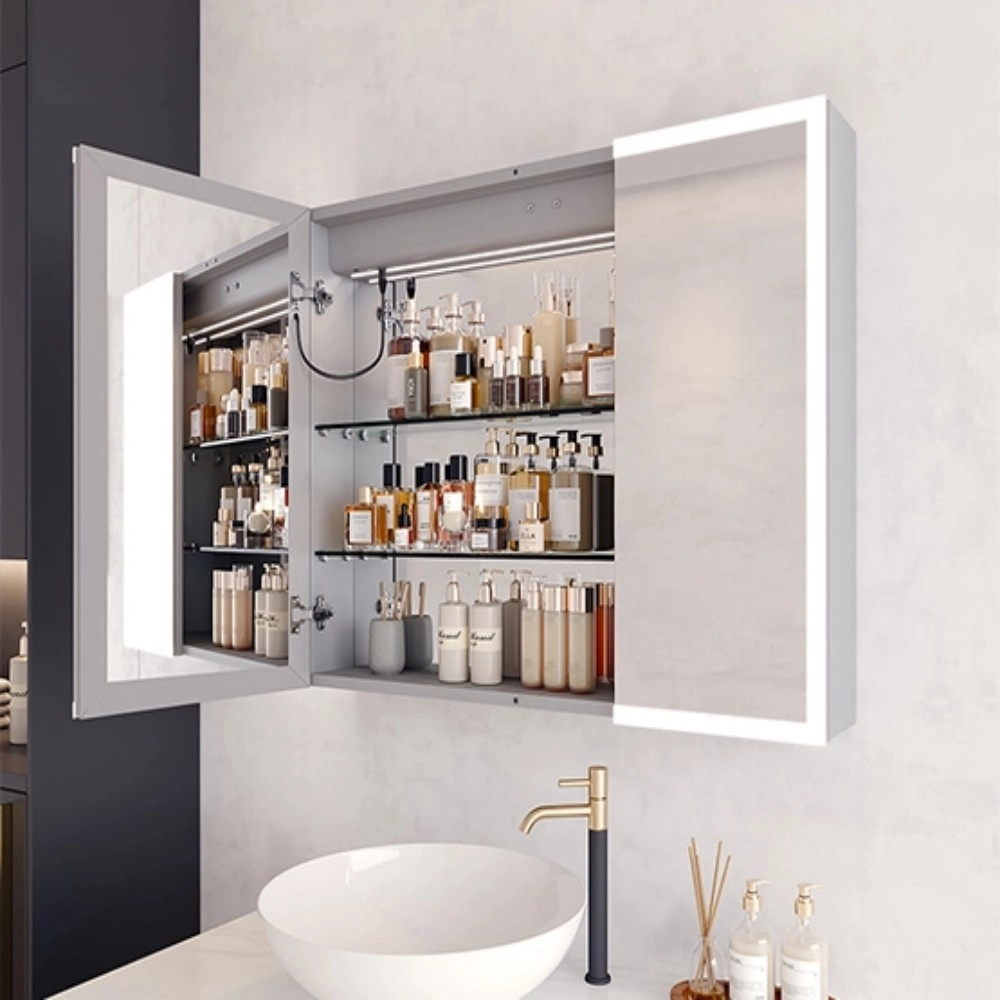
Coordinate an electrically powered cabinet before wall finishes close. The electrical professional should confirm voltage, frequency, hardwire or cord connection, cable entry, grounding, circuit protection, switching, and bathroom-location requirements. A recessed installation also needs a rough opening clear of plumbing, framing, and other services.
Separate Component Marks from Finished-Product Listings
A certified LED driver does not establish certification of the complete cabinet. For North America, ask which finished-product model is covered by UL, cUL, ETL, or cETL documentation. Verify the listing number, applicant, product description, ratings, and installation conditions. CE, SAA, UKCA, or RoHS documentation may serve other markets but cannot replace evidence required at the destination.
Check Safety and Quality-Control Evidence
Electronic reliability depends on more than a label. Our acquired LED strips, drivers, and touch switches undergo at least 72 hours of aging testing. Completed units receive lighting, high-voltage, and grounding checks before shipment. The wholesale medicine cabinet quality-control process should be reflected in the buyer’s inspection, sample approval, change control, and required reports.
Ask whether the driver, control, defogger connection, or Bluetooth module can be replaced without damaging the wall or mirror. Confirm replacement-parts responsibility, wiring access, and model-specific installation instructions.
Compare Models and Build a Complete RFQ
Homeowners should prioritize fit, comfortable light, simple controls, and installation support. Designers need finish coordination, color consistency, door proportions, and samples. Hotel buyers should add repeatability, guest-friendly controls, service access, spare parts, and room schedules. Importers need the fullest evidence package because one feature change may affect cost, documentation, and compliance.
|
RFQ Field |
Information to Request |
|
Product and installation |
Model/SKU, dimensions, door count, mounting method, rough opening, finish, shelf layout, fixing method |
|
LED specification |
Light location, lumens or photometric data, wattage, CRI, kelvin options, diffuser, expected service information |
|
Controls and options |
Exact switch, dimming, memory, defogging, internal light, Bluetooth, outlet, clock, and independence of controls |
|
Electrical |
Voltage, frequency, hardwire/cord, grounding, cable entry, wiring diagram, driver access, bathroom-location requirements |
|
Certification and testing |
Finished-product listing for the exact model and market, component certificates, test reports, inspection criteria |
|
Commercial terms |
Sample, MOQ, tooling, packaging, labeling, lead time, spare parts, warranty, and change approval |
Eternamir Bath supports custom sizes, colors, functions, packaging, and OEM/ODM medicine cabinet projects. Our mirror and mirror cabinet work includes hospitality and residential applications, allowing room schedules and maintainability alongside appearance. Send every candidate the same RFQ fields and compare documents for the approved model, not a general product family.
FAQ
Q: What are lighted medicine cabinets used for?
A: Lighted medicine cabinets combine a mirror, eye-level storage, and LED illumination. They support grooming while keeping toiletries off the vanity. Depending on the model, lighting may sit on the mirror face, behind it, or inside the cabinet. Buyers should still plan ambient room lighting and confirm mounting and electrical requirements.
Q: What color temperature is best for lighted medicine cabinets?
A: Neutral light around 4000K is a practical starting point for grooming, while 2700–3000K suits warmer interiors. Cooler light near 6000K creates a crisper appearance. Compare the cabinet with adjacent fixtures and finishes, then verify whether the offered model has one fixed temperature or selectable settings.
Q: Are all lighted medicine cabinets dimmable and anti-fog?
A: No. Dimming and defogging depend on the configuration, as do memory, Bluetooth, internal lighting, clocks, and outlets. Check the exact SKU and controls in the quotation. For defogging, ask about the heated area and separate switching; for dimming, request the range and test smooth, flicker-free operation on a sample.
Q: Do lighted medicine cabinets need UL or ETL certification?
A: Requirements depend on the destination, installation, code, and approval authority. For North America, verify whether the exact finished-product model is covered by a UL, cUL, ETL, or cETL listing. A certified driver or another component does not prove that the complete cabinet has the same certification scope.
Q: What should importers request when buying lighted medicine cabinets?
A: Importers should request the exact model, dimensions, mounting method, LED and control specifications, electrical ratings, wiring diagram, market-specific finished-product certification, inspection criteria, packaging, labeling, sample process, MOQ, lead time, warranty, and spare-parts plan. Every option should be written into the RFQ because a feature change can affect both price and compliance documentation.
