



How to Evaluate a Medicine Cabinet Manufacturer
Time : September 17, 2026 View : 38
Choosing among medicine cabinet manufacturers is a specification decision, not simply a price comparison. A low quote becomes expensive when drawings are incomplete, functions change, or replacement parts are unavailable. Buyers should evaluate factory capability, engineering, documentation, and project support as one process.
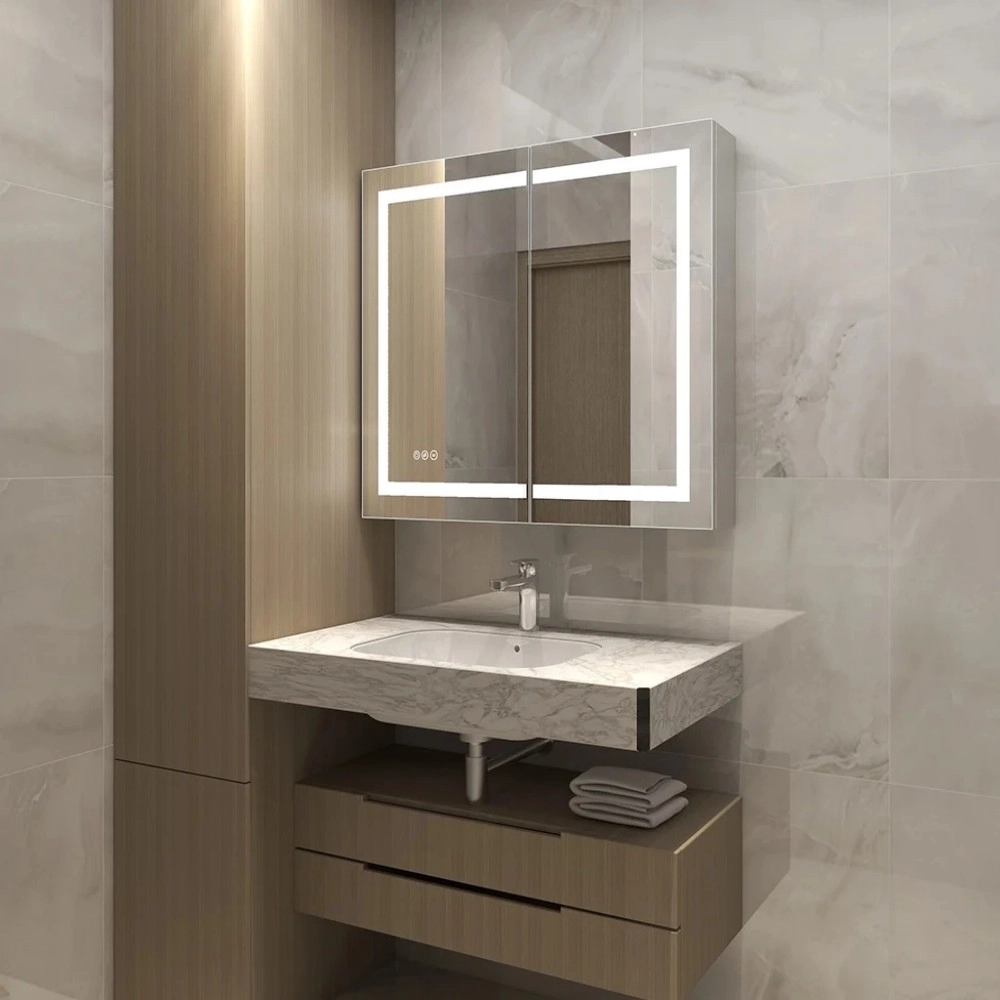
Start with the Manufacturer’s Actual Scope
The first question is whether the candidate is a medicine cabinet manufacturer or a trading company presenting a broad bathroom catalog. Buyers need to know who owns the drawings, controls production changes, performs inspection, and handles technical issues. Ask for the legal entity, factory address, product scope, and engineering contact.
Do not treat a website title, factory photograph, or broad product list as proof. A credible medicine cabinet supplier should connect the quoted SKU to a drawing, BOM, sample, inspection standard, packaging specification, and model-level certification documents.
Manufacturer Evaluation Scorecard
Use a simple 0-to-5 score for each category. A zero means no usable evidence; five means the supplier provides clear, current, model-relevant evidence and answers follow-up questions consistently.
Use the manufacturer evaluation criteria to compare medicine cabinet manufacturers on the same evidence set.
|
Evaluation area |
Evidence to request |
Score focus |
|
Factory capability |
Legal entity, address, factory details, capacity, product scope |
Can the operation support the required volume and product type? |
|
Product engineering |
Drawings, BOM, mounting details, electrical layout, revision control |
Are design decisions documented and controlled? |
|
Customization |
Custom sizes, colors, layouts, functions, packaging, OEM/ODM process |
Can changes be reviewed without losing specification control? |
|
Quality control |
Incoming checks, aging, salt spray, functional tests, final inspection |
Are acceptance criteria defined before shipment? |
|
Certification documentation |
Exact model, certificate or listing, ratings, market, conditions |
Does the evidence apply to the finished configuration and destination? |
|
Project delivery |
Sample approval, MOQ, lead time, packaging, labeling, logistics |
Can the supplier support the installation schedule? |
|
After-sales support |
Warranty terms, spare parts, service contact, issue process |
Is support practical after delivery? |
Verify the Product Scope
Confirm that factory, quality, certification, and capacity evidence applies to medicine cabinets and the quoted SKU.
Verify Factory Capability and Product Engineering
A medicine cabinet factory should explain how its physical and electrical decisions are made. Check dimensions, depth, door configuration, shelves, mirror construction, mounting, cable entry, and service access. For a recessed cabinet, the drawing must coordinate the rough opening; for a surface-mounted cabinet, projection and fixing points matter. Review a quoted medicine cabinet configuration against its technical documents.
Eternamir Bath was established in 2009 in Foshan, Guangdong, China. The operation includes an 8,000-square-meter production area, two factories, approximately 100 employees, and a capacity of over 8,000 mirror products per month. These figures do not promise the same schedule for every order.
Product engineering should separate standard construction from optional functions. Do not assume that a quoted cabinet includes Bluetooth, defogging, dimming, USB, an outlet, internal lighting, or a motion sensor. Request the exact configuration, component list, ratings, installation instructions, and change history.
Questions That Expose Weak Documentation
Ask who approves drawing revisions, communicates production changes, and controls the bulk inspection reference. Request tolerances for finished walls, door alignment, shelves, mirrors, and electrical access.
Confirm Factory Ownership
Ask which entity owns the equipment, drawings, inspection records, and change approvals for the quoted SKU.
Assess Customization, Materials, and Quality Control
A custom medicine cabinet manufacturer should show how a requested change moves from concept to approved sample and production. Confirm which dimensions, finishes, layouts, lighting choices, sockets, labels, cartons, and branding elements can be customized. The critical check is whether the change is documented and repeatable.
Ask what cabinet body, mirror, shelves, hinges, hardware, LED strips, drivers, switches, and wiring are specified. For humid bathrooms, request the corrosion-resistance inspection scope. Eternamir Bath offers regular sampling checks of the mirror, cabinet bottom, hardware, and screws.
Eternamir Bath’s LED strips, LED drivers, and touch sensor switches receive at least 72 hours of aging testing. Completed units receive lighting, high-voltage, and grounding checks before shipment, with 100% full inspection before shipment.
Request this custom medicine cabinet documentation before a purchase order:
*Current product drawing with revision, dimensions, mounting, door swing, shelves, cable entry, and access
*BOM identifying mirror, body, hardware, LED parts, drivers, switches, and optional functions
*Sample approval record, finish reference, inspection standard, and defect limits
*Quality-system evidence, inspection method, aging-test record, salt-spray record, and final report
*Installation instructions, wiring diagram, ratings, packaging, carton markings, and spare-parts list
*Warranty terms, after-sales contact, escalation process, MOQ, lead time, and change-approval procedure
Check Certifications and Market Documentation
Certification review must be model-specific. For North America, ask whether the exact finished configuration is covered by UL, cUL, ETL, or cETL documentation. Verify the model or file number, category, ratings, applicant, market, conditions, and whether evidence covers the cabinet or only a component. A certified driver does not certify the finished cabinet.
CE, SAA, UKCA, and RoHS may matter elsewhere; check them against the target market and configuration. Clarify whether changes to the mirror, driver, socket, Bluetooth module, defogger, or controls affect documentation. Installation, grounding, GFCI or RCD protection, damp-location rules, and inspection remain subject to local requirements and qualified review.
Compare Project Support Before You Release an RFQ
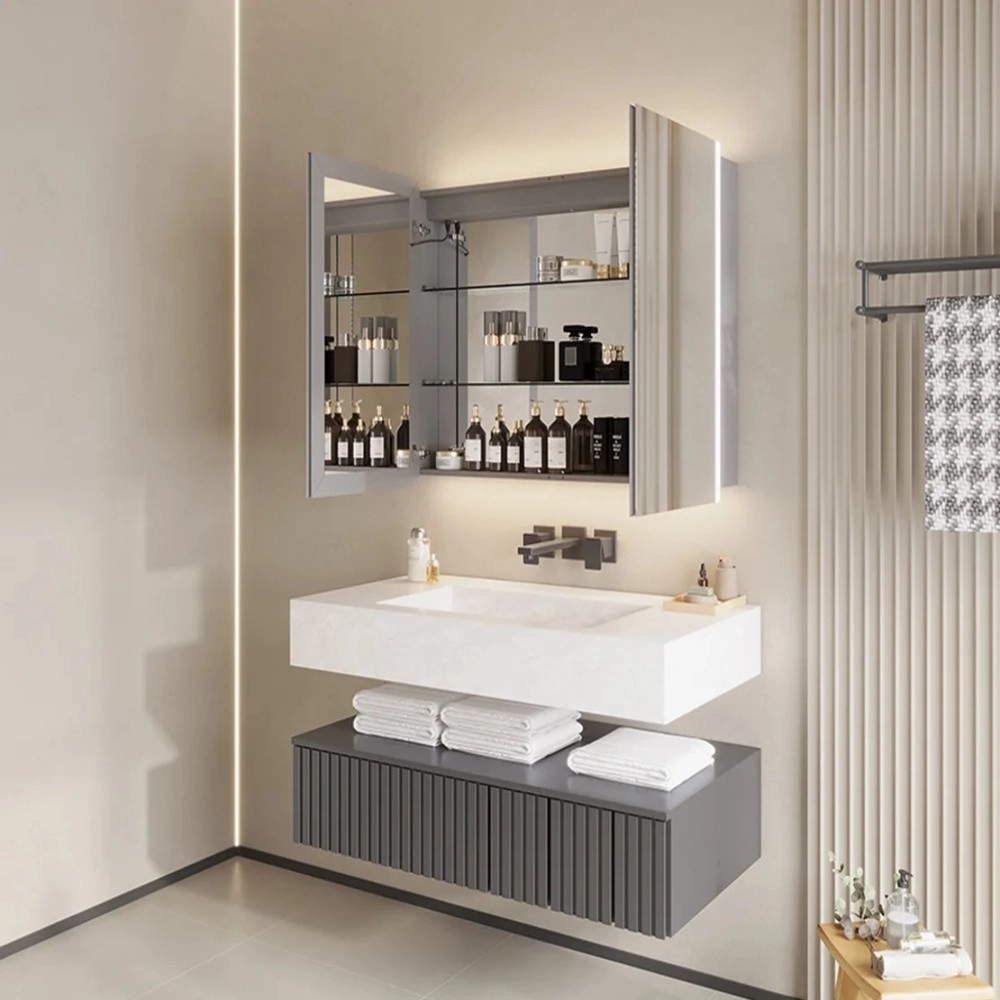
Hotel and residential buyers should compare packaging, labeling, spare parts, warranty response, service access, and damaged-unit procedures. Ask whether the approved sample, drawing, inspection standard, and packaging specification stay aligned through shipment.
For a medicine cabinet manufacturer RFQ, include:
*Cabinet width, height, depth, door count, hinge direction, shelf layout, mirror specification, finish, and mounting type
*Recessed or surface-mounted installation, rough opening, wall conditions, cable entry, and service-access requirements
*Lighting position, CRI, color temperature, control type, driver information, and whether dimming or memory is required
*Bluetooth, defogger, USB, socket, internal lighting, or sensor requirements, each marked required, optional, or excluded
*Supply voltage, frequency, connection method, grounding, target market, certification documents, and installation instructions
*Sample quantity, approval method, inspection level, packaging, labeling, spare parts, warranty, MOQ, lead time, and delivery sequence
*Change-control owner, nonconformance process, after-sales contact, and required technical records
Eternamir Bath supports custom sizes, colors, functions, packaging, and OEM/ODM medicine cabinet projects. We also provide medicine cabinet customization information for buyers defining a project-specific configuration.
Warning signs include an unidentified finished model, component-only certificates, conflicting dimensions, refusal to provide a BOM, unexplained substitutions, unclear inspection ownership, and unwritten capacity or delivery promises. Ask: Which entity manufactures this SKU? Which document controls production? What evidence arrives before shipment?
Compare medicine cabinet manufacturers using one scorecard and document-request standard.
FAQ
Q: What should I look for in medicine cabinet manufacturers?
A: Compare factory capability, product engineering, customization control, quality testing, model-level certification, project delivery, and after-sales support. Request a drawing, BOM, sample record, inspection standard, packaging plan, warranty, spare-parts list, and lead-time conditions. Evidence should match the quoted cabinet, not a general catalog.
Q: How can I verify a medicine cabinet factory?
A: Request the legal manufacturing entity, address, product scope, factory details, capacity statement, production locations, and person responsible for engineering and quality approval. Then compare the information with the SKU drawing, sample, BOM, inspection records, and packaging documents. A factory claim should support the product and quantity you are actually buying.
Q: What should a custom medicine cabinet manufacturer provide?
A: A custom medicine cabinet manufacturer should provide a controlled drawing, configuration list, component schedule, sample record, finish reference, inspection criteria, packaging specification, and change process. Confirm which dimensions, finishes, layouts, electrical functions, labels, and cartons are custom. OEM/ODM wording matters only when changes are repeatable.
Q: How do I verify a medicine cabinet manufacturer certification?
A: Ask for documentation covering the exact finished model, product category, configuration, destination market, ratings, and installation conditions. For North America, check applicable UL, cUL, ETL, or cETL evidence; other markets may require CE, SAA, UKCA, or RoHS review. Confirm whether a document covers the cabinet or only an LED driver or other component.
Q: What should I include in a medicine cabinet supplier RFQ?
A: Include dimensions, door and shelf layout, mounting type, mirror and finish, lighting specification, controls, optional electrical functions, supply details, target market, certification, packaging, warranty, spare parts, MOQ, lead time, inspection, sample approval, and change control. Mark each feature required, optional, or excluded.
