



How to Choose a Medicine Cabinet Manufacturer: 8-Point OEM/ODM Checklist
Time : August 27, 2026 View : 64
Choosing a medicine cabinet manufacturer for an OEM or ODM order is less about the lowest unit price and more about controlling project risk. Buyers need a supplier that can translate drawings into stable production, keep electrical features safe, hold finishes consistent, and communicate clearly when schedules change. A useful checklist tests both the cabinet and the factory behind it: materials, door design, lighting, certificates, sampling, packing, MOQ, lead time, and service after shipment. The eight points below suit hotel, apartment, retail, and private-label programs where one small detail can repeat across hundreds of rooms.
Start with the Buying Brief, Not the Catalog
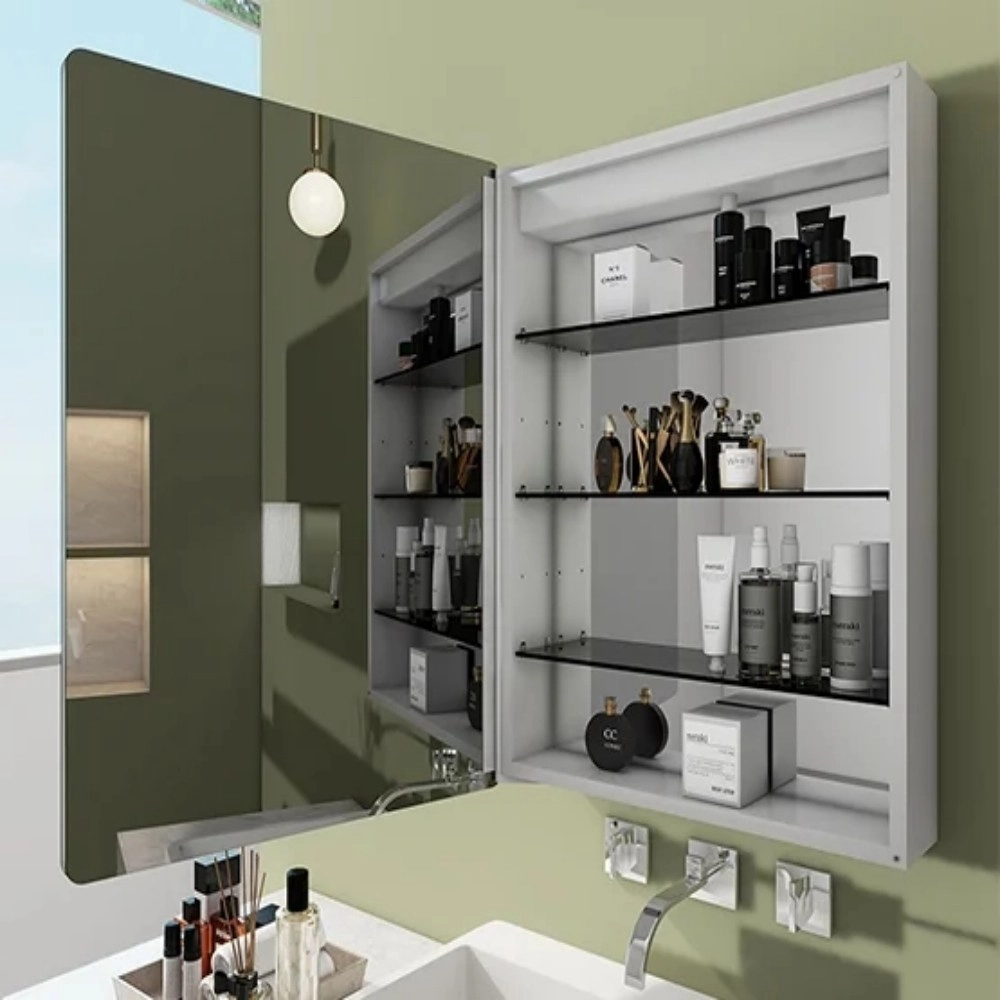
Before comparing suppliers, define the buying brief in plain terms. Note the project type, target market, installation method, cabinet width, door count, shelf depth, lighting style, electrical options, finish, packaging needs, and launch date. A factory cannot quote honestly if the request only says “LED mirror cabinet” with no wall conditions or user scenario.
This brief also prevents a common sourcing mistake: treating a bathroom storage cabinet, a lighted mirror, and a mirror cabinet as interchangeable. The right supplier should understand concealed storage, damp-room materials, door swing, load-bearing, wiring access, and serviceable parts.
Medicine Cabinet Manufacturer Checklist: 8 Points
|
Checkpoint |
What to Ask |
Why It Matters |
|
1. Product scope |
Can the factory make surface, recessed, and dual-mount cabinets? |
Mounting choice affects wall depth, installation labor, and renovation flexibility. |
|
2. OEM/ODM route |
Are drawings, samples, finishes, and private-label details controlled? |
A custom program needs repeatable approval points, not loose verbal agreement. |
|
3. Cabinet body |
Which materials, shelves, hinges, and mirror backing are used? |
Humid bathrooms punish weak bodies, poor hardware, and unsealed edges. |
|
4. Lighting and power |
What LED, driver, outlet, clock, or hidden-wire options are available? |
Electrical details decide comfort, safety, service access, and market compliance. |
|
5. Certificates |
Which certificates apply to the whole item and key components? |
Lighted cabinets need stronger proof than appearance-only bathroom furniture. |
|
6. Testing |
How are LED strips, drivers, switches, and corrosion resistance checked? |
Batch checks catch small defects before they become room-by-room complaints. |
|
7. MOQ and lead time |
What changes MOQ, sample timing, urgent orders, and delivery windows? |
Buyers need a schedule that matches rollout, warehouse, and cash-flow plans. |
|
8. Service |
What warranty, spare parts, and response process are provided? |
After-sales support matters when a project has many identical installed units. |
Check Engineering and OEM/ODM Depth
OEM vs ODM Medicine Cabinet Decisions
OEM work usually starts with a buyer’s drawing, brand standard, or target specification. ODM work depends more on the factory’s existing structure, engineering library, and ability to adapt finishes, lighting, doors, and packaging. In either case, ask for dimension drawings, sample approval steps, and change-control rules before price negotiation.
LED Medicine Cabinet OEM Manufacturer Capability
For buyers seeking a China-based source, Eternamir Bath offers a useful benchmark. We are a Foshan manufacturer founded in 2009, with two factories, 100 employees, and 8,000 square meters of production space. We manufacture mirrors and mirror cabinets for hospitality and residential projects, making us a suitable partner for buyers who need custom project guidance rather than a one-size-fits-all cabinet.
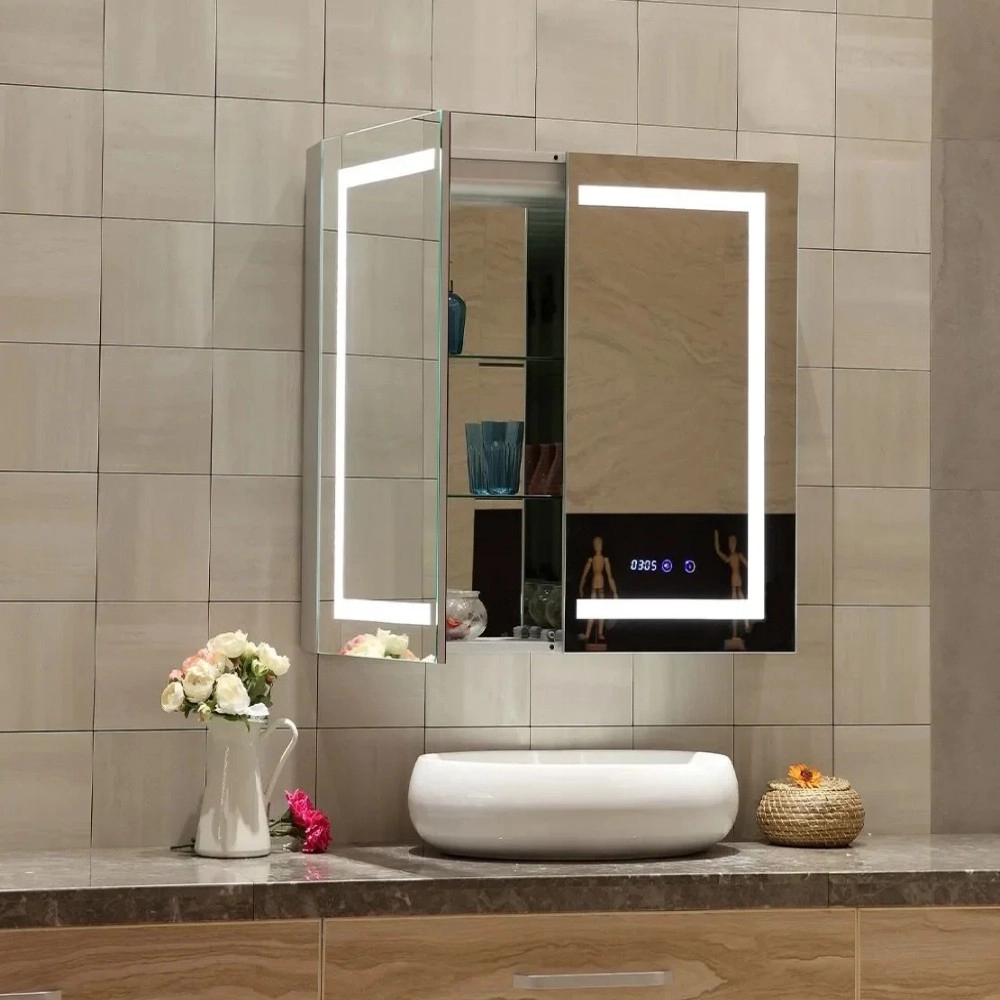
We encourage buyers to keep the engineering review practical. Confirm whether custom sizes and colors are available, whether we can manufacture one-, two-, and three-door configurations, and whether the cabinets can be delivered mostly assembled, with the shelves installed on-site. Our cabinet range includes rust-resistant matte silver aluminum bodies, adjustable tempered glass shelves, soft-close hinges, concealed wiring, electrical outlets, LED digital clocks, and both surface-mounted and recessed installation options.
Verify Quality, Certifications, and Production Control
Lighted Cabinet Certifications and Testing
Lighted cabinets sit in humid rooms and combine glass, metal, storage, and electrical parts. Ask which certificates apply to the whole item and which apply only to components such as drivers. Eternamir Bath has gained cETL, ETL, cUL, UL, CE, SAA, UKCA, and RoHS certificates for completed products, with ETL and cETL certificates for cabinets recorded in 2019. Also, UL-, CE-, and SAA-certified LED drivers with a stated 30,000-hour lifetime.
Lighting data should also be checked before mass production. The cabinet specification includes flexible 2835 LED strips, CRI 90+ light, and a 50,000-hour LED lifetime. Ask how the supplier checks LED batches and whether approval samples match mass production.
Medicine Cabinet Factory Quality Control
Quality control should cover incoming parts, in-process checks, and final inspection. Acquired electronic parts such as LED strips, LED drivers, and touch sensor switches go through at least 72 hours of aging testing. It also states that LED strip batches are tested using the most sophisticated test equipment.
Do not stop at electrical testing. Bathrooms expose cabinets to steam, splashes, cleaning chemicals, and repeated door movement. The buyer’s checklist should include corrosion-resistance checks for the mirror, cabinet bottom, hardware, and screws, plus shelf fit, hinge closing force, door alignment, and packing protection.
Match MOQ, Lead Time, and Project Service
Medicine Cabinet MOQ and Lead Time
MOQ and lead time are not fixed numbers in serious sourcing. They change with cabinet size, finish, electrical configuration, packaging, certificate requirements, and whether the order uses a current design or a new drawing or tooling route. Ask the factory to separate sample time, approval time, production time, inspection time, and shipping readiness.
Eternamir Bath provides 24-hour service and quick feedback, and that urgent-order lead time can be reduced by up to 50 percent compared with regular lead time.
Samples, Packaging, and After-Sales
For wholesale orders, the supplier should help buyers control samples, specifications, production changes, pricing, MOQ, quality control, packaging, and delivery. Hotel buyers also need serviceability, door clearance, moisture resistance, safety.
After-sales support deserves the same attention as price. Eternamir Bath warranty language describes a three-year period for physical goods from product completion and covers defects in material or workmanship under normal use and maintenance. Project buyers should confirm photos or videos for diagnosis, spare parts, replacement timing, and whether broken parts must be retained for testing.
FAQ
Q: Is OEM or ODM better for a hotel cabinet project?
A: OEM is useful when the buyer already has drawings, brand standards, or a fixed specification. ODM is faster when an existing factory structure can be adapted through size, finish, lighting, or packaging changes. For hotels, the better route is the one that keeps approval samples, installation details, and replacement parts under control.
Q: Which certifications matter for a lighted cabinet?
A: Ask whether certificates apply to the completed item, the LED driver, or another component. Useful evidence may include ETL, cETL, UL, cUL, CE, SAA, UKCA, RoHS, and quality-system certification. The exact requirement depends on the destination market, wiring method, installer expectations, and whether the cabinet includes outlets or other powered functions.
Q: What service questions should be asked before deposit?
A: Ask who responds after shipment, what evidence is needed for a claim, how spare parts are supplied, and how urgent schedules are handled. Also confirm the warranty period, what normal use and maintenance mean, and whether the factory can diagnose problems through photos, videos, or returned parts when needed.
