



Wood Medicine Cabinet with Lights: Combining Style and Utility
Time : July 29, 2026 View : 146
A medicine cabinet does not need to look like a box that is only useful. Wood, mirror glass, storage areas, and built-in lights can work together as one unit. The cabinet then adds warmth to a tiled bathroom. It also makes daily grooming tasks easier. The ideal result is a well-balanced piece. Its materials, size, light output, and inside layout fit how people actually use the room.
Why Choose a Wood Medicine Cabinet with Lights for Modern Bathrooms?
Natural Warmth from a Wooden Medicine Cabinet with LED Lighting
Wood adds grain, depth, and a feel that polished glass and metal cannot give by themselves. Light oak can soften a white bathroom. Walnut can stand out against stone. Painted wood can link the cabinet to a vanity. A shaped or framed door gives the mirror a stronger look in the room.
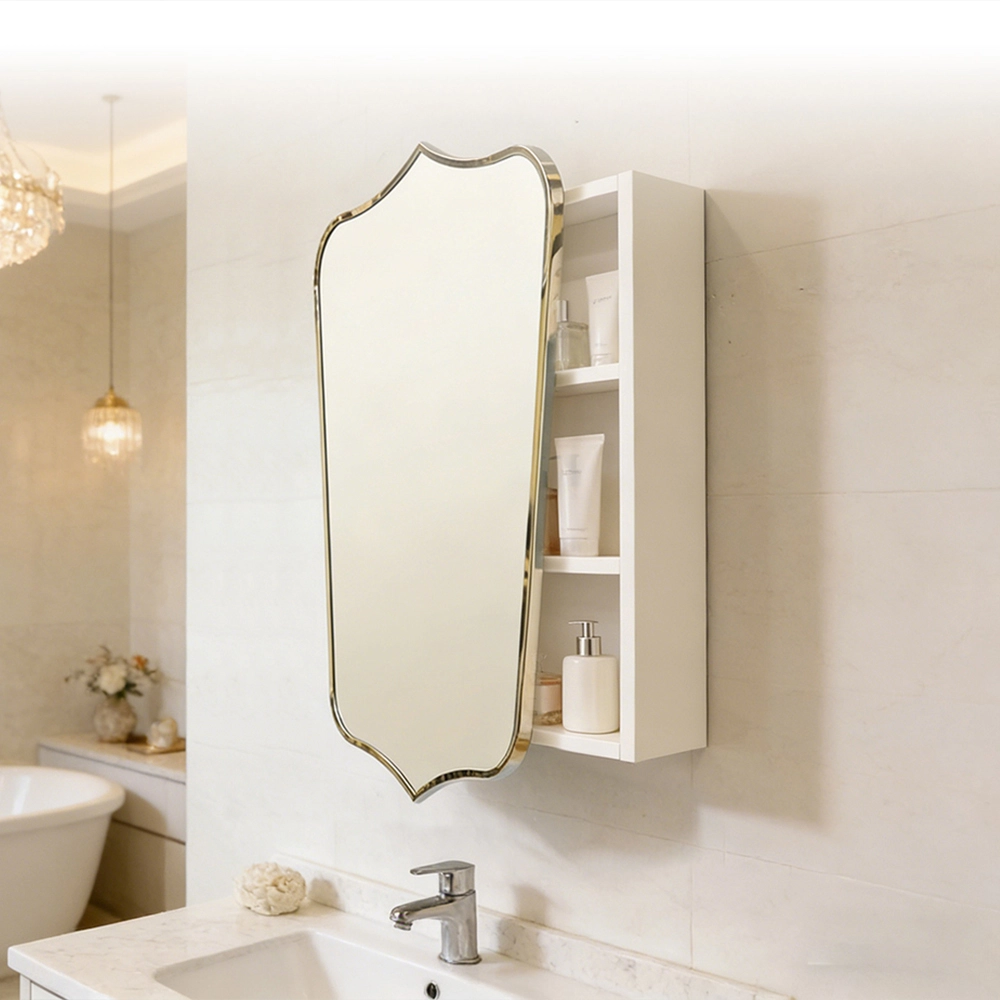
The Artistic Shape Wooden Mirror Cabinet shows this idea with a treated wooden exterior, veneer finish, aluminum inner structure, adjustable shelving, and soft-close hardware. Its irregular outline adds character. It still offers hidden storage.
How a Lighted Wood Medicine Cabinet Balances Style and Utility
Built-in lighting puts helpful light exactly where people shave, apply makeup, or check their skin. It can cut the need to fit a separate mirror, storage cabinet, and vanity light on a small wall. A diffused light area usually feels more comfortable than bright spots. It softens glare and spreads light evenly across the face.
Eternamir Bath develops wood-focused mirror cabinets. These combine decorative surfaces with practical internal structures. We support flexible storage, lighting, and project-based setups. This lets the cabinet fit different bathroom layouts. It avoids forcing every room into one fixed design.
Wood vs. Aluminum, Stainless Steel, and Steel Medicine Cabinets
Solid Wood, Plywood, MDF, and Wood Veneer Cabinet Options
“Wood cabinet” can describe several constructions. Solid wood offers unique grain but reacts to humidity. Cross-layered plywood can improve stability. Its edges still need careful sealing. MDF gives a smooth surface for painted finishes. Damaged or unsealed edges should not stay exposed to water. Wood veneer over a stable core can deliver natural texture with more predictable movement.
Buyers should check the finish system, sealed edges, joinery, backing material, and ventilation around electrical parts. In a wet room, good workmanship matters as much as the base material.
Wood vs. Aluminum Medicine Cabinets in Humid Bathrooms
Aluminum is light, rust-resistant, and suited to clean modern shapes. Wood brings visual warmth. It can match furniture-style vanities directly. A hybrid design can use a wood or veneer exterior with an aluminum inner frame. This gives the visible surface a softer look while the structure resists moisture.
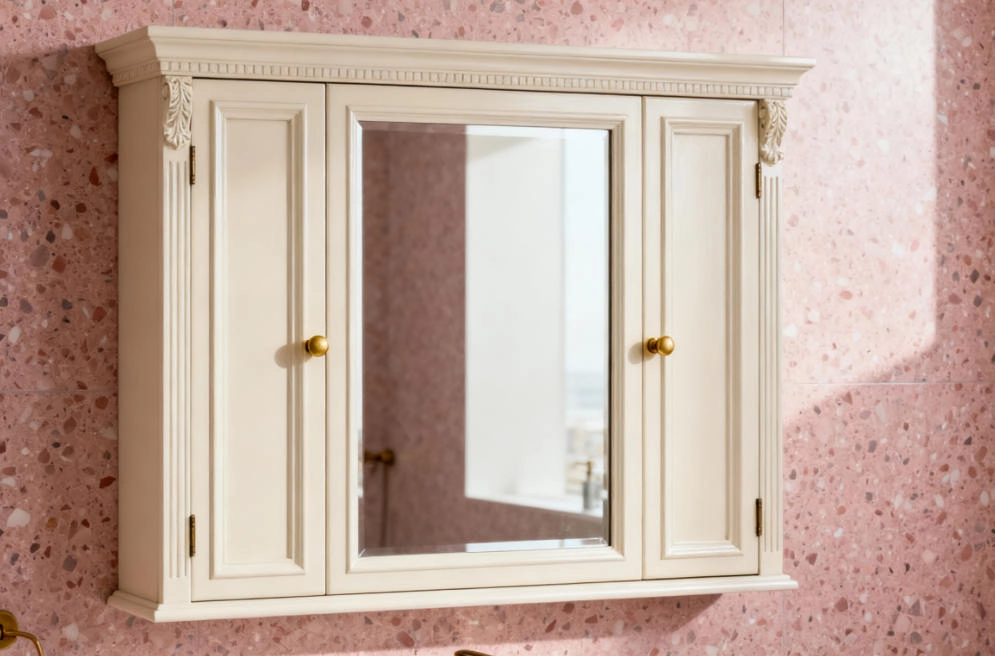
The Wooden Frame Double Door Mirror Cabinet follows that logic. Its wooden exterior and veneer finish pair with an aluminum inner frame, adjustable glass shelves, soft-close hinges, and integrated lighting. This setup creates a wood-forward appearance. It does not rely on wood for every surface.
Wood vs. Stainless Steel and Powder-Coated Steel for Long-Term Use
Stainless steel provides strength, a clean commercial look, and solid resistance to humidity when the right grade and build are chosen. It can appear cooler and may show fingerprints. Powder-coated steel offers firmness and many color choices. Damaged coating should be fixed before the metal starts to corrode.
Wood is often the better choice when grain and furniture matching guide the design. Metal may work better where a slim profile, heavy use, or simple cleaning is more important. The bathroom conditions and maintenance plan should decide the material. A single ranking does not fit every case.
Matching a Wood Medicine Cabinet with Mirror and Lights to Bathroom Styles
Wood Finishes for Modern and Minimal Bathroom Designs
Minimal bathrooms do not require fixtures without frames. A slim light-toned border can ease an all-white scheme. Dark veneer can outline the mirror against concrete-look tile. Keep the grain direction, frame thickness, and hardware simple. The cabinet then adds texture without creating visual noise.
Match undertones rather than copying every finish. Warm wood works naturally with brass and cream stone. Cooler brown or charcoal-stained wood can sit beside black hardware and gray tile.
Lighted Wooden Cabinets for Transitional, Natural, and Hospitality Interiors
Transitional rooms gain from wood. It connects furniture details with current lighting technology. Natural or spa-inspired bathrooms can repeat the cabinet finish in a vanity or shelf. Hospitality interiors may need a stronger focal point. This point must still handle frequent use.
For wider vanities, the Modern Wooden Triple Door Bathroom Mirror Cabinet provides a broad mirror, multiple access points, adjustable shelving, and integrated lighting. The three-door setup can serve shared bathrooms. It keeps the viewing area well organized.
Storage Planning for a Bathroom Wood Medicine Cabinet with Lights
Adjustable Shelving for Toiletries and Grooming Essentials
Plan the inside around real containers instead of abstract space. Reserve a tall area for bottles. Use a shallow shelf for small daily items. Set aside a separate area for products used less often. Adjustable tempered-glass shelves let the layout change as needs shift.
Items used often should stay easy to reach. Users should not move other products first. Small trays stop loose objects from getting lost behind taller bottles. They also make cleaning simpler.
Choosing a Medicine Cabinet Door Layout for Comfortable Access
A single door gives an unbroken mirror surface. It needs clear space to swing open. Double doors create smaller swing arcs. They also separate storage zones. Wider multi-door cabinets can improve access for two users. Door divisions should not cut across the most useful viewing area.
Check nearby walls, sconces, faucets, and towel bars before you choose the opening direction. Soft-close hinges reduce impact noise. They cannot fix a door that hits another fixture.
How to Plan LED Lighting for a Wooden Medicine Cabinet
Task Lighting for Makeup, Shaving, and Daily Grooming
Good grooming light reaches the face from the front or sides. It should not depend only on a ceiling fixture. Even diffusion cuts shadows around the eyes, nose, and chin. The mirror should supply useful task light. It should avoid a harsh border that pulls attention from the reflection.
Integrated LEDs may serve as the main face-level source. Ceiling lighting can still light the room and shower. Consider daylight and other fixtures first. This helps decide how bright the cabinet needs to be.
Balancing Brightness, Color Temperature, and Visual Comfort
Brightness should match the mirror size and viewing distance. It should not be judged by wattage alone. Color rendering matters when users must see skin tones or cosmetic colors clearly. Adjustable color temperature can support bright morning routines and warmer evenings. Dimming keeps the cabinet from feeling too bright at night.
Controls should stay easy to use with the doors open or closed. Electrical parts need proper protection in a humid bathroom. Installation must follow local requirements.
Choosing the Right Size and Installation for a Lighted Wood Medicine Cabinet
Surface-Mounted vs. Recessed Wood Medicine Cabinets
Surface mounting works well for renovations. It avoids cutting a full recess in the wall. The wooden frame stays visible. Recessed installation creates a flatter look. The wall must have enough depth. It must stay free from pipes, wiring, or structural framing that could interfere.
Plan electrical connections before you fix the cabinet in place. A qualified installer can confirm wall support, safe wiring, and proper clearances.
Matching Cabinet Width, Depth, and Clearance to the Vanity
A cabinet usually looks balanced when it lines up with the vanity width or sits slightly inside it. Depth should give useful storage. It should not feel bulky above the basin. Check faucet height, backsplash clearance, door swing, eye level, and reach to upper shelves.
Mark the proposed outline on the wall before ordering. This step shows whether the cabinet overwhelms the room. It reveals any awkward gaps or conflicts with nearby fixtures.
FAQ
Q: Is a wood medicine cabinet with lights suitable for a humid bathroom?
A: Yes, when it is designed for bathroom use. Look for moisture-resistant construction, sealed edges, durable finishes, protected electrical parts, and suitable hardware. Good ventilation and prompt removal of standing water also help.
Q: Which material is better for a lighted medicine cabinet, wood or aluminum?
A: Wood offers warmth and design flexibility. Aluminum is lightweight, rust-resistant, and visually minimal. A hybrid wood exterior with an aluminum inner structure can combine both advantages.
Q: Can a wooden medicine cabinet with LED lighting be recessed?
A: Some can be recessed. The wall cavity, cabinet depth, wiring route, and ventilation must be checked first. Surface mounting is simpler when pipes, wiring, or framing occupy the wal
