



Wholesale Medicine Cabinet Mirrors with LED Lighting for Bulk Orders
Time : July 29, 2026 View : 147
Bulk purchasing changes the medicine cabinet decision. A design that looks attractive in one showroom must also fit repeated room layouts, arrive safely, install predictably, and perform consistently across hundreds of units. Wholesale buyers therefore need more than a list of smart features. They need a clear product structure, measurable lighting requirements, durable construction, controlled customization, and an order plan that reduces surprises from sampling through delivery.
What Wholesale Buyers Need from LED Medicine Cabinet Mirrors
Common Applications Across Residential and Commercial Projects
Wholesale medicine cabinet mirrors serve apartment developments, hotels, student housing, senior living projects, retailers, and regional distributors. Each channel values a different balance. Hotels may prioritize easy cleaning and service access, while apartment projects often need standardized dimensions and straightforward installation. Distributors may prefer a small assortment that covers several price levels without creating excessive inventory. A broad medicine cabinet product range helps buyers compare configurations before reducing the selection to practical order groups.
Before requesting quotations, separate the order by application, room type, expected quantity, and installation environment. This prevents a premium specification from being applied where a simpler configuration would work, and it keeps entry-level products from being placed in demanding locations.
Balancing Lighting, Storage, Appearance, and Budget
An LED medicine cabinet performs three jobs at once: it provides face-level light, conceals everyday storage, and becomes a visible design feature. The most expensive option is not automatically the best wholesale choice. Buyers should decide which functions are mandatory, which are optional, and which are unnecessary for each product tier. That discipline makes quotations easier to compare and limits costly changes after sample approval.
Choose the Right Wholesale Medicine Cabinet Configuration
Compare Door Counts, Cabinet Sizes, and Storage Layouts
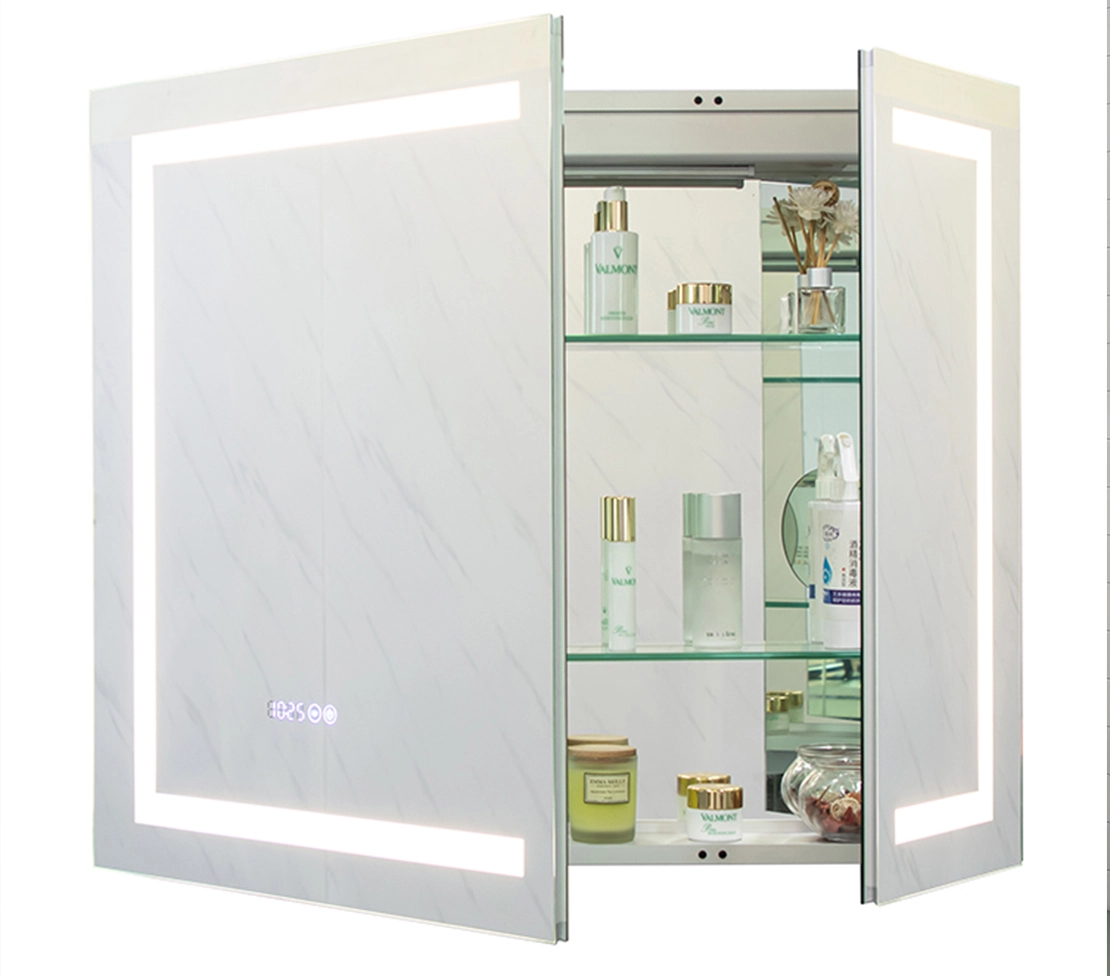
Single-door cabinets suit compact vanities, while two- and three-door designs provide wider viewing areas and more organized storage. Cabinet width should relate to the vanity, but internal depth, shelf spacing, and usable clearance matter just as much. Buyers should check whether tall bottles fit, whether shelves can be adjusted, and whether doors remain accessible when nearby walls or lights restrict movement.
Select Surface-Mount, Recessed, or Flexible Installation
Surface mounting is often practical for renovation projects because it requires less wall modification. Recessed installation creates a cleaner profile but depends on wall depth, framing, wiring, and accurate openings. A Surface and Recessed Mount 2 Doors Cabinet shows how one cabinet format can support installation flexibility, although the purchase specification must still define mounting hardware, side finishing, and electrical access.
Build Product Tiers Without Creating Too Many SKUs
A useful assortment might include a compact standard cabinet, a mid-range illuminated model, and a larger feature-rich option. Keep common components consistent where possible. Shared finishes, lighting controls, shelf systems, and packaging formats can reduce spare-part complexity and make staff training easier.
Evaluate LED Lighting, Mirror, and Electrical Features
Compare Brightness, CRI, Color Temperature, and Dimming
Brightness should be judged at the user’s face, not only by total LED output. Diffusion, cabinet width, surrounding room light, and wall color affect the result. High color rendering helps skin tones and grooming details appear natural. Color temperature also changes the atmosphere: warm light feels softer, neutral light supports everyday use, and cooler light can appear crisp in commercial interiors. Dimming gives one cabinet more flexibility across different projects.
Consider Defoggers, Touch Controls, Sensors, and Outlets
Additional functions should solve a defined user need. A defogger can improve mirror availability after showers, while touch controls and sensors can create a cleaner interface. Internal outlets may support grooming devices, but their location, plug standard, wiring method, and applicable safety requirements must be confirmed before ordering. More features also mean more components to inspect and service.
Confirm Mirror Safety and Damp-Location Requirements
Request clear documentation for mirror construction, safety backing, electrical components, moisture protection, and the complete product. Compliance requirements vary by destination market, so a component certificate should not be treated automatically as approval for the assembled cabinet. The specification should also state the intended bathroom zone and connection method.
Compare Materials, Hardware, and Long-Term Durability
Assess Cabinet Materials and Moisture Resistance
Aluminum, stainless steel, steel, and wood-based cabinets can all serve valid market segments. The correct choice depends on finish expectations, humidity, weight, price position, and maintenance. Buyers should examine exposed edges, interior coatings, corner joints, mirror backing, and areas where water or cleaning products may collect.
Check Hinges, Shelves, Door Operation, and Interior Finish
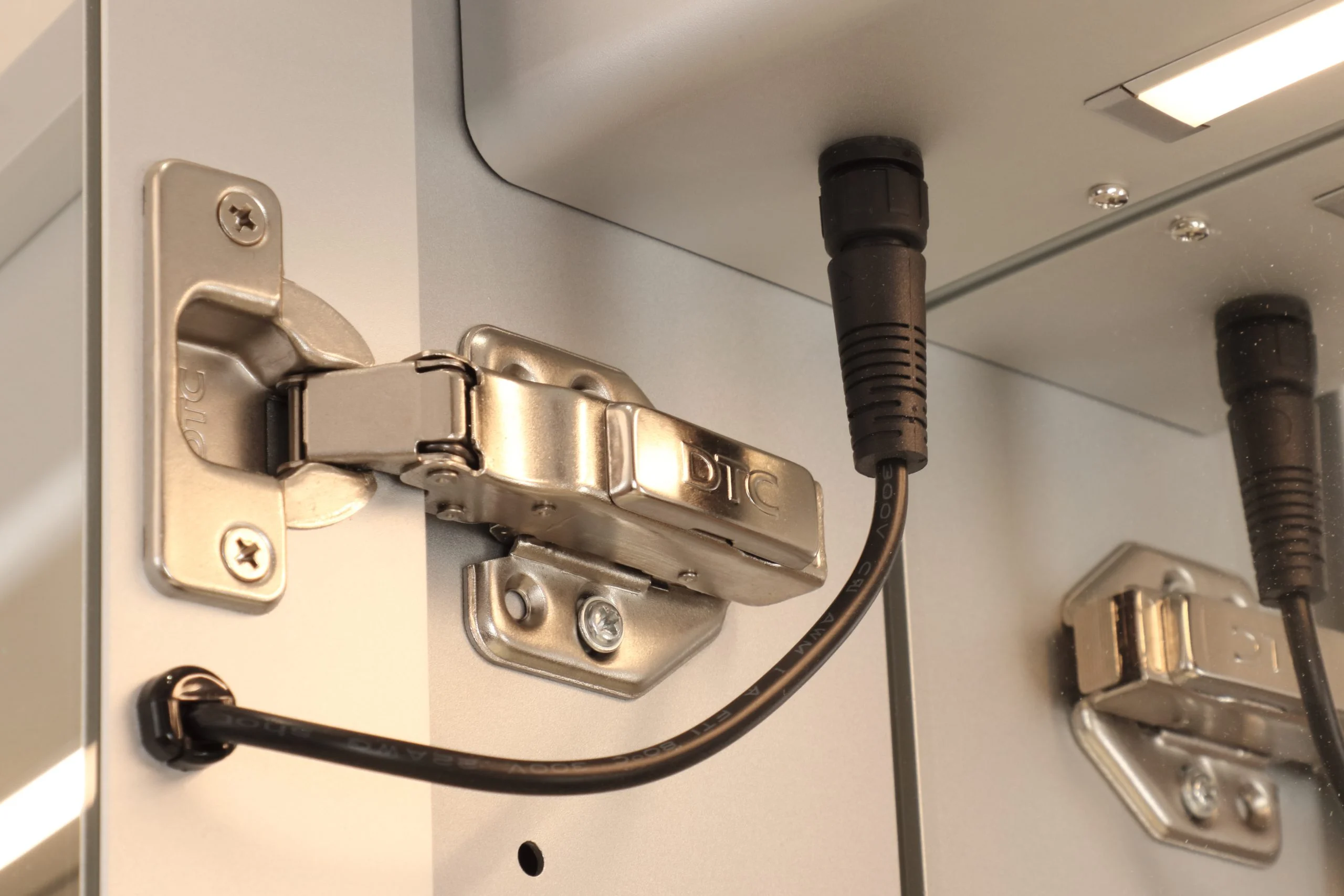
Hardware quality becomes obvious after repeated use. Soft-close hinges should move smoothly, support the mirror door, and remain accessible for adjustment. Tempered glass shelves need secure clips and practical spacing. Open and close the sample from different positions, test door clearance, and inspect the cabinet while loaded rather than evaluating only an empty display unit.
Consider Cleaning, Maintenance, and Replacement Parts
Bulk projects need a service plan. Ask how drivers, switches, hinges, shelves, and other replaceable parts can be identified and supplied. Smooth interiors and accessible components shorten maintenance time. A simple replacement procedure may provide more long-term value than an impressive feature that requires the entire cabinet to be removed.
Plan Customization for Bulk and Private-Label Programs
Customize Sizes, Finishes, Functions, and Packaging
Customization should begin with a controlled option list. At Eternamir Bath, we can discuss sizes, finishes, lighting, controls, labeling, manuals, and packaging without forcing every buyer into one narrow design. For larger vanities, the 3 Doors Halo Backlit LED Bathroom Medicine Cabinet illustrates a wider illuminated format with generous storage. Each requested option should remain a separate approval item so that pricing and production changes stay visible.
Control Samples, Specifications, and Production Changes
The approved sample should become the physical reference for mass production. Pair it with a signed specification sheet, drawings, finish samples, packaging details, and an agreed change process. If a component must be replaced, the buyer should receive the new specification and approve its effect on appearance, performance, compliance, and lead time before production continues.
Manage Pricing, MOQ, Quality Control, and Delivery
Prepare a Clear and Comparable Wholesale RFQ
A useful request for quotation states quantities by SKU, dimensions, mounting type, material, mirror construction, lighting requirements, electrical features, destination market, packaging, labeling, and delivery terms. Ask suppliers to separate base product cost from optional functions, customization, testing, packaging upgrades, tooling, and freight. This exposes cost drivers and prevents unlike quotations from appearing comparable.
Confirm Production Capacity, Lead Time, and Inspection Stages
Minimum order quantity and lead time should be reviewed by configuration, not only by total units. Confirm when materials are approved, when the first production units can be inspected, and what tests are performed during assembly and before shipment. Inspection criteria should cover dimensions, finish, mirror condition, lighting consistency, controls, hardware, labeling, accessories, and carton count.
Protect Bulk Orders with Suitable Packaging and Shipping Plans
Mirror cabinets need packaging designed for glass, corners, doors, hardware, and long-distance handling. Specify protective structure, carton markings, accessory placement, pallet requirements, and drop or transit testing when appropriate. Delivery planning should also account for replacement units and spare parts. A small service stock can prevent one damaged cabinet from delaying an entire room handover.
FAQ
Q: What should buyers include in a wholesale medicine cabinet specification?
A: Buyers should define dimensions, door count, mounting method, cabinet material, mirror construction, shelf layout, LED performance, controls, electrical connection, compliance needs, packaging, labeling, quantities, and delivery terms.
Q: Which LED features matter most for bulk medicine cabinet orders?
A: The most important features are even face-level illumination, suitable brightness, good color rendering, an appropriate color temperature, reliable drivers, and controls that match the application. Optional functions should be added only when they provide clear value.
Q: Are surface-mounted or recessed LED medicine cabinets better for wholesale projects?
A: Surface-mounted cabinets are often easier for renovations, while recessed cabinets provide a built-in appearance when wall conditions allow. Flexible installation models can support mixed projects, but the required hardware and finishing details must be specified.
Q: How can buyers check quality before ordering LED mirror cabinets in bulk?
A: Buyers should approve a working sample, verify documents, test lighting and controls, inspect materials and hardware, confirm dimensions, review packaging, and establish written inspection criteria for mass production.
Q: Can wholesale medicine cabinet mirrors be customized for private-label programs?
A: Yes. Common options include dimensions, finishes, lighting functions, controls, labels, manuals, cartons, and accessory kits. Every approved option should appear in the sample record and production specification.
