



Which Is Better, Aluminum or Stainless Steel for Medicine Cabinets?
Time : July 09, 2026 View : 203
Choosing between aluminum and stainless steel is not only about strength. A bathroom medicine cabinet must resist moisture, remain secure on the wall, support its doors and shelves, and keep an attractive finish after repeated cleaning. For most homes, apartments, and hotels, aluminum provides a better balance of corrosion resistance, low weight, design flexibility, and installation convenience. Stainless steel is a strong alternative when higher rigidity, impact resistance, or a distinctive metallic finish is required.
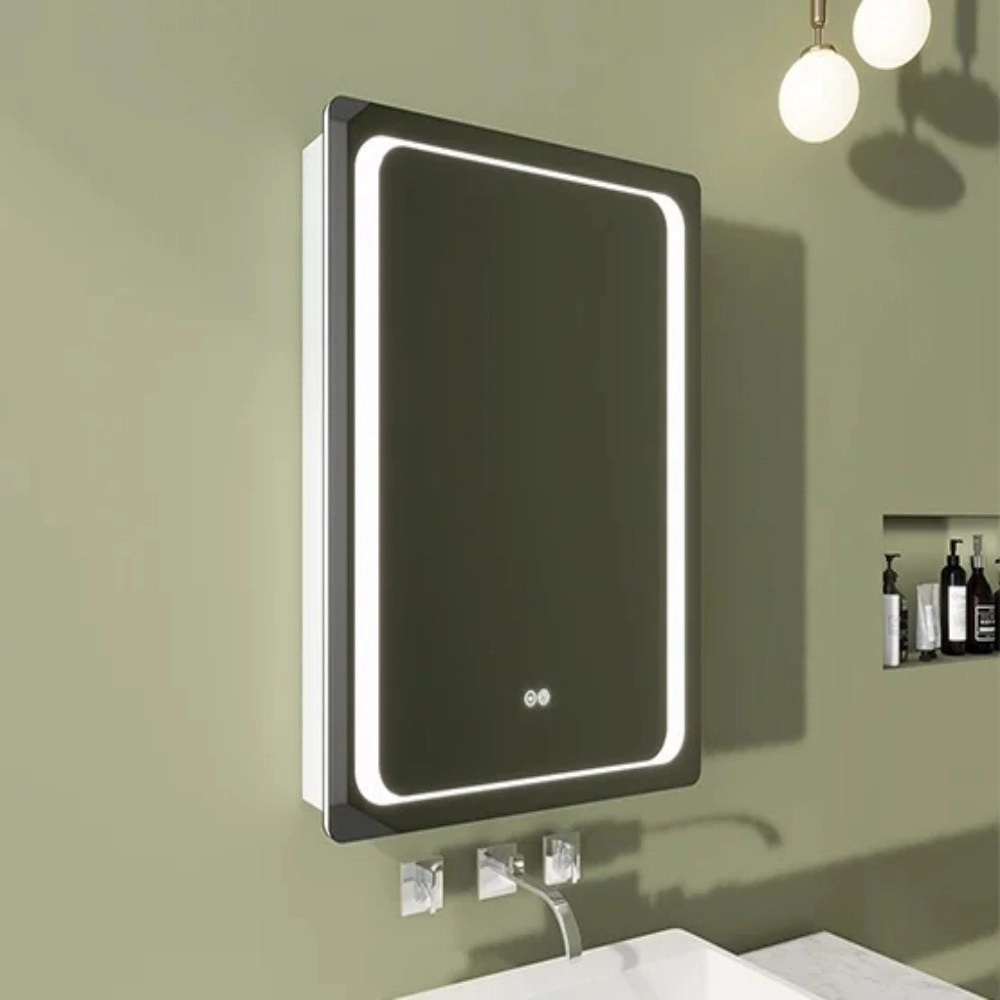
Aluminum vs Stainless Steel Medicine Cabinets at a Glance
Quick Comparison of Weight, Corrosion Resistance, Strength, and Maintenance
|
Moisture resistance |
Corrosion-resistant and does not form iron rust |
Strong resistance when the correct grade and finish are used |
|
Weight |
Lightweight and easier to position |
Heavier and may need stronger wall support |
|
Rigidity |
Suitable for most residential and hotel projects |
Greater rigidity for demanding settings |
|
Finishes |
Matte, silver, black, gray, painted, or customized |
Commonly brushed or polished |
|
Maintenance |
Easy to wipe; abrasives may damage the finish |
Durable, but fingerprints and water marks may be visible |
|
Best use |
Homes, hotels, large wall-mounted units, custom projects |
High-impact areas or projects requiring a stainless look |
Which Material Is Better for Most Bathroom Projects?
Practicality usually wins over Aluminum to the exclusion of stiffer, heavier materials; the lower weight of Aluminum manifests in reduced difficulty in handling, plus reduced wall load, for wide, multi-door, surface-mounted cabinets, amongst others. And whilst it isn’t ideal for damp rooms, provided the body, joints, coating, hardware and mirror backing are all properly designed, then Aluminum can perform well in these environments.
Stainless steel does not have to mean better just because it feels heavier. Many variables affect the performance of stainless, such as the grade of stainless, the finish, the fabrication, and how it will be used, i.e., will it be exposed to moisture or harsh cleaning chemicals. Buyers should compare the complete cabinet specification rather than the metal name alone.
How Do Aluminum and Stainless Steel Medicine Cabinets Perform?
Corrosion Resistance in Humid and Coastal Bathrooms
In bathrooms where there is a high risk of cabinets being exposed to splashes, condensation, cleaning products, and steam, aluminum does not suffer from red iron rust. It forms a natural oxide coating on the surface, and a suitable surface treatment can offer further protection as well as enhance the appearance of the aluminum.
While stainless steel is known for its corrosion resistance, it is not 100% foolproof. Chlorines, harsh chemicals, scratched finishes, and poor joint construction can cause unsightly staining and localised corrosion. Properties near the coast and busy hotels will require special attention to the type of cabinet used, the screws, hinges, surface finish, and ventilation.
For either metal, remove any standing water and try to keep the area somewhat dry. Avoid the use of steel wool or other abrasive cleaners. All interior surfaces, the rear panel, all fasteners, and all door hardware must be moisture-resistant.
Strength, Weight, and Wall-Mounting Requirements
Stainless steel generally offers greater rigidity, while aluminum provides adequate strength for a well-engineered medicine cabinet with less weight. This affects transportation, lifting, alignment, and fastening.
A recessed unit transfers most of its load to the surrounding framed opening. A surface-mounted cabinet, on the other hand, is a projection from the wall surface, and consequently, much of its load is transferred by anchors and by the mounting points.
1.Wall type and structural support
2.Cabinet dimensions and installed weight
3.Door number and opening direction
4.Shelf load and stored items
5.Recommended anchors and fixing positions
Surface Finish, Cleaning, and Long-Term Appearance
Finishes for Aluminum Fixtures can coordinate with other fixtures for the bathroom, such as faucets, tile, and lighting, as well as other items of bathroom hardware. A Matte finish is available for silver as well as black, grey, and other colors, which can be specially formulated to meet modern residential or hospitality interiors.
Stainless steel finishes give a very clean and professional appearance. A highly polished finish is more likely to show up fingerprints, soap marks, and water marks. A brushed finish may hide these marks a little better.
Clean the material with a soft cloth and a mild cleaner. Remove any leaking toiletries and do not use rough pads as they may scratch the protective finish.
When Should You Choose an Aluminum or Stainless Steel Medicine Cabinet?
When an Aluminum Medicine Cabinet Is the Better Choice
Aluminum is usually preferred when a project needs lower weight, moisture resistance, flexible finishes, or larger wall-mounted configurations. It is well suited to apartments, hotels, villas, and residential renovations using one-, two-, or three-door cabinets.
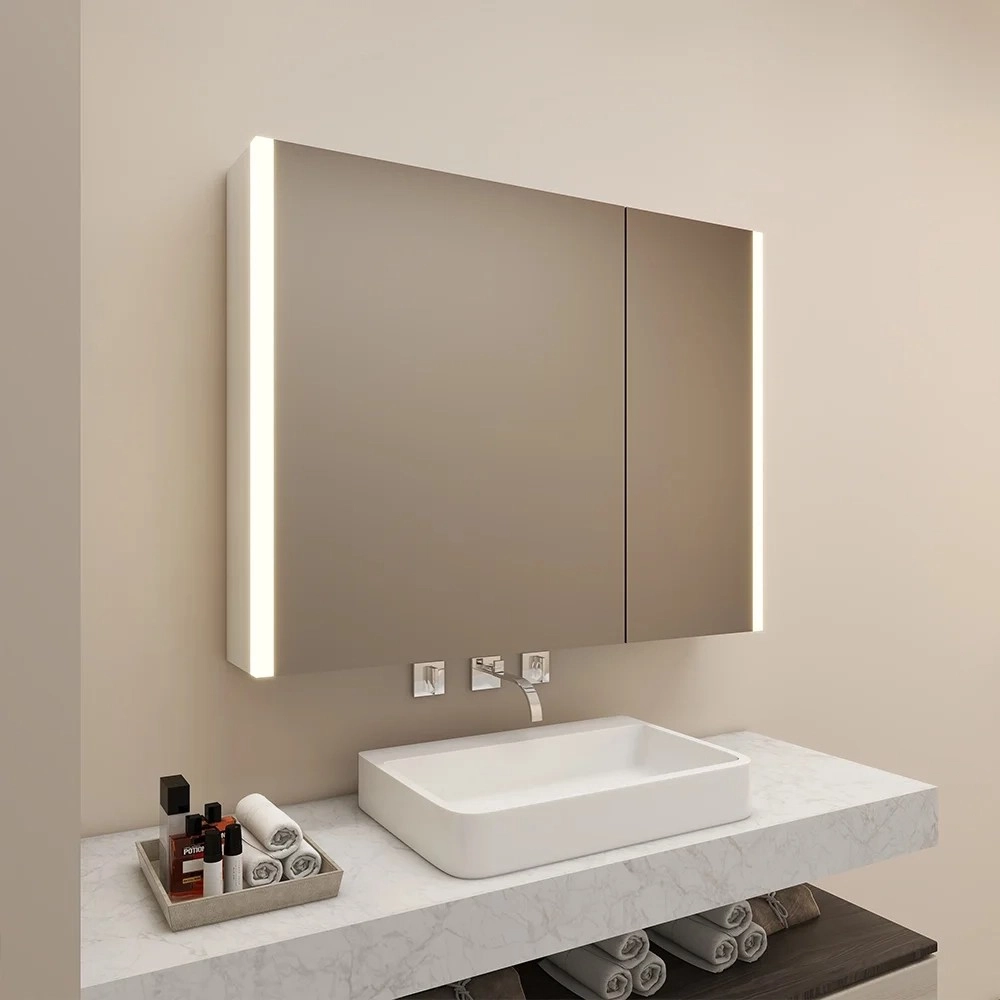
The Eternamir Bath EMI.952 DS surface-mount LED bathroom cabinet is an example of a well-engineered bathroom cabinet. It’s made from a rust-resistant matte silver aluminum body; the 3 mm double-sided copper-free mirror has a safety backing, and the soft-close hinges are of good quality. The two tempered-glass shelves are adjustable. The item is supplied 95% assembled, with the shelves placed, to make assembly easier. There are 1, 2, and 3 door options, plus various customized sizes, and several different finishes to suit wall widths and individual project styles.
This product also demonstrates why the buyers should assess the mirror safety, the interior mirror shelf, the hinge, the assembly, and the installation method in addition to the body metal.
When a Stainless Steel Medicine Cabinet Is the Better Choice
Stainless steel is suitable where the priority of a structure is rigidity and impact resistance. In addition, a structure made of stainless steel can have a brushed metal finish and match other fixtures found in commercial interiors made of stainless steel.
Weight and method of mounting must be taken into account by the buyer. A heavier unit will create more work for the installation team and may need additional support for the walls. The finish should also be inspected for fingerprints, water marks.
What Should Buyers Check Beyond the Cabinet Body Material?
Aluminum Alloy or Stainless Steel Grade and Surface Treatment
A quotation stating only “aluminum” or “stainless steel” is not detailed enough. Request confirmation from the supplier.
1.Material specification and cabinet thickness
2.Surface treatment and available finishes
3.Joint, edge, and corner construction
4.Corrosion-resistance requirements
5.Fastener and hinge materials
6.Color and texture sample approval
All dimensions, finishes, door gaps, and construction details should remain consistent for all custom orders in a batch after approval.
Hinges, Shelves, Mirror Backing, Seals, and Electrical Components
The body of the cabinet alone is not durable. Cheap hinges will rust, cabinet supports for shelves will fail, exposed edge of the mirror will deteriorate in humidity.
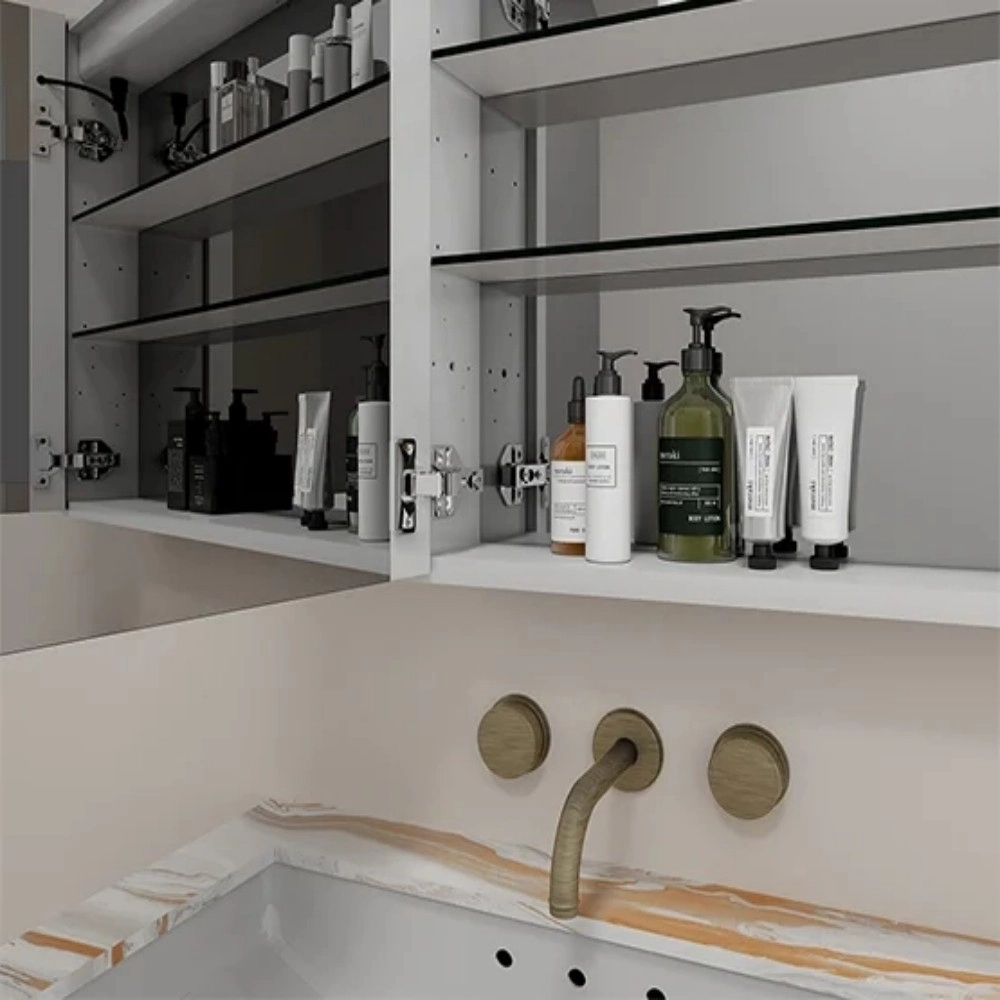
When selecting wall mirrors, check for suitable hinges, adjustable tempered-glass shelves, sufficient moisture-resistant screws, and protected mirror backing. For illuminated wall mirrors, check the driver, wiring, grounding, testing, and issue certificates for the destination market. Optional electrical functions should only be specified if they are suitable for the particular project and local system.
How Can You Specify the Right Medicine Cabinet for Your Project?
Checklist for Homeowners, Designers, and Contractors
Before ordering:
1.Measure the finished wall width, height, and depth.
2.Choose recessed or surface-mounted installation.
3.Check studs, wall construction, wiring, and nearby plumbing.
4.Check that the doors will open without hitting any fixtures.
5.Plan shelf spacing around actual bottles and toiletries.
6.Coordinate the finish with other bathroom metals.
7.Confirm cleaning and ventilation requirements.
A recessed medicine cabinet can save visual space in small rooms. A lightweight surface-mounted cabinet can be preferred in renovation projects with limited wall depth.
Checklist for Distributors, Hotel Projects, and Custom Orders
Commercial buyers should also agree on sample approval, batch consistency, packaging, mounting accessories, spare parts, certificates, and after-sales procedures.
Eternamir Bath is supporting hospitality and residential projects by providing OEM and ODM solutions. Products are being checked for quality by aging tests for electrical equipment, for corrosion resistance of mirrors and of hardware, and by a complete check-up before shipping. Lighting, high-voltage, and grounding tests are included where applicable. The most important thing for a project product is that it is performing well and consistently in all the rooms of a project, not only that it looks ok in the sample that has been presented.
A hotel could utilize one material and finish, but have the option to change the width of the cabinet, the number of doors and/or shelves, and the wiring in the different rooms. This allows the designer to have consistency with the design, but still take into consideration the installation of the different rooms.
FAQ
Q: Which is better, aluminum or stainless steel, for a bathroom medicine cabinet?
A: Lightweight metal for residential and hotel use. Moisture-resistant, flexible finish options. Stainless steel is preferable when greater rigidity, impact resistance, or a stainless appearance is specifically required.
Q: Is a stainless steel medicine cabinet better for a humid bathroom?
A: No. The performance of aluminum depends on grade, finish, fabrication, and maintenance. In addition to being suited for a damp bathroom, aluminum is easy to mount to a wall and can be made into a proper cabinet.
Q: Can an aluminum medicine cabinet be recessed or surface-mounted?
A: Yes. Aluminum cabinets can be installed using recessed, surface-mounted, or dual-mount installations. Depending on the depth of the wall, the size of the cabinet, the size of the cabinet in the wall, and the type of wiring used, one method of installation may be preferred over the others for aesthetic purposes.
Q: What should I look for when buying a custom aluminum medicine cabinet?
A: Material specification, thickness, surface finish, mirror back, hinges, shelves, fasteners, mounting system, electrical components, all relevant certificates, packaging, and any relevant tolerances for customization. Also check for sample approval on project orders and confirm that this batch is running to approval.
