



Scratch Resistant Makeup Mirror in 2026: Glass vs Acrylic Comparison
Time : October 28, 2026 View : 80
For everyday surface abrasions, a scratch resistant makeup mirror is likely to be best made with glass. Acrylic may be considered where low weight and high impact resistance are more important, but an uncoated face of such a material requires careful handling, as it is not scratch proof. What is the reflective surface/substrate of your proposed buying product? What coatings have been applied to it? What evidence exists to prove the finished mirror will withstand reasonable wear in 2026?
What does scratch resistant mean for a makeup mirror?
What to look at first
A mirror is an assembly consisting of a transparent front substrate, a reflective layer, a backing, possibly a front coating, and a supporting frame. A scratch on the face of a mirror is not necessarily the same as damage to the rear coating of the mirror. Claiming a mirror has a protective back-coating does not necessarily mean the front of the mirror will be abrasion-resistant.
What to verify next
Inquire about the surface used for testing and how it was done. A method of abrasion, the load applied, number of cycles, and outcome will provide a basis to the claim. Words like durable or premium do not indicate these details. The hard coating affects the performance of the acrylic material.
Chrome stand pictures cannot reveal the mirror face; what the pictures show of a brass, steel, or aluminum stand corresponds with the fittings. You must be explicitly informed of glass or acrylic by the seller in order to be able to compare these display materials fairly. Testing a display model with a key has the potential to cause serious damage and is in any case not a good test for cleaning.
How do glass and acrylic compare in everyday use?
Both glass and acrylic surfaces can be damaged by grit, but in normal light usage the uncoated glass surface tends to tolerate light contact better than acrylic. Acrylic is generally lighter and more impact tolerant than glass, but can chip or break on impact. Note that impact resistance and scratch resistance describe different failure modes and should not be used as the opposite to prove a point.
A fixed vanity mirror is all about having a good, clean reflection. A portable mirror, on the other hand, has different considerations, such as weight, how it will be supported, and how it will travel. A cover or even a padded case may be more valuable than an unsubstantiated durability claim.
|
Buying consideration |
Glass mirror |
Acrylic mirror |
|
Surface abrasion |
Usually the stronger starting point |
Check whether an abrasion-resistant coating is specified |
|
Handling weight |
Typically heavier at comparable size |
Typically lighter |
|
Impact or dropping |
Can chip or fracture |
Generally more impact tolerant |
|
Reflection consistency |
Check finished optical quality |
Check thickness, support, and distortion |
|
Cleaner choice |
Follow mirror and backing instructions |
Confirm compatibility with acrylic and coatings |
These comparisons are qualitative. They are not a ranking of every finished product, and they do not prove a specific mirror’s test result.
Why do coatings and reflection quality change the decision?
Note that some of the mirrored plastic sheets are supplied with abrasion-resistant front coatings and with protective rear coatings to preserve the reflective surface during handling. These are two separate functions and must be asked for specifically in relation to the makeup mirror offered, as opposed to the sheet supplier’s claim being transferred to a totally separate finished article.
View the mirror at the distance at which you will be working. Move from side to side slightly and check that straight lines appear straight. For magnification, check the viewing distance before trying to make sense of the reflection. An enlarged face viewed from too far away is of little use.
Even when a face has no scratches, glare and reflections can obscure detail. Test the mirror in the room’s likely lighting conditions, not just under the special spotlight that a showroom uses to display a product. A clean and supported face at a useful angle is more valuable than a face that appears to be flawless but is unsupported by the rest of the mirror.
Which makeup mirror configuration suits your routine?
Eternamir Bath offers mirror and mirror-cabinet solutions for homes and for the hospitality industry. Our selection of makeup mirrors is offered as countertop or wall-mounted options and can be compared by viewing size, magnification, body, and controls before reading about scratch-resistance.
Round Countertop 3x-5x Makeup Mirror has an 8-inch round face and is double-faced. One side is 1x, and the other side is magnified. The solid brass body is available in chrome or gold finish. Please confirm the correct magnification for the mirror you have ordered, as the body-only information does not detail the mirror itself (i.e., reflective surface and scratch resistance).
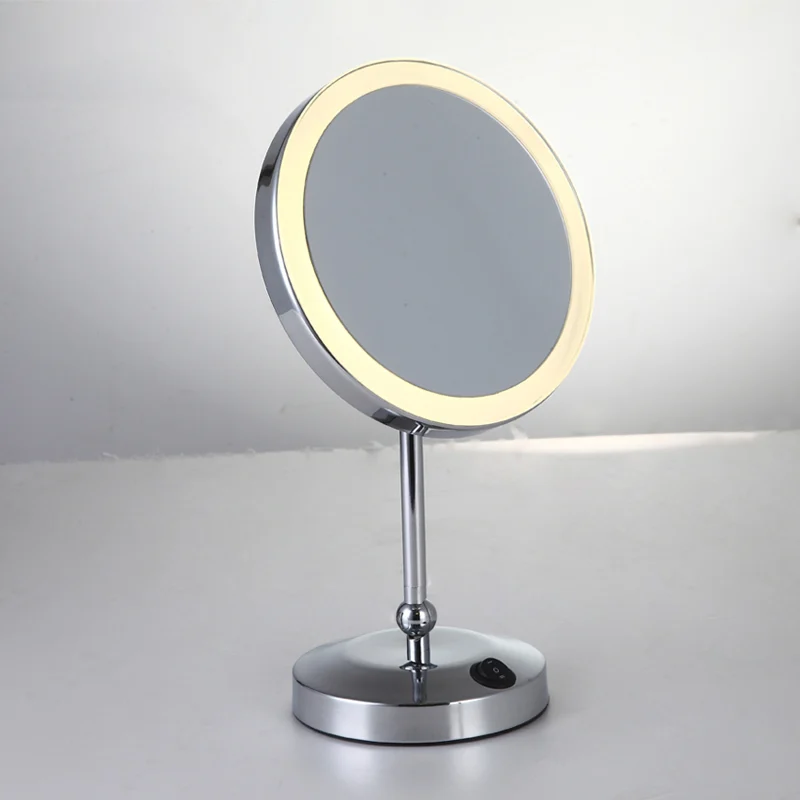
Round Countertop Lighted 10x Makeup Mirror: This makeup mirror features an 8” round viewing face, a sturdy base, internal lighting, and a rocker switch. The body of the mirror is made of brass and is available in chrome or gold finish. This mirror is perfect for makeup, skin care, and general grooming. The named 10x version of this mirror provides additional magnification for closer examination. Other magnification ratios are available. Verify with the seller for available options when ordering.
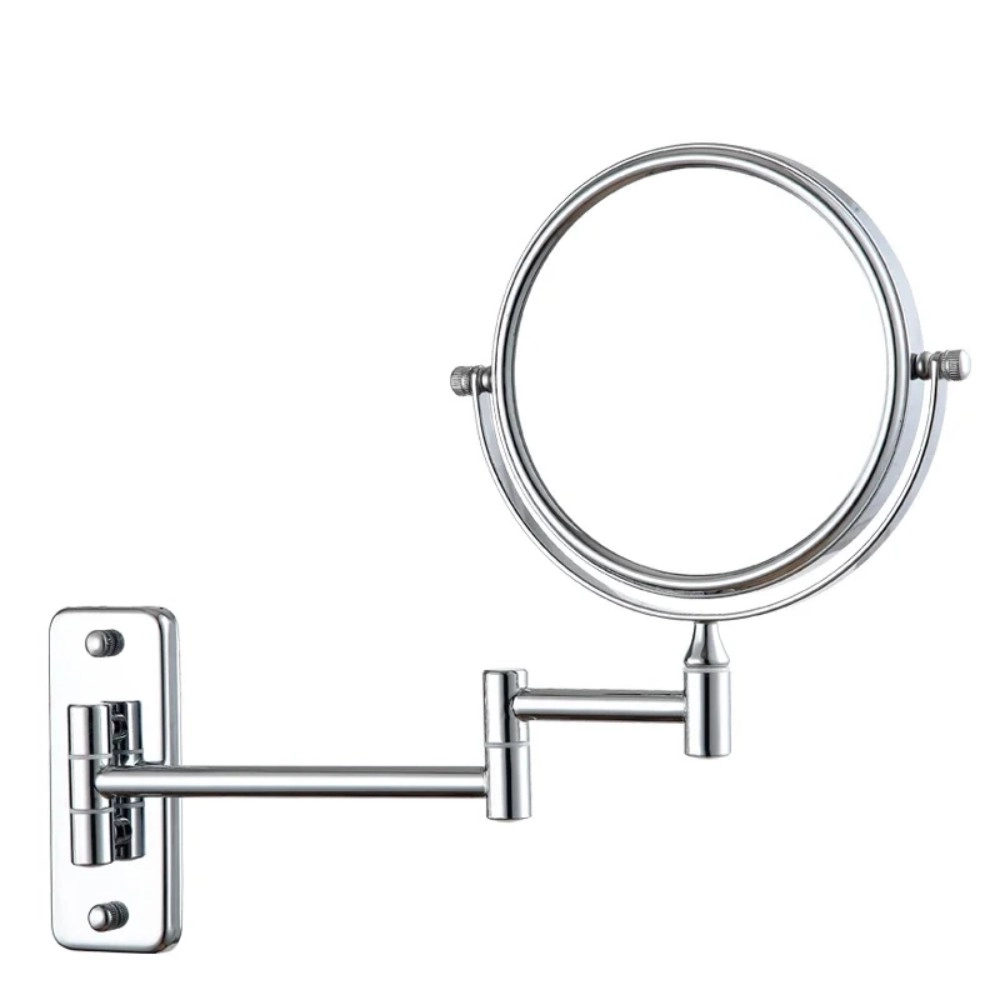
The Lighted Wall Mounted Makeup Mirror with Magnification & Extendable Arm features a two-sided mirror with 1x and 5x magnification and allows for tilting and swiveling. The mirror has integrated front lighting and is a wall-mounted, hardwired makeup mirror. The product description notes that the mirror is made of glass, but does not provide details regarding the abrasion test or scratch-resistance rating. This helps to keep product selection honest, as known features are useful without inventing an unverified surface claim.
How can you reduce scratches during cleaning and storage?
Dust loosely adhering material gently before wiping with a clean, soft cloth and a cleaning solution recommended for the substrate, coating, and backing. A household glass cleaner is not necessarily suitable for acrylic. Always spray the solution onto the cloth where permitted by the manufacturer’s instructions and avoid getting liquid into edges or into electrical outlets.
Try to avoid using scouring pads, rough powders or a soiled cloth with sand or cosmetic residue. Pack travel mirrors in their protective cases, away from keys and other tools. Check that the folding cover does not rub against the face when packed.
If any markings exist, see whether they can be removed and, if so, how the manufacturer advises removing such markings. Don’t use toothpaste, metal polish, or any plastic repair products unless authorized by the manufacturer for the completed mirror. Products meant for use on bare material might damage the coatings and even alter the reflective qualities.
When buying, ask for all these specifications in writing. Select glass if scratch resistance is the main issue; choose acrylic if portability and possible impacts justify the effort. Treat both decisions as made on completed product criteria.
FAQ
Q: Is a glass makeup mirror scratch-proof?
A: No. While glass surfaces are generally strong, they can be scratched by abrasive particles or with the wrong tools. The normal surface advantages of glass do not mean that it can be cleaned with just any old means.
Q: Is acrylic a good choice for a scratch resistant makeup mirror?
A: We might consider this when low weight or low impact tolerance is a requirement. Also, please check for any abrasion-resistant coating on the finished product and for instructions on how to clean it.
Q: Does a brass makeup mirror have a brass reflective face?
A: Usually the term describes the body or support. It does not identify the reflective substrate; ask whether the mirror face is glass, acrylic, or another specified material.
Q: Can glass cleaner be used on an acrylic makeup mirror?
A cleaner will only be suitable for use if the manufacturer has approved its use for the acrylic and its coatings. An apparently soft cloth can be severely detrimental to surfaces if used with an unsuitable cleaner.
Q: Does magnification prove better scratch resistance in a makeup mirror?
A: No. Magnification refers to the viewing of specimens. Scratch resistance refers to the surface and coating and would need to be shown separately.
