



One Mirrored Medicine Cabinet Design Across Different Hotel Room Types
Time : September 03, 2026 View : 52
Hotel bathrooms rarely use the same layout in every room. A compact king room, accessible room, extended-stay room, and suite can have different vanity widths, wall depths, lighting needs, storage expectations, and service routines. The practical question is whether the cabinet design must change each time. In most projects, a mirrored medicine cabinet works as one coordinated family with controlled variations. That approach keeps procurement, installation, guest experience, and maintenance consistent without ignoring the differences between room categories.
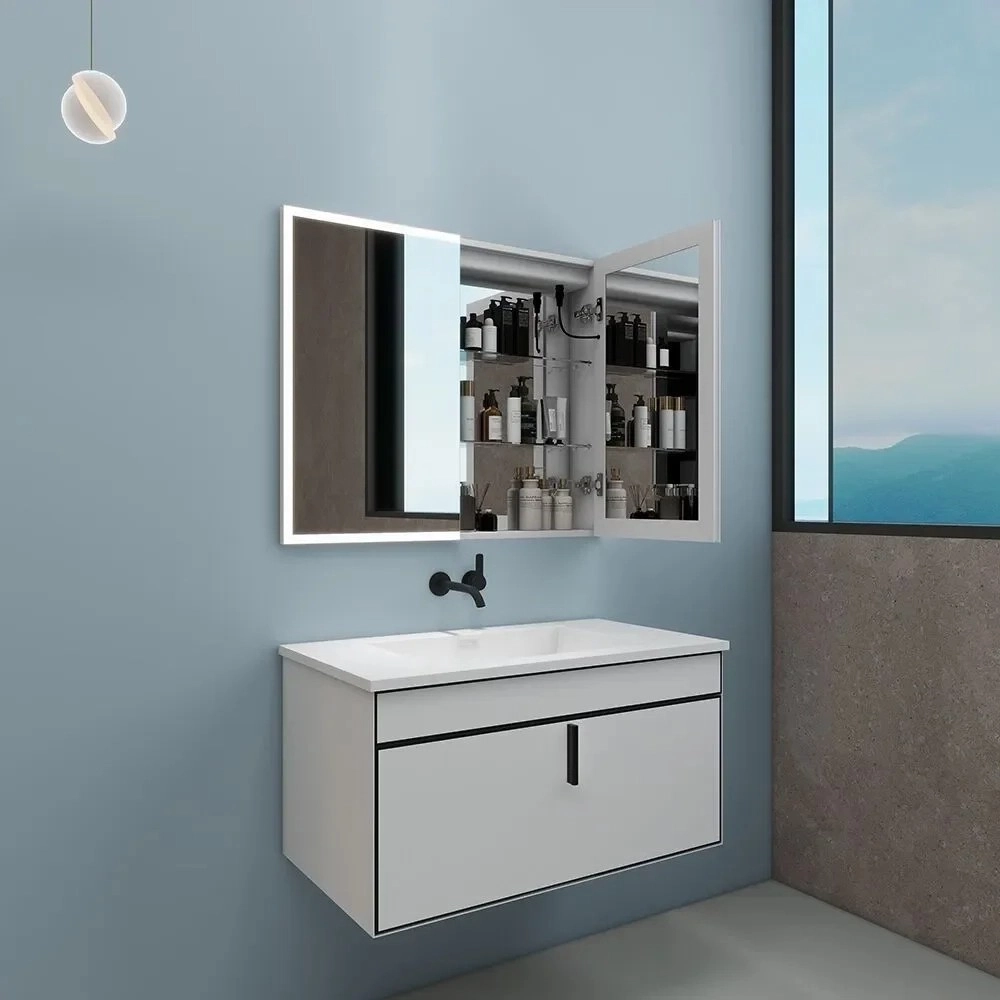
Define One Cabinet Family Before Changing Sizes
Standardization does not mean forcing the same box into every bathroom. It means fixing the visible style, finish direction, door behavior, electrical logic, and certification documentation request before room-type details are adjusted. Width, mounting method, shelf layout, and optional functions can then change without making the property look inconsistent.
This approach gives the design team a cleaner specification and gives teams fewer parts to manage. Installers read a repeatable drawing set, and maintenance teams can understand the cabinet family faster. If faucet height, door clearance, wall depth, lighting glare, and guest storage are not checked, the same mistake repeats across many rooms.
Lock the Shared Specification
Start with width and height rules, cabinet depth, wall projection, mirror edge treatment, door count options, and the allowed mounting method. A single-door mirrored medicine cabinet may suit a narrow vanity, while two- or three-door layouts can support wider vanities.
For coordinated hotel programs, Eternamir Bath can support custom sizes and custom colors. Our medicine cabinet configurations can include surface, recessed, or surface-and-recessed mounting, and we offer one-, two-, and three-door options. That lets the project team scale one visual direction across different vanity widths.
Internal storage should also feel predictable. Adjustable tempered glass shelves help guests adjust according to their own habits, while soft-close hinges support frequent guest use. Our medicine cabinet options include a rust-resistant matte silver aluminum cabinet body, and our quality checks cover corrosion resistance across the scratch resistant makeup mirror, cabinet bottom, hardware, and screws.
Adapt the Same Design by Room Type
After the base family is fixed, the room schedule should define controlled variations. The goal is not identical bathrooms; it is a clear reason for every difference.
|
Room Type |
Adjustable Detail |
|
Compact or standard room |
Narrower width, simpler shelves, surface or recessed mounting |
|
Accessible or family room |
Reach, door clearance, control position, shelf spacing |
|
Extended-stay room |
More storage, outlet option, clearer item separation |
|
Suite or premium room |
Wider cabinet, multi-door layout, added lighting or clock option |
Compact and Standard Rooms
Compact rooms need discipline. The cabinet should not overpower the vanity, and the door should not block normal movement at the sink. A slimmer width, single-door layout, or recessed installation can work well, but only after the wall cavity, faucet projection, mirror height, and side clearance are confirmed.
Standard rooms usually need a balanced cabinet: enough hidden storage to reduce vanity clutter, but not so much depth that the wall feels bulky. The specification should connect vanity width, faucet height, door swing, and lighting position.
Accessible, Family, Extended-Stay, and Suite Rooms
Accessible and family rooms need clearer rules for reach, clearance, and shelf flexibility. The designer should check whether a guest can open the cabinet door easily, see the mirror at the expected position, and whether items are securely placed on the shelf.
Extended-stay rooms often benefit from larger storage and electrical convenience. If the cabinet includes an outlet socket, hidden wires, an LED digital clock, or other powered functions, the requirement should appear in the room schedule.
Keep Electrical and Installation Rules Repeatable
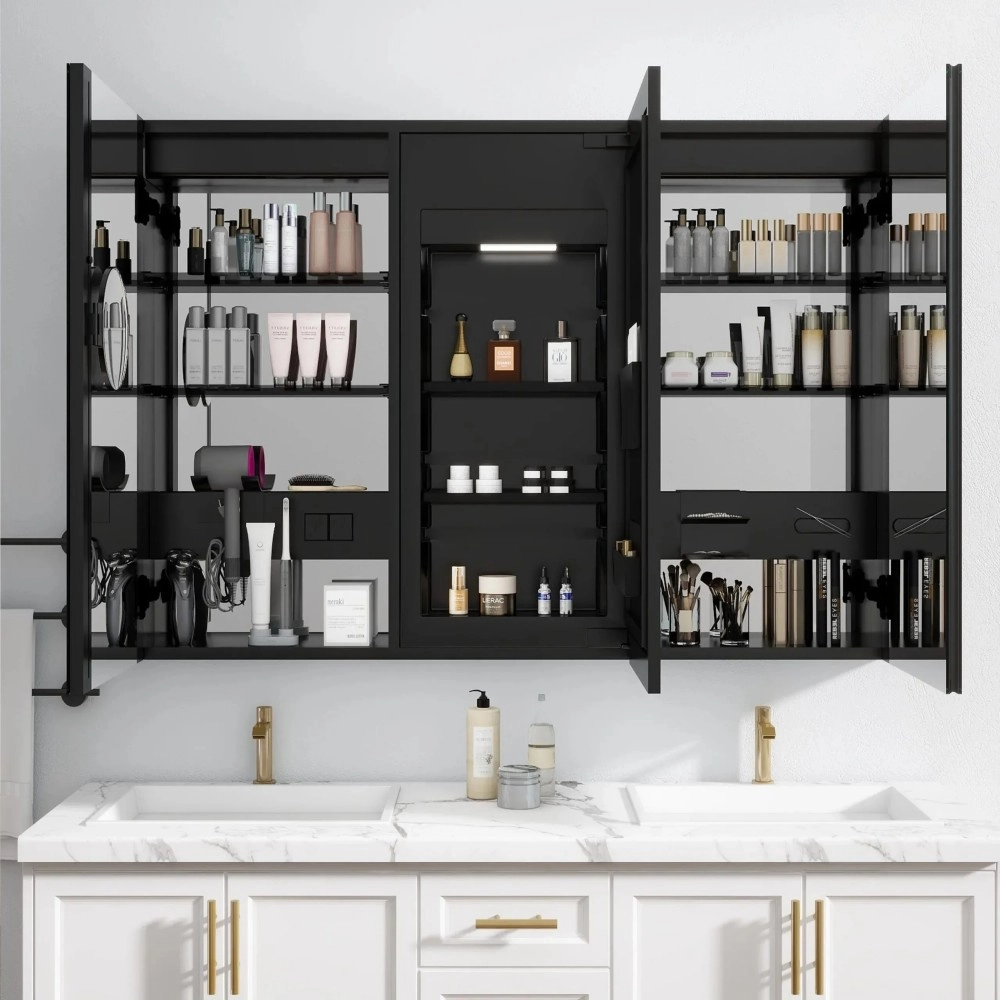
Lighting and Power
For lighted cabinets, specify the LED type, driver requirement, switch position, color rendering expectation, dimming logic when needed, and whether the lighting connects to a separate room circuit. Our medicine cabinet lighting uses flexible 2835 LED strips with CRI 90+. Each batch of LED strips is tested with an integrating sphere against high requirements, and acquired electronic parts such as LED strips, LED drivers, and touch sensor switches receive at least 72 hours of aging testing.
Mounting, Rough Opening, and Service Access
Surface mounting, recessed mounting, and dual-use configurations affect wall preparation, rough openings, trim appearance, and repair access. A recessed cabinet can look cleaner, but it needs the correct cavity depth and coordination with studs, plumbing, and electrical runs. A surface-mounted cabinet can suit retrofit or tight-wall conditions, but projection must be controlled.
To reduce installation variation, the submittal should include mounting drawings, finished-wall references, wiring entry points, glass shelf installation, and packaging labels by room type.
Approve the Family and the Variation Schedule Together
The final approval should not be a simple yes or no on a showroom sample. The project team should approve the base cabinet family and the variation schedule together. Check finish, mirror clarity, hinge operation, shelf layout, lighting, socket position, mounting details, carton protection, replacement-part logic, and room-type labels before production.
As experienced medicine cabinet manufacturers for OEM and ODM hotel work, we help align custom size, custom color, mounting configuration, lighting, and electrical options with the approved specification. Our completed products include cETL, ETL, cUL, UL, CE, SAA, UKCA, and RoHS certificates.
One cabinet family works when the approval package is strict. The buyer should know which details are fixed, which details are adjustable, who approves changes, and how each room type is labeled for production and installation. That is how a coordinated design supports multiple hotel bathrooms without becoming a confusing list of unrelated products.
FAQ
Q: Can one mirrored medicine cabinet design work across different hotel room types?
A: Yes. One design can work when the specification separates fixed elements from adjustable elements.
Q: What should a mirrored medicine cabinet schedule include for hotel bathrooms?
A: A mirrored medicine cabinet schedule should include room type, width, height, mounting method, rough opening notes, door count, door swing, shelf layout, lighting, controls, outlet requirements, finish, certificate review, packaging label, and installation responsibility. It should also identify standard options and upgrades.
Q: Is a recessed mirrored medicine cabinet better than a surface-mounted cabinet for hotels?
A: Recessed installation is often better when the wall cavity, studs, wiring, and plumbing allow it, because the cabinet can look more integrated. Surface mounting can be better for retrofit work or walls that cannot accept a recess. The right choice depends on wall conditions and clearance.
Q: How should a mirrored medicine cabinet be adapted for compact hotel rooms?
A: For compact rooms, keep the cabinet visually light, control projection, and confirm door clearance near side walls, faucets, towel bars, and shower screens. A narrower width, single-door layout, or recessed mounting can work well if the cabinet still provides useful storage.
Q: What electrical details matter in a lighted mirrored medicine cabinet specification, and can we specify a bathroom cabinet with razor socket?
A: The specification should define LED type, driver requirements, switch position, dimming or control logic, wiring path, outlet option (such as a bathroom cabinet with razor socket), anti-fog or clock option if used, and market certification requirements. It should also state how electrical parts will be tested.
