



Medicine Cabinet Storage Guide for a Clutter-Free Bathroom
Time : August 20, 2026 View : 16
A crowded countertop is not always an organization problem. The cabinet may be too shallow, poorly divided, or difficult to access. This guide covers size, mounting, layout, materials, and lighting.
Why Medicine Cabinet Organization Begins with Cabinet Design
The Hidden Problems Caused by the Wrong Cabinet Layout
Poor storage often starts with a mismatch between the cabinet and the user. Fixed shelves may not hold tall bottles, deep compartments can hide small containers, and doors may hit a side wall or light fixture. In shared bathrooms, one large door can also block access.
The result is predictable: products move onto the counter and cleaning takes longer. The cabinet needs suitable depth, flexible shelving, practical door movement, and a mirror area that fits the vanity.
Identify What the Medicine Cabinet Needs to Store
Before comparing models, divide the contents into four groups:
1.Daily essentials, such as toothpaste and facial cleanser
2.Tall bottles, including lotion and shaving products
3.Small items, such as cotton swabs and first-aid supplies
4.Occasional-use products for upper or lower shelves
This inventory shows whether the bathroom needs compact zones, tall compartments, or more doors. It also prevents buyers from selecting a cabinet based only on exterior dimensions.
Step 1: Plan the Right Medicine Cabinet Size and Mounting Type
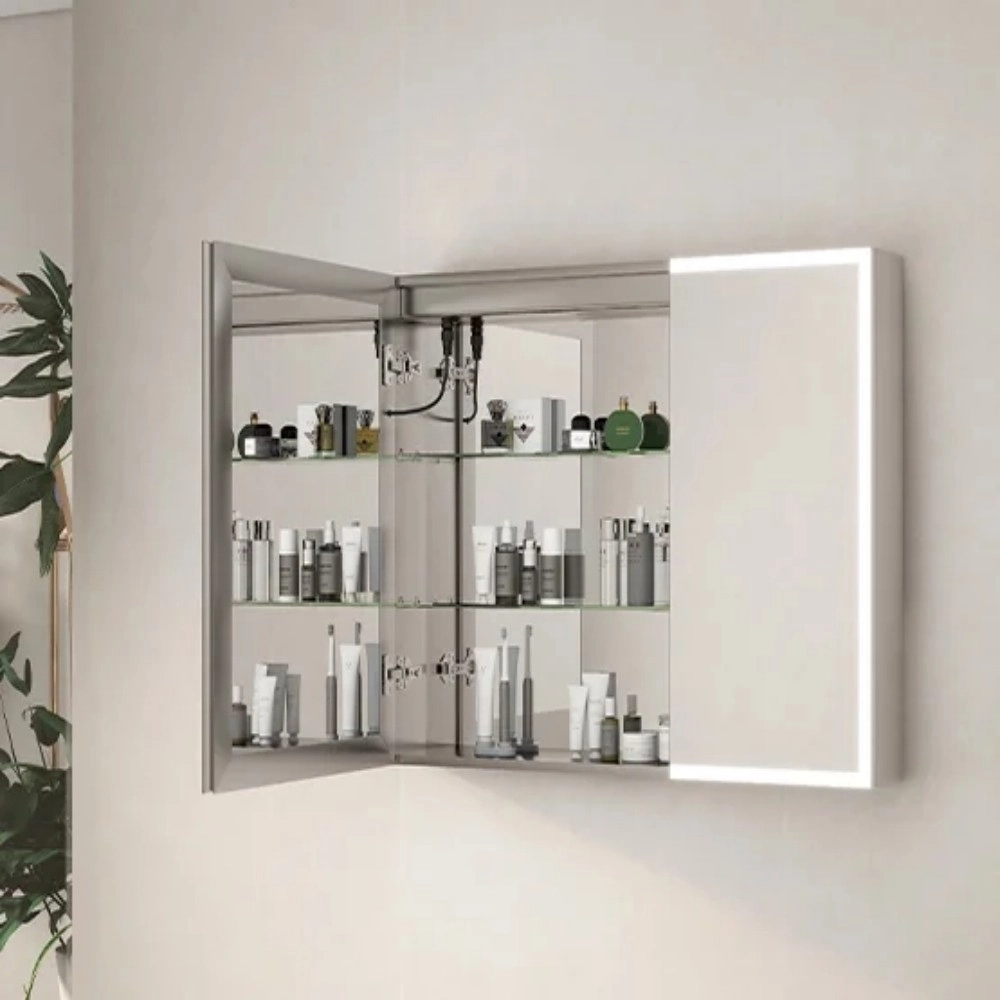
Measure the Vanity, Wall Space, and Door Clearance
Start with the vanity width, then measure the usable wall area above it. Check faucets, backsplashes, lights, side walls, and nearby doors. The cabinet should look balanced without interfering with fixtures.
Use this sequence:
1.Confirm the vanity centerline
2.Record maximum cabinet width and height
3.Check wall depth for recessed installation
4.Verify door swing and user clearance
5.Mark the electrical point for a lighted model
For commercial projects, measure each room type because wall depth and power locations may vary.
Compare Surface-Mount, Recessed, and Dual-Mount Medicine Cabinets
|
Mounting type |
Best suited for |
Main consideration |
|
Surface mount |
Renovations |
Projects farther from the wall |
|
Recessed mount |
New construction |
Requires a suitable wall cavity |
|
Dual mount |
Mixed site conditions |
Installation details must be confirmed |
Surface-mounted cabinets are usually easier to add during renovation. Recessed models create a built-in appearance, but studs, wiring, plumbing, and wall depth must be checked. Dual-mount designs offer more flexibility.
At Eternamir Bath, we offer surface-mounted, recessed, and two-way installation medicine cabinets. Selected products use rust-resistant aluminum bodies, copper-free mirrored doors with safety backing, soft-close hinges, and adjustable tempered glass shelves. These details support flexible installation and practical storage.
Step 2: Build a Medicine Cabinet Storage Layout That Works
Match the Door Configuration to the Bathroom and Its Users
A single door suits compact vanities and individual use. Two doors can divide storage between users or separate daily items from occasional products. Three-door designs provide wider mirror coverage and several access points for larger bathrooms.
Unequal door widths can also help. A wider section may support the main viewing area, while a narrower side door offers quick access to daily items. In hotels and apartments, intuitive door movement helps users understand the cabinet immediately.
Use Adjustable Shelves and Vertical Storage Zones
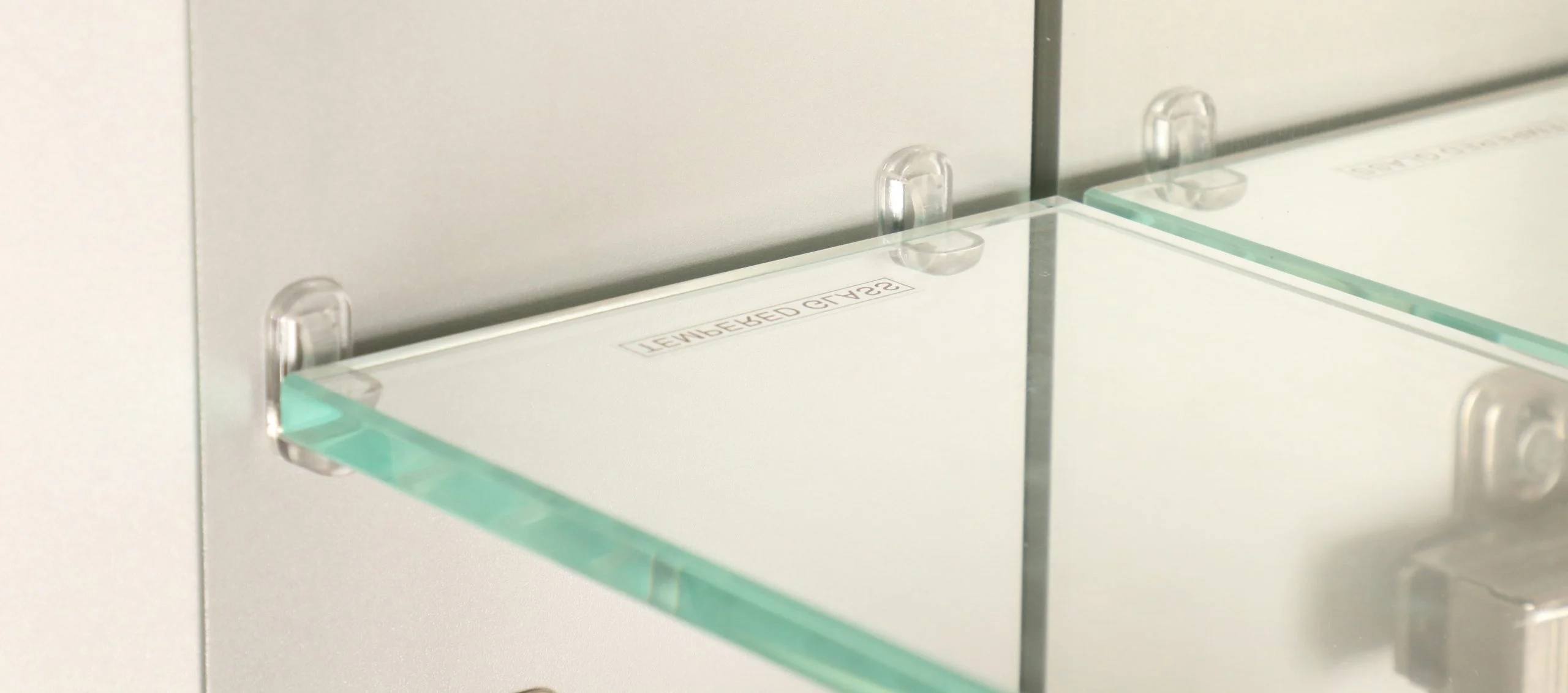
Adjustable shelves allow one interior to hold tall bottles and small containers. Tempered glass is easy to clean and lets light pass through the cabinet. Shelf clips should hold the glass securely while allowing simple height changes.
For a family bathroom, one shelf per user can reduce mixing. In hospitality settings, a simpler layout may be easier for housekeeping teams to inspect and clean.
Keep Frequently Used Items Visible and Accessible
Place daily products at eye level and occasional items above or below. Keep small objects in shallow trays so they do not disappear behind bottles. Avoid filling every shelf; open space makes items easier to see and return.
Consider a two-person apartment with a wide vanity but one narrow cabinet compartment. Most toiletries stayed on the counter. A two-door cabinet with adjustable shelves created separate left and right zones. Better access and shelf planning solved the problem, not simply greater volume.
Step 3: Choose Materials and Features for Bathroom Conditions
Compare Aluminum, Stainless Steel, Steel, and Wood Cabinets
Bathroom cabinets face humidity, splashes, cleaning products, and frequent door movement.
|
Material |
Main strength |
Key consideration |
|
Aluminum |
Lightweight and corrosion resistant |
Suits modern finishes |
|
Stainless steel |
Durable and solid |
Usually heavier |
|
Steel |
Strong and cost flexible |
Finish protection matters |
|
Wood |
Warm appearance |
Needs moisture-resistant construction |
At Eternamir Bath, we match materials, finishes, dimensions, and structures to project needs. Our process includes full inspection before shipment. Electrical accessories undergo aging tests, while mirror, metal, and hardware components are sampled for corrosion resistance. This matters in multi-unit projects where consistency is essential.
Decide Which Lighting and Smart Features Add Real Value
Lighting should improve visibility without making the cabinet unnecessarily complex. Relevant specifications include brightness, color temperature, color rendering, dimming method, and interior illumination.
For selected lighted medicine cabinets, we offer CRI 90+ LED options and color temperatures including 2700K, 3000K, 4000K, and 6000K. Depending on the model, options may include touch dimming, 0–10V dimming, TRIAC dimming, defogging, night lights, outlets, or digital clocks.
Not every feature belongs in every project. A hotel may prioritize reliable hardwiring, while a homeowner may value dimming or a defogger. The specification should follow the user scenario and local electrical requirements.
From Bathroom Storage Needs to a Project-Ready Specification
A Medicine Cabinet Checklist for Developers, Hotels, and Distributors
Before requesting a quotation, prepare:
1.Cabinet width, height, and depth
2.Installation method
3.Cabinet material and finish
4.Door count and proportions
5.Shelf quantity and adjustment range
6.Lighting and electrical requirements
7.Destination-market certifications
8.Quantity, packaging, and delivery schedule
This information reduces revisions and reveals technical conflicts early. A wide three-door unit may need different hinge planning, wiring, and packaging from a compact single-door model.
How Eternamir Bath Supports Custom Medicine Cabinet Projects
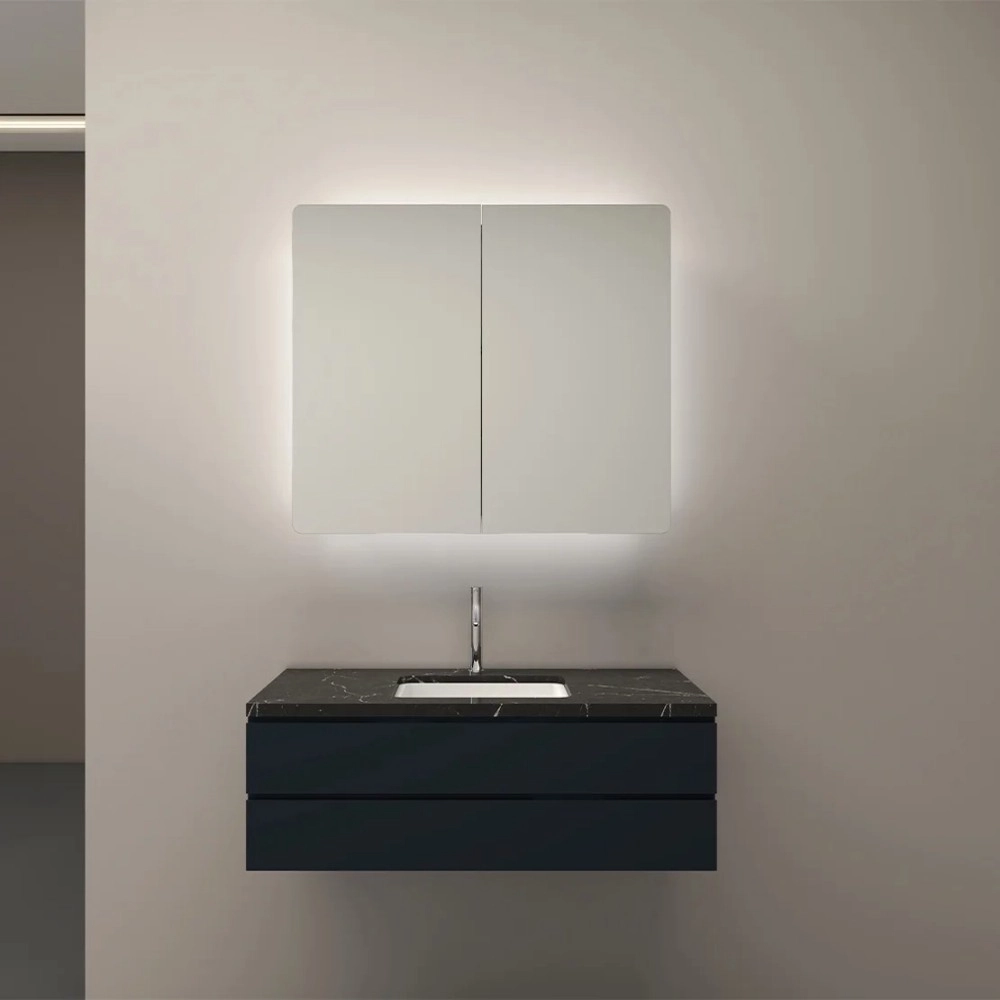
At Eternamir Bath, we provide cabinet solutions for residential and hospitality applications. Our range includes single-door, two-door, and three-door designs, together with surface-mounted, recessed, and dual-mount structures. Custom sizes, finishes, wiring methods, and selected options can be discussed according to model and order requirements.
We have manufactured bathroom mirror and mirror cabinet products since 2009. Our two factories have a stated monthly capacity of over 8,000 mirror products.
Send us drawings, dimensions, installation type, quantity, target market, and electrical specifications. We can then review the structure, configuration, certification needs, and production details.
FAQ
Q: What is the best way to organize a medicine cabinet?
A: Group items by use, place daily products at eye level, adjust shelves for different bottle heights, and keep small items in shallow containers.
Q: What size medicine cabinet should I choose for my bathroom?
A: Choose a size proportionate to the vanity and available wall area. Check the height, depth, and door clearance. Also, consider the lighting position and your actual storage needs.
Q: Is a recessed medicine cabinet better than a surface mount medicine cabinet?
A: Neither is always better. Recessed cabinets need a suitable wall cavity, while surface-mounted models are easier where opening the wall is impractical. Dual-mount cabinets add flexibility.
Q: What features should a lighted medicine cabinet with mirror include?
A: Useful features may include even LED illumination, suitable color temperature, high color rendering, adjustable shelves, safe electrical components, and compatible dimming.
Q: How do I choose a custom medicine cabinet manufacturer for a hotel or residential project?
A: Carefully review their customization options and materials. Check their quality control and certifications. Look at production capacity, samples, and packaging. Finally, consider warranty terms and their similar project experience.
