



Medicine Cabinet Guide: Mounting, Materials & Quality
Time : August 20, 2026 View : 80
A medicine cabinet is used every day, yet many buyers judge it mainly by size, mirror shape, and price. In a bathroom, that is not enough. Steam, temperature changes, repeated door movement, and electrical parts can expose weak construction quickly.
A sound buying process asks whether the cabinet suits the wall, handles humidity, uses durable mirror and hardware components, and meets the electrical needs of the destination market.
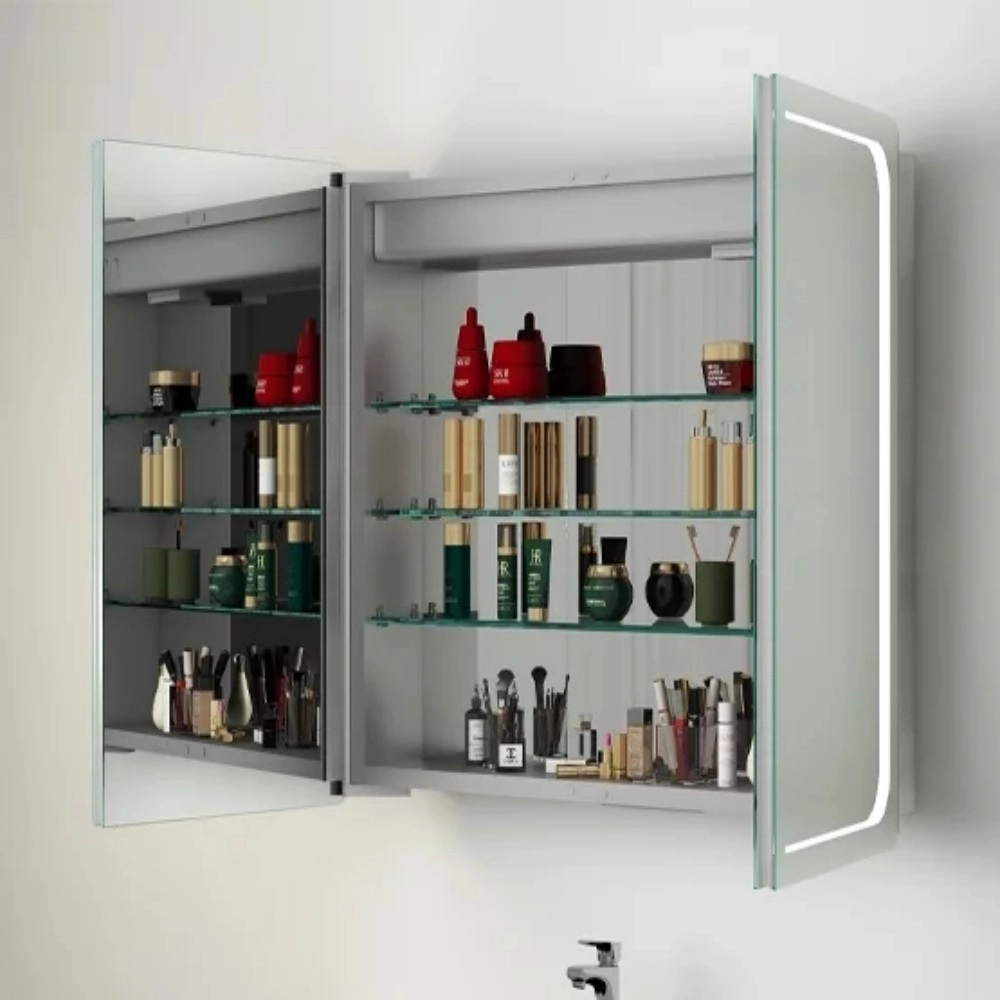
Why Medicine Cabinet Quality Matters in a Bathroom
How Moisture and Daily Use Expose Weak Construction
Steam reaches mirror edges, hinges, screws, shelf supports, and the cabinet body. If protective finishes are incomplete, corrosion may begin in hidden areas before it becomes visible.
Daily use adds mechanical stress. Doors open repeatedly, shelves carry uneven loads, and mirrored panels may close with force. A moisture-resistant cabinet therefore needs stable hinges, secure shelf clips, protected mirror backing, corrosion-resistant materials, and accurate assembly.
The Hidden Costs of Choosing a Low-Quality Medicine Cabinet
A low purchase price can create higher costs after installation. Typical problems include:
1.Mirror-edge deterioration.
2.Rust around screws, hinges, or corners.
3.Doors that no longer align.
4.Loose shelves and damaged clips.
5.LED or driver failure.
6.Replacement and wall-repair labor.
Consider a 100-room hotel renovation. If ten cabinets fail after handover, the contractor may face replacement units, repeat visits, room downtime, logistics costs, and complaints. For volume buyers, consistency matters as much as one good sample.
How to Identify a High-Quality Medicine Cabinet
Cabinet Materials and Corrosion Resistance
Material choice should reflect humidity, design, weight, and budget.
|
Material |
Main strength |
What to verify |
|
Aluminum |
Lightweight and corrosion-resistant |
Wall thickness, joints, finish |
|
Stainless steel |
Strong with a premium appearance |
Grade, weight, fingerprints |
|
Coated steel |
Stable and cost-effective |
Edge protection, coating coverage |
|
Sealed wood |
Warm residential look |
Sealing, ventilation, moisture protection |
Processing matters as much as the base material. Ask how edges, fasteners, hinges, and the cabinet body are protected. Salt-spray testing is useful because corrosion often starts at hardware points.
Mirror Quality, Safety Backing, and Edge Protection
Check mirror thickness, edge finishing, backing protection, distortion, and humidity resistance. Copper-free construction can help reduce edge problems when combined with proper sealing.
Safety backing helps hold fragments together if glass breaks. For a mirrored door, the bond between the glass and supporting structure should also be load-tested.
Hinges, Shelves, Door Alignment, and Interior Hardware
Inspect the door gaps from several angles. Hinges should move smoothly, and doors should remain aligned through their opening range. Soft-close hinges reduce impact but must match the door weight.
Adjustable tempered-glass shelves make storage more flexible. Check that shelf clips are secure and easy to reposition. Interior wiring should be protected so installation or service does not interfere with storage.
LED Performance and Electrical Safety
For an LED medicine cabinet with mirror, brightness alone does not define quality. CRI affects color accuracy, while color temperature changes the atmosphere. CRI 90+ supports detailed grooming.
At Eternamir Bath, relevant cabinet models offer LED options from 2700K to 6000K and CRI 90+ configurations. LED strips, drivers, and touch switches undergo at least 72 hours of aging testing. Finished products also receive lighting, grounding, and high-voltage inspections before shipment. These controls help us support projects that require repeatable performance, not just a long feature list.
Recessed vs Surface Mount Medicine Cabinets
When a Recessed Medicine Cabinet Is the Better Choice
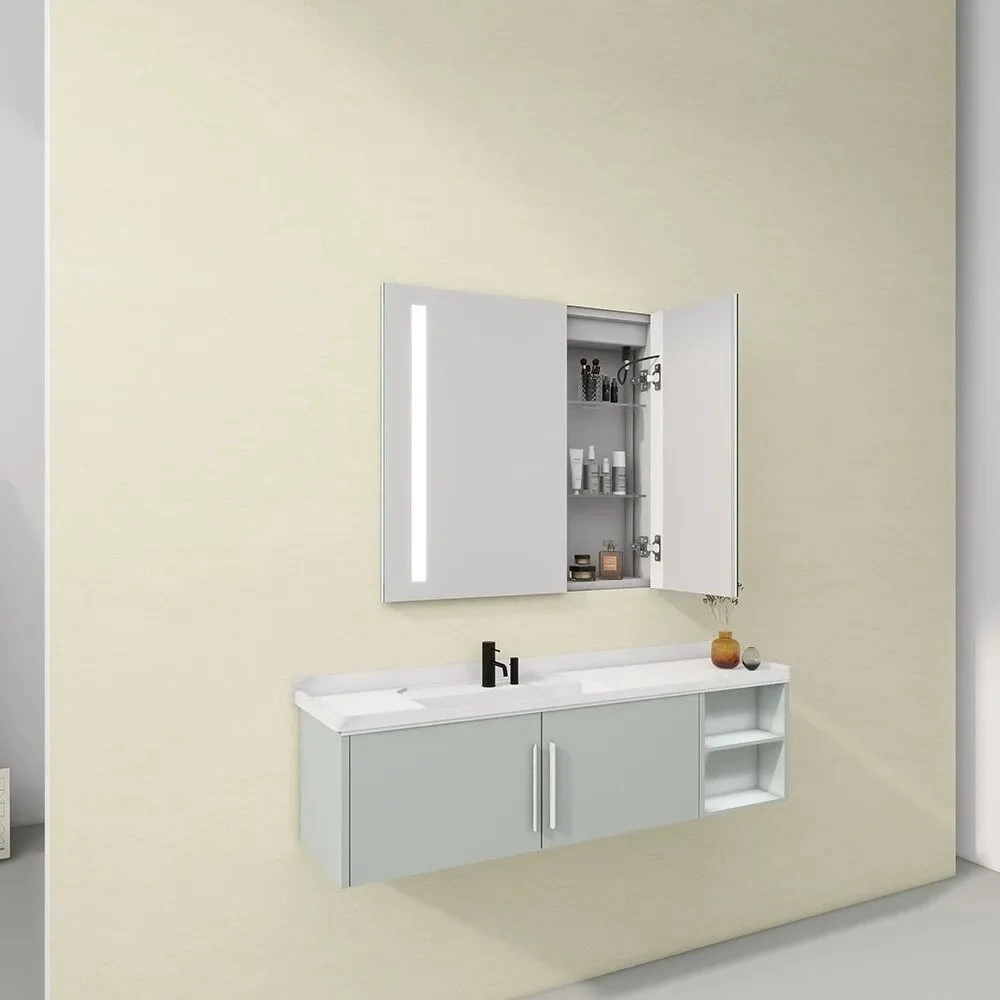
A recessed cabinet fits partly inside the wall, creating a built-in appearance with less projection above the vanity. It works well in new construction or major renovation, where framing can be planned early.
Before ordering, confirm the rough opening, wall depth, stud spacing, pipes, cables, and door clearance.
When a Surface Mount Medicine Cabinet Makes More Sense
A surface mount medicine cabinet attaches directly to the finished wall. It suits retrofit projects, concrete walls, shallow cavities, or schedules that do not allow major wall work.
It may provide more usable depth. Because the sides remain visible, check joint quality, finish consistency, and proportions.
Why a Surface and Recessed Mount Medicine Cabinet Offers More Flexibility
Dual-mount construction reduces specification risk when wall conditions vary. Distributors can also cover more applications without stocking separate versions.
The Eternamir Bath EMI.842 DS supports surface or recessed installation. Its listed configuration includes double-sided 3 mm copper-free mirrors with safety backing, a rust-resistant matte silver aluminum body, soft-close hinges, a 30,000-hour LED driver, UL hardwire availability, and suitability for damp bathroom locations. This shows how installation flexibility can be combined with material and electrical requirements.
Which Medicine Cabinet Features Are Worth Paying For?
Essential Features vs Optional Smart Features
Separate construction essentials from convenience features before comparing prices.
|
Priority |
Examples |
Buying approach |
|
Essential |
Corrosion resistance, secure backing, stable hinges, adjustable shelves |
Confirm for every project |
|
Useful |
Dimming, selectable color temperature, defogger, interior light, outlet |
Match to user needs |
|
Project-specific |
Night light, digital clock, Bluetooth speaker, custom finish |
Add when justified |
More functions do not automatically create a better cabinet. Each electrical feature adds wiring, testing, and service requirements. Hotels may prefer simple controls, while premium homes may justify a defogger, touch dimming, or an outlet.
How to Evaluate a Medicine Cabinet Manufacturer for Custom or Bulk Orders
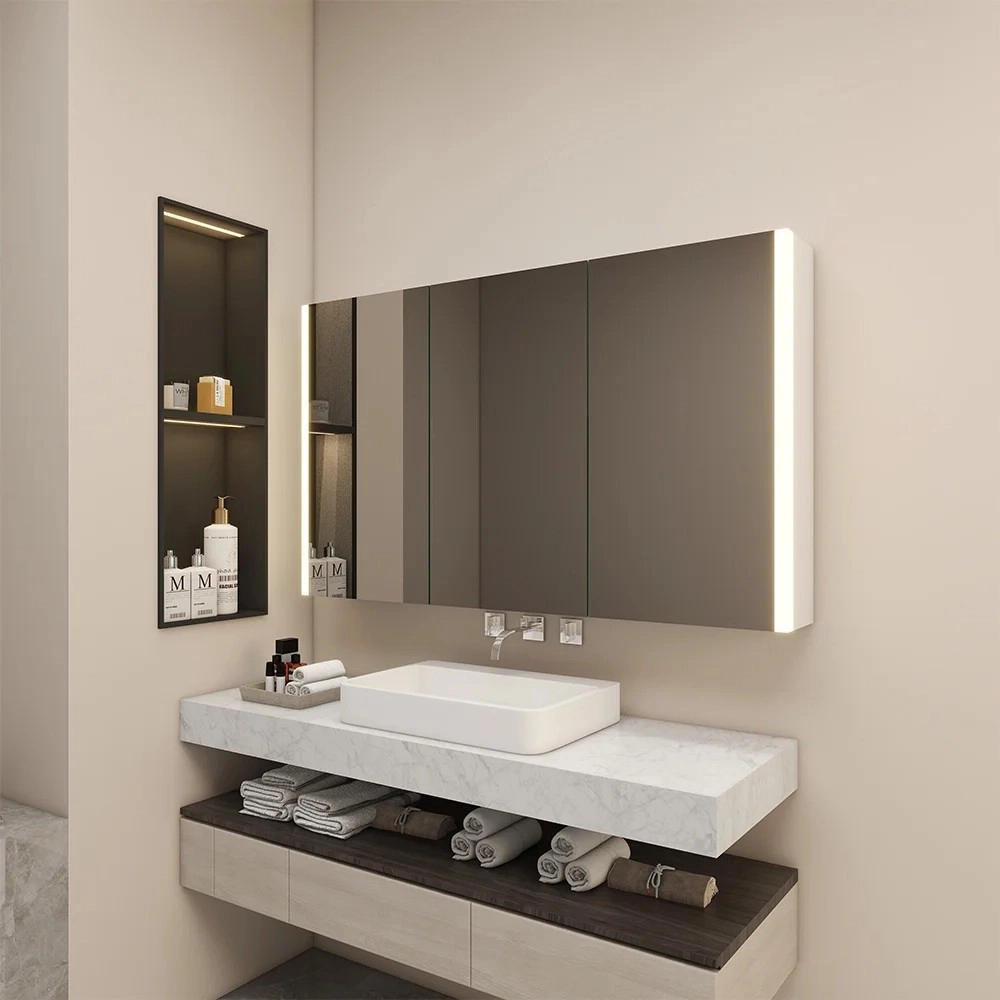
Quality Control, Certification, Customization, and Project Support
B2B buyers should review the manufacturing process as carefully as the sample. A supplier evaluation should cover:
1.Material and component specifications.
2.Electrical aging and safety tests.
3.Corrosion testing for mirrors and hardware.
4.Full inspection before shipment.
5.Certification for the target market.
6.Custom sizes, finishes, door layouts, and wiring.
7.Warranty and replacement-part support.
8.Capacity and lead-time planning.
Eternamir Bath has manufactured illuminated glass and medicine cabinets since 2009. We manage two distinct facilities encompassing an 8,000-square-meter fabrication zone. Our declared monthly output exceeds 8,000 mirrored items. Our routine involves complete outbound auditing, dampness trials, and strict adhesive weight evaluations. We operate under ISO 9001:2015 management frameworks. Additionally, we facilitate OEM and ODM ventures and provide unique measurements, varied paint choices, and specific setups tailored for domestic and commercial environments.
For an accurate quotation, provide the installation method, drawings, voltage, certification target, quantity, finish, lighting requirements, and delivery schedule.
FAQ
Q: Is a recessed or surface-mount medicine cabinet better?
A: A recessed model suits walls with a suitable cavity and creates a flush look. A surface-mounted model is usually easier for renovations. The right choice depends on wall structure, storage depth, budget, and schedule.
Q: What is the best material for a bathroom medicine cabinet?
A: Aluminum is lightweight and corrosion-resistant, stainless steel is strong, coated steel can offer good value, and sealed wood provides a warmer look. Choose according to humidity, finish quality, weight, and maintenance needs.
Q: Is an LED medicine cabinet with mirror worth it?
A: It can be when lighting, storage, and mirror functions are all needed. Compare CRI, color temperature, driver quality, dimming, damp-location suitability, and certification rather than brightness alone.
