



Identifying Common Issues in Low-Quality Medicine Cabinets
Time : September 10, 2026 View : 64
Medicine cabinets can look acceptable in product photos and still create problems after installation. A door that sits unevenly, a mirror that develops dark edges, a shelf that cannot hold everyday bottles, or a light that fails early usually points to a specification or quality-control gap rather than one isolated cosmetic defect. Buyers need to identify the symptom, understand the likely cause, and ask for evidence before approving a cabinet.
The useful comparison is not simply low price versus high price. It is whether materials, components, assembly, testing, and documentation match the bathroom environment and intended use.
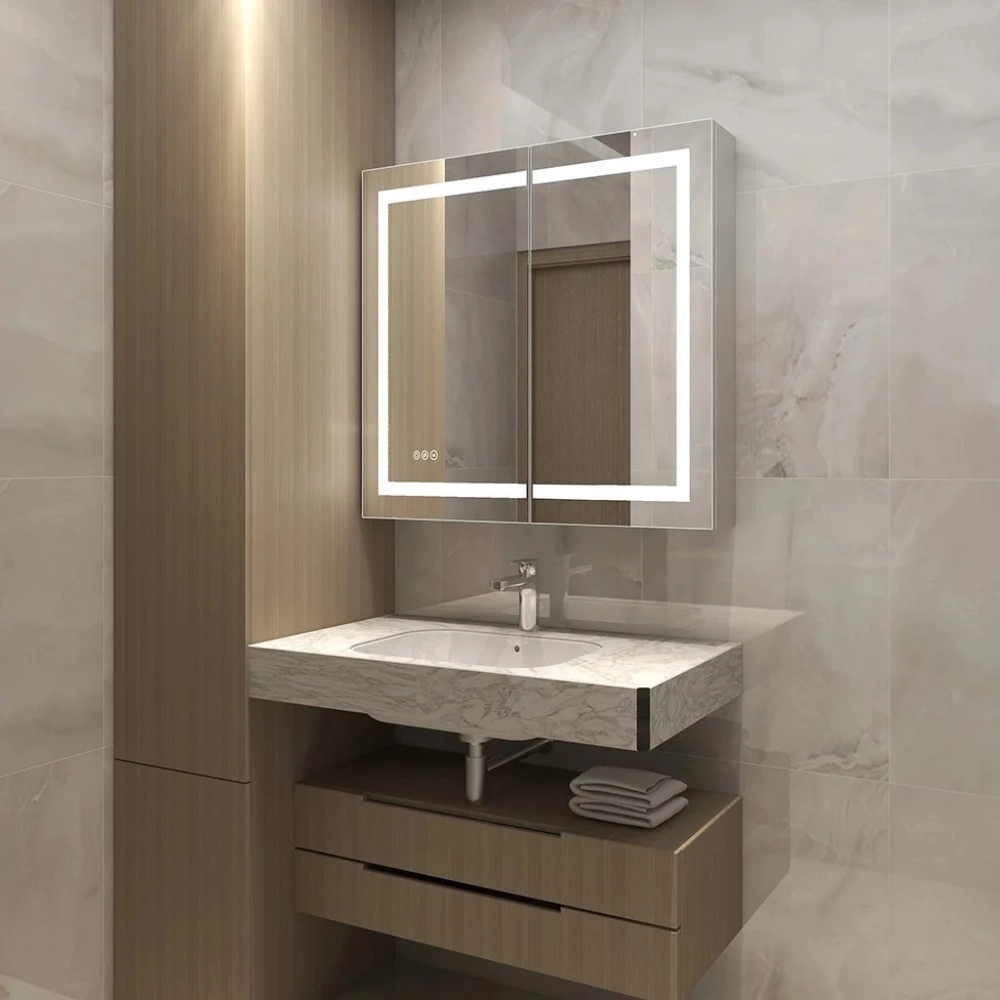
What Are the First Signs of a Low-Quality Medicine Cabinet?
Uneven Doors and Difficult Opening
A door that rubs the frame, fails to close evenly, or needs excessive force is an early warning. It may result from weak hinges, inaccurate drilling, a cabinet that is not square, or an installation wall that was not checked properly.
Before approval, open and close every door. Check frame gaps, soft-close action, hinge type, and installation tolerances.
Dark Edges, Cloudy Areas, or Backing Damage
Dark lines around a mirror, cloudy patches, or peeling at the rear surface can indicate moisture reaching the reflective layer. The risk is higher when edges are unprotected, the backing is damaged during cutting, or unsuitable cleaning chemicals are used. A sample inspection should include the perimeter and rear treatment rather than only the front reflection.
Ask how the edge is finished and sealed, whether the backing suits humid rooms, and how the mirror is protected during assembly and shipping. Review the cabinet body, sealant, and bottom panel.
Which Construction Problems Affect Daily Use?
Weak Cabinet Bodies and Corroding Hardware
A cabinet body or fastener that reacts poorly to bathroom humidity can create staining, loose connections, and service problems. Surface finish alone does not prove corrosion resistance. Buyers should identify the cabinet material, finish, hardware, and screws.
Eternamir Bath medicine cabinets use a rust-resistant matte silver aluminum body. We also use regular material sampling to check corrosion resistance across the mirror, cabinet bottom, hardware, and screws. Those checks address more than the visible frame; they include parts that can affect long-term assembly stability.
Shelves That Waste Space or Fail Under Normal Loads
Fixed shelves with unsuitable spacing make different bottle heights difficult to store. Thin or poorly supported shelves may flex, chip, or move during use.
Confirm shelf material, adjustment positions, edge treatment, support points, and the intended load before purchase. Our medicine cabinets use adjustable tempered glass shelves, allowing the interior to be arranged around the items that users actually store.
Poor Door Alignment and Hardware Fatigue
Frequent opening puts repeated stress on hinges and mounting points. Low-quality hardware may loosen, produce noise, or allow the door to drop out of alignment. A door that closes hard can also transmit impact to the mirror and cabinet frame.
Review hinge load, adjustment range, soft-close behavior, screw engagement, and replacement availability. For multi-door layouts, test adjacent-door interaction and opening clearance.
What Problems Are Common in Lighted Medicine Cabinets?
Flicker, Uneven Light, or Early LED Failure
Lighting problems often come from the driver, LED strip, switch, wiring, or heat management. Flicker, inconsistent brightness, delayed activation, or early failure should therefore be investigated at the component level. A general statement such as “LED included” is not a sufficient electrical specification.
Ask for the LED type, driver, control method, color-rendering requirement, wiring route, and applicable certification for the exact configuration. Confirm incoming-component and final-unit testing.
At Eternamir Bath, acquired LED strips, LED drivers, and touch sensor switches receive at least 72 hours of aging testing. Each LED strip batch is checked with an integrating sphere against customization requirements.
Unsafe or Inconvenient Electrical Features
The locations and electrical requirements for features like a shaver socket inside bathroom cabinet, concealed wiring, digital clocks, or touch switches must be determined prior to production. Poorly placed sockets interfere with storage, while unclear wiring complicates installation and service.
Confirm outlet position, wire exit, switch location, installation responsibility, and test documents. Also, surface, recessed, and surface-and-recessed mounting create different wall and wiring conditions.
How Can Buyers Check Quality Before Ordering from Medicine Cabinets Manufacturers?
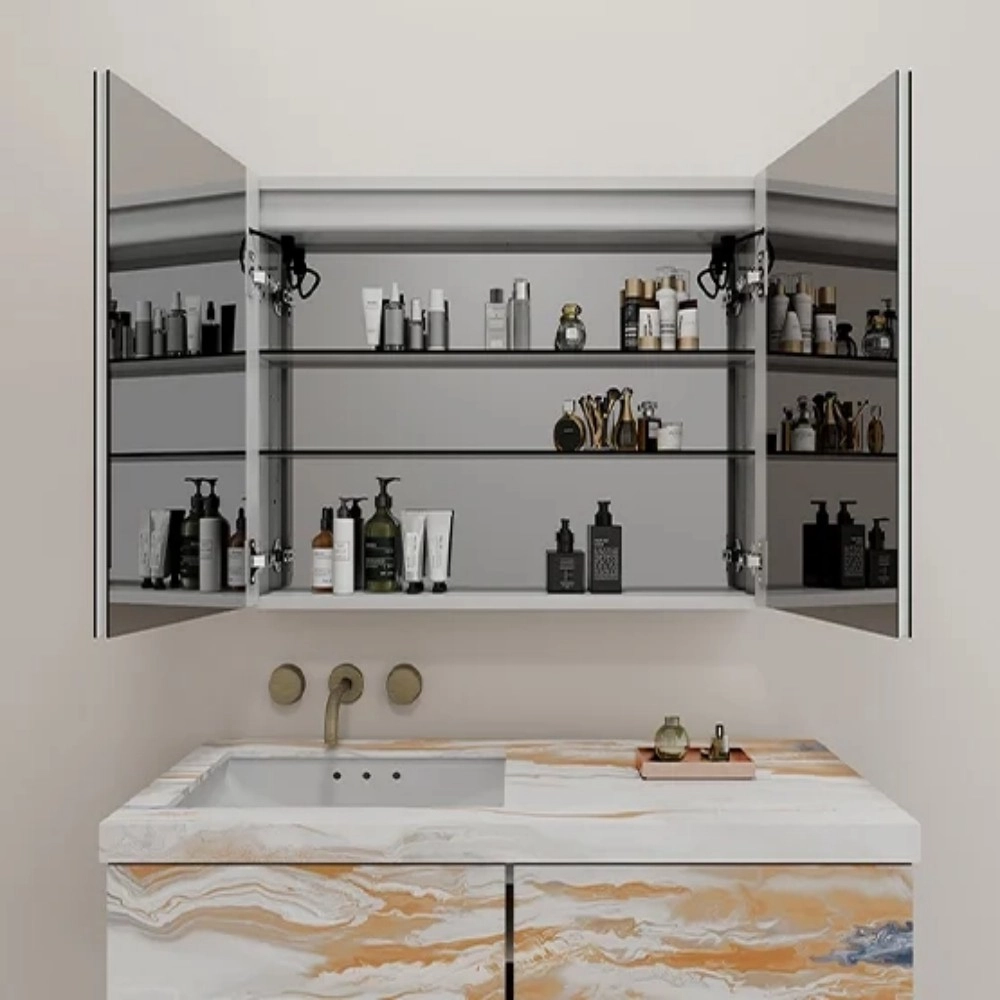
Use the following as a pre-approval review. Each item should be answered in writing or demonstrated on a representative sample.
|
Check area |
Warning sign |
Evidence to request |
|
Cabinet body |
Unknown metal, staining, or exposed fasteners |
Material and finish specification, corrosion checks |
|
Mirror |
Dark edges, cloudy areas, or unprotected perimeter |
Mirror construction, edge treatment, sample photos |
|
Doors and hinges |
Rubbing, uneven gaps, hard closing, or drop |
Hinge details, adjustment range, opening test |
|
Shelves |
Fixed spacing, chips, flexing, or poor support |
Tempered-glass specification, load and adjustment details |
|
Lighting |
Flicker, delay, uneven brightness, or heat |
LED, driver, switch, wiring, and test documents |
|
Installation |
Unclear rough opening, projection, or wire route |
Dimensioned drawing, mounting instructions, responsibilities |
|
Delivery |
Damage, missing parts, or excessive site assembly |
Packaging plan, parts list, assembly status, warranty |
The sample should represent the final mirror, cabinet body, hinges, shelves, lighting, sealants, and finish. Request the inspection plan, packaging method, corrective-action process, and replacement-part procedure before an order.
How Does Eternamir Bath Reduce These Medicine Cabinet Risks?
We review the finished medicine cabinet as one assembly. Our medicine cabinet configurations include one-, two-, and three-door layouts, adjustable tempered glass shelves, soft-close hinges, surface mounting, recessed mounting, and surface-and-recessed options. Custom sizes and colors are also available.
Our quality system is certified to ISO 9001:2015. A medicine cabinet can also arrive 95% assembled, with customers only needing to install the glass shelves on applicable models. For physical goods, we provide a limited three-year warranty from product completion for defects in material or workmanship under normal use and maintenance.
Buyers still need to approve drawings, samples, electrical requirements, installation conditions, and care instructions. These details provide a clearer basis for checking readiness for the intended bathroom.
FAQ
Q: What are the most common problems with low-quality medicine cabinets?
A: Common problems include uneven doors, weak hinges, dark mirror edges, corroding parts, unusable shelf spacing, flickering LEDs, unclear wiring, and incomplete installation documents. Buyers should inspect the complete assembly and request material, component, testing, mounting, packaging, and warranty information.
Q: How can I check the quality of medicine cabinets before buying?
A: Request a production-equivalent sample and test doors, hinges, mirror edges, shelves, lighting, controls, and mounting points. Review the drawing, material specification, electrical documents, inspection plan, packaging, replacement-part process, and warranty. Written answers and production components should match the approved sample.
Q: Why do mirrors on medicine cabinets develop dark edges?
A: Dark edges can occur when moisture reaches the reflective layer through an exposed or damaged perimeter, or when unsuitable cleaners attack the backing. Ask how the mirror is processed, sealed, and protected. Review the cabinet bottom, sealant, drainage, installation, and cleaning instructions as well.
Q: What should I check in lighted medicine cabinets?
A: Check the LED type, driver, switch, wiring route, outlet position, heat management, control behavior, and certification for the exact configuration. Ask how electronic parts and the assembled cabinet are tested. Confirm who coordinates the bathroom circuit and installation before approving production.
Q: Are Eternamir Bath medicine cabinets suitable for custom projects?
A: We offer custom sizes and colors, one-, two-, and three-door configurations, adjustable tempered glass shelves, soft-close hinges, and surface, recessed, or surface-and-recessed mounting options. We can review the cabinet dimensions, wall condition, lighting, electrical features, finish, sample, and inspection points against the project requirements before production approval.
