



How to Install a Recessed Medicine Cabinet
Time : July 30, 2026 View : 165
A recessed medicine cabinet creates a clean, built-in appearance while keeping toiletries close to the vanity. Yet installation involves more than cutting drywall. You must first confirm the wall depth, framing, door clearance, rough opening dimensions, and electrical requirements.
General guides on how to install a medicine cabinet may overlook lighting, an outlet, defogging, or Bluetooth functions. Always follow the exact model instructions and local codes.
What Is a Recessed-Mount Medicine Cabinet—and Is It Right for Your Wall?
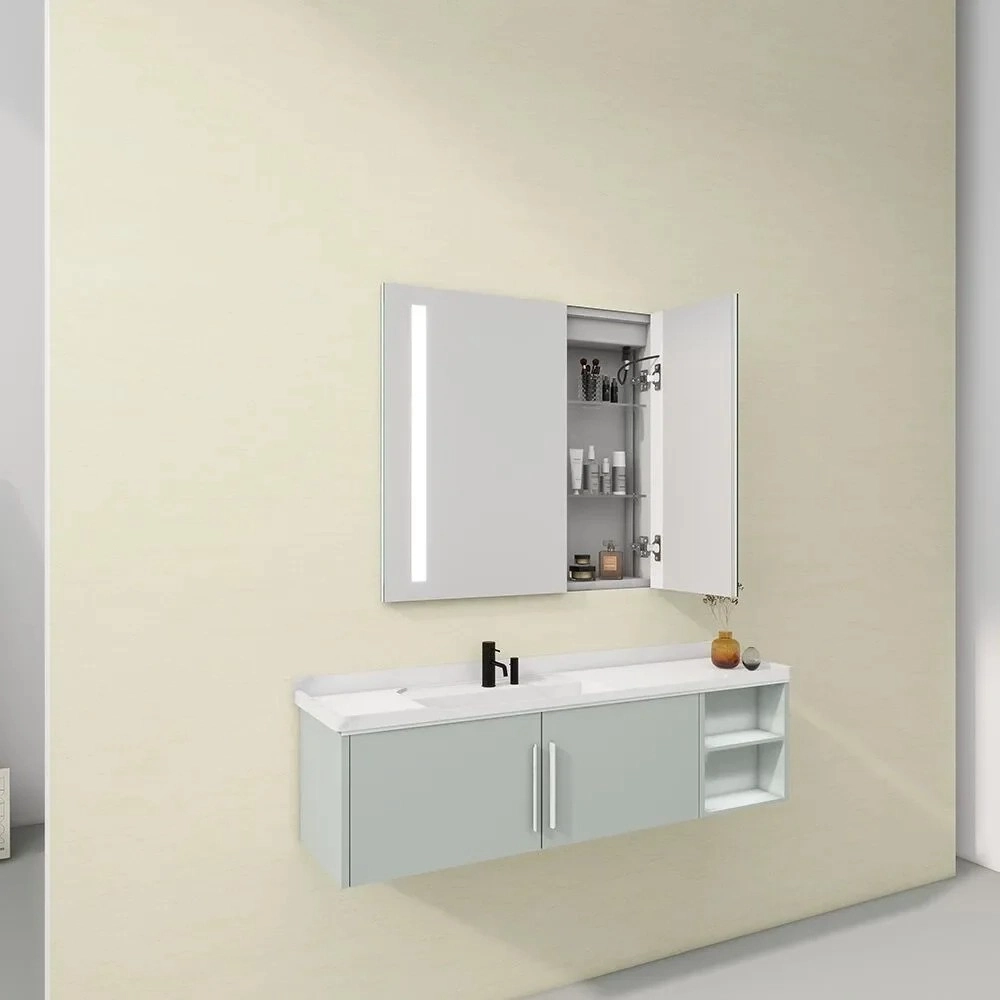
Recessed vs. Surface Mount: What Changes During Installation?
What is recessed mount medicine cabinet installation? It means placing the cabinet body inside a framed wall opening so the mirror sits close to the finished surface. A surface-mounted cabinet is fixed directly over the wall.
|
Type |
Wall work |
Finished look |
|
Recessed |
Cutting and framing required |
Streamlined and built in |
|
Surface |
Minimal wall alteration |
Cabinet projects outward |
|
Dual mount |
Depends on the chosen method |
Flexible for renovations |
A recessed model saves visual space, but capacity still depends on cabinet dimensions and shelf layout. Choose the mounting method only after inspecting the wall.
Check Wall Depth, Studs, Plumbing, Wiring, and Door Clearance
Use a stud finder and a voltage detector to carefully map out the planned opening area. Create one small inspection hole within the outlined section and check thoroughly for any studs, water pipes, drain vents, cables, insulation, or ductwork inside. Measure the actual usable cavity depth right up to the nearest obstruction found. Exterior walls often hold insulation or vapor-control layers that need evaluation by a qualified professional. Verify that the doors have enough clearance from nearby walls, faucets, lights, and vanity accessories.
What to Prepare Before You Install a Recessed Medicine Cabinet
Confirm the Rough Opening, Cabinet Depth, and Installation Height
The mirror size is not necessarily the rough-opening size. Use the manufacturer’s drawing for the recessed body, mounting flange, fixing points, and cable-entry location.
Record these details before cutting:
1.Cabinet-body width, height, and depth
2.Required rough-opening dimensions
3.Distance between the vanity and cabinet
4.Electrical entry and service-access points
5.Door swing and shelf-clearance needs
Center the cabinet over the basin at a comfortable viewing height, leaving enough space above the faucet and backsplash.
Gather Tools, Safety Gear, and Manufacturer Instructions
A typical set of tools to start with would be a tape measure, level, pencil, stud finder, voltage tester, a drywall saw, a drill, screws, framing lumber, shims, safety glasses, and a vacuum.
Make sure to turn the power off in the wall before starting to open it up. If your cabinet has hardwired lighting, defogging, Bluetooth speakers, or an outlet, be sure to do the electrical work for this model in the fixing and wiring locations as specified in the instructions for that model and have qualified people do that work for you.
How to Install a Recessed Medicine Cabinet Step by Step
Step 1: Mark the Cabinet Position and Make a Small Inspection Opening
Mark the centerline above the basin. Transfer the rough-opening dimensions to the wall and use a level to confirm the outline is square.
Cut a small inspection opening inside the marked area. A flashlight or camera can reveal pipes, cables, and framing before the full cut. Reposition the outline if needed.
Step 2: Cut the Wall and Frame the Rough Opening
Cut along the outline gradually and keep the blade shallow until the cavity is visible. Remove the drywall and confirm the actual stud positions.
When the cabinet fits between studs, add blocking at the top and bottom. If a stud must be altered, do not simply remove it. The opening may need a header, sill, and side framing. Ask a qualified builder to assess uncertain walls.
The finished opening should be square, plumb, and close to the specified dimensions. An oversized opening can weaken fastening and leave visible gaps.
Step 3: Dry-Fit, Level, and Secure the Cabinet Body
Place the empty cabinet body in the opening before installing shelves or accessories. Check every side with a level. Add shims where needed, but do not twist the cabinet.
Fasten through the designated mounting points into solid framing. Tighten evenly and stop when secure. Excessive force can distort the body and affect door alignment.
Step 4: Reinstall Doors, Shelves, and Finish the Wall Edges
Reinstall the mirrored doors and adjust the hinges until the gaps are even. Fit the tempered-glass shelves at heights suitable for bottles and daily toiletries.
Some Eternamir Bath medicine cabinets are substantially assembled, with adjustable shelves positioned after mounting. Our product’s available details include soft-close hinges, copper-free mirrors with safety backing, and corrosion-resistant aluminum bodies. Still confirm door alignment and keep shelves unloaded until all fixings are complete.
Patch or trim the wall edges as directed. Do not seal ventilation slots, hinges, electrical access points, or removable service covers.
How to Plan Power for a Lighted or Smart Medicine Cabinet
Route Wiring for LED Lighting, Defogging, and a Bluetooth Medicine Cabinet
Plan the power supply before inserting the cabinet. Confirm whether the model is hardwired or plug-connected, where the cable enters, and whether the driver or connection box must remain accessible.
Depending on the configuration, a smart cabinet may include LED lighting, defogging, touch control, a clock, Bluetooth audio, or an outlet. Never assume every function is standard.
The Eternamir Bath EMI.842 DS, for example, supports surface or recessed installation and combines halo lighting with an available UL hardwire connection. Its body depth, cable entry, framing, and service access should be coordinated before the opening is finished. Optional functions offered on other models must be verified for the exact product ordered.
Keep mains connections, low-voltage parts, and moving door cables in their intended positions. Hidden wiring should improve appearance without preventing inspection or repair.
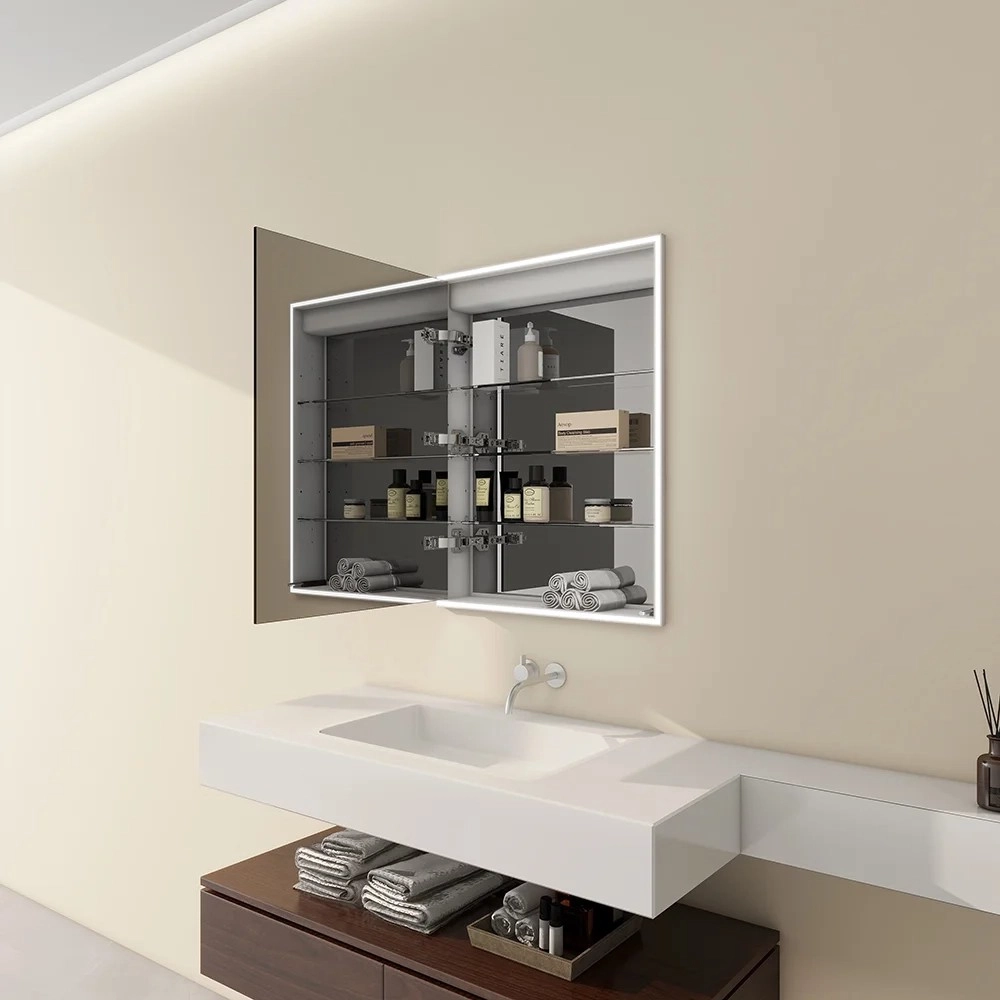
Position a Shaver Socket Inside the Bathroom Cabinet Safely
A shaver socket inside the bathroom cabinet storage keeps razors and toothbrush chargers off the countertop. Position it where plugs and adapters will not block shelf adjustment or become pinched by the door.
The socket, protective device, wiring method, and bathroom zone must meet local requirements. Do not drill an aftermarket socket into an unsuitable cabinet; this could damage the mirror backing, finish, or wiring. Select a properly configured model and use a qualified electrician.
How Cabinet Design Affects Installation and Long-Term Performance
What the Best Custom Medicine Cabinets in 2026 Should Provide Before Installation
The best custom medicine cabinets 2026 projects should begin with accurate technical information. Before cutting the wall, medicine cabinet manufacturers should provide body dimensions, rough-opening requirements, fixing locations, wiring diagrams, door clearances, mounting methods, and applicable certification details.
Also assess the cabinet material, mirror backing, hinge quality, adjustable storage, corrosion resistance, and access to replaceable electrical parts. A custom width is useful only when framing, door proportions, lighting, and internal organization remain practical.
At Eternamir Bath, we offer custom sizing and medicine-cabinet configurations for residential and hospitality spaces. Relevant options include recessed or dual-mount installation, rust-resistant aluminum bodies, copper-free mirrors with safety backing, adjustable tempered-glass shelves, soft-close hinges, and hidden-wire designs. Features vary by model and must be confirmed before installation.
Our quality process includes aging tests for components such as LED strips, drivers, and touch switches. Finished-product inspection may include lighting, high-voltage, and grounding checks, while mirror and hardware materials are evaluated for corrosion resistance. This preparation helps installers work from clear specifications rather than assumptions.
FAQ
Q: How do you install a recessed medicine cabinet without cutting a stud?
A: Choose a cabinet body that fits between the existing studs. Add secure top and bottom blocking, then fasten the cabinet through its designated mounting points.
Q: Can a Bluetooth medicine cabinet be installed as a recessed model?
A: Yes, when the model supports recessed mounting and the wall has enough depth for the body, wiring, driver, Bluetooth parts, and service access.
Q: Is a shaver socket inside a bathroom cabinet safe?
A: It can be safe when the cabinet and socket are designed for bathroom use and installed under local electrical rules. Keep it clear of hinges, moving shelves, moisture, and pinched cords.
Q: What should you ask medicine cabinet manufacturers before installing a custom cabinet?
A: Request the rough-opening size, body depth, fixing positions, door clearance, electrical entry, wiring diagram, mounting method, certifications, and service-access instructions.
