



How to Choose a Medicine Cabinet: Size, Mounting, Materials & Features
Time : August 13, 2026 View : 107
A medicine cabinet may look simple, but a poor choice can create inconvenience and costly installation problems. A narrow unit may lack storage, while a deep one can feel bulky. The wrong mounting method may also conflict with studs, wiring, or pipes.
A better decision starts with the room, its users, and the project requirements. This guide compares mounting types, dimensions, layouts, materials, lighting, and supplier capabilities.
Why Choosing the Right Medicine Cabinet Matters
Start With the Bathroom and Its Users
The ideal cabinet relies on who will utilize the bathroom and how frequently they use it. A half-bath might require just a small single-door unit. Conversely, a family bathroom needs extra shelf room, broader mirror space, and sturdy doors that handle constant opening and closing. Furthermore, hotels and apartment complexes demand consistent specifications. They also need straightforward upkeep and quick installation processes.
Before you evaluate different products:
1.Determine the count of daily users.
2.Write down the specific items that need storing.
3.Verify if the undertaking is a fresh build or a remodel.
4.Observe the moisture levels, airflow, and how often cleaning happens.
5.Determine if you need standard sizes or custom measurements.
Define Your Storage, Mirror, and Lighting Priorities
A bathroom cabinet generally fulfills three roles. These are storage, reflection, and sometimes lighting. You should prioritize these requirements initially.
Regarding storage, think about the heights of bottles, how adjustable the shelves are, and the door layout. For the mirror, assess the reflective span. Also, consider if several individuals require access at the same time. Regarding lighting, determine if built-in lights will add to ceiling fixtures or vanity lamps.
Movable tempered-glass shelves help arrange large and tiny items neatly. At the same time, soft-close hinges lessen the force when doors shut.
Recessed vs. Surface-Mount Medicine Cabinets
When a Recessed Medicine Cabinet Is the Better Choice
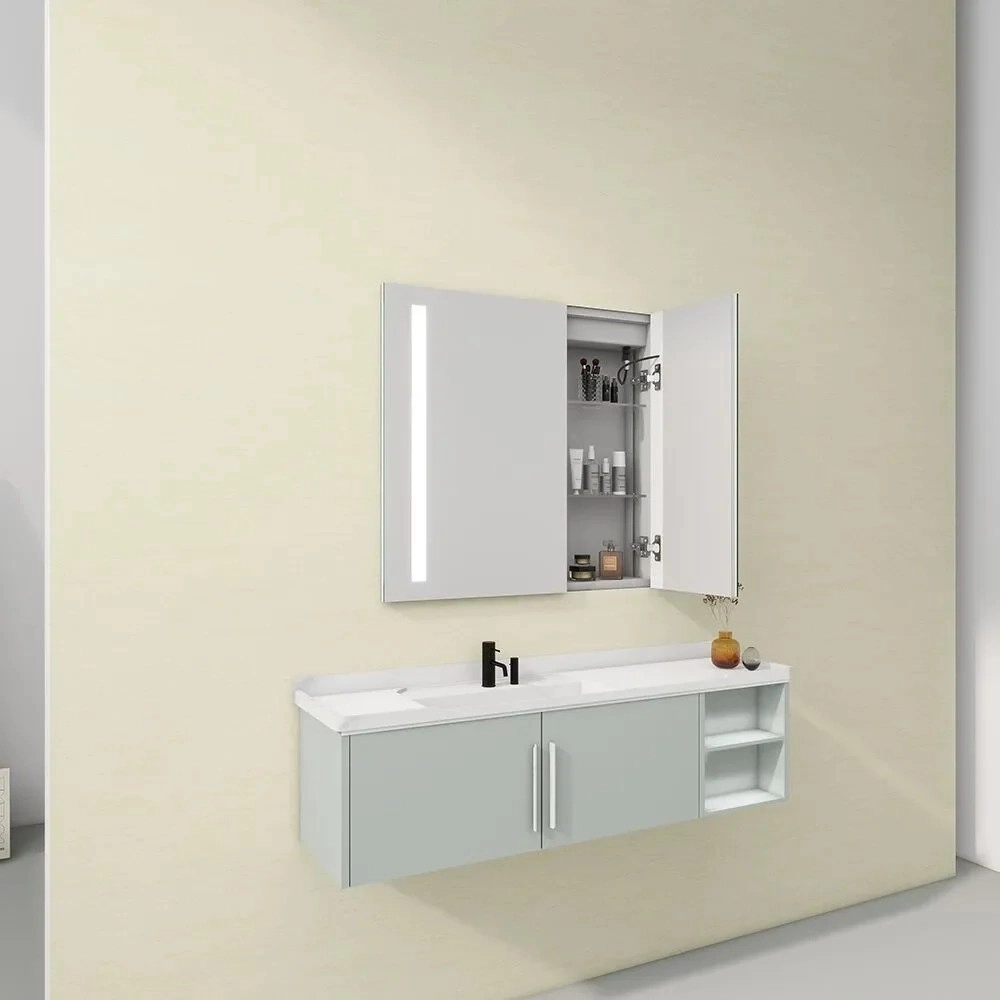
A recessed medicine cabinet rests partially inside the wall structure. This creates a sleek look and minimizes how much it sticks out into the space. It functions exceptionally well in fresh builds or extensive remodels. During these projects, framing and electrical layouts can be aligned before the final surfaces go up.
However, this style needs adequate wall thickness and an empty space inside. Wall studs, plumbing pipes, air ducts, or electrical wires might hinder the placement. For illuminated versions, electrical connections must comply with regional rules. Always verify the rough hole size and wall state before you place an order.
When a Surface-Mount Medicine Cabinet Makes More Sense
A surface-mounted cabinet fastens straight onto the completed wall. It is frequently useful for renovations. This is because it prevents cutting a massive hole. Furthermore, it works well in places where wall spaces are thin or blocked.
The primary concern here is how far it sticks out. A thick cabinet might provide extra storage. However, it can appear too large in a tight room. It might also clash with nearby items. Always measure its gap from the sink faucet, the wall backsplash, the adjacent wall, and the light fixtures.
Recessed vs. Surface Mount: A Quick Comparison
|
Factor |
Recessed cabinet |
Surface-mount cabinet |
|
Appearance |
Integrated and minimal |
Cabinet depth remains visible |
|
Wall requirements |
Requires a suitable cavity |
Fits most finished walls |
|
Installation |
More planning and labor |
Generally more direct |
|
Best use |
New builds and full renovations |
Retrofit and remodeling projects |
|
Main risk |
Hidden wall conflicts |
Projection and clearance issues |
Dual-mount models supply project teams with extra adaptability for various wall situations.
How to Choose the Right Medicine Cabinet Size and Configuration
Match Cabinet Width to the Vanity and Available Wall Space
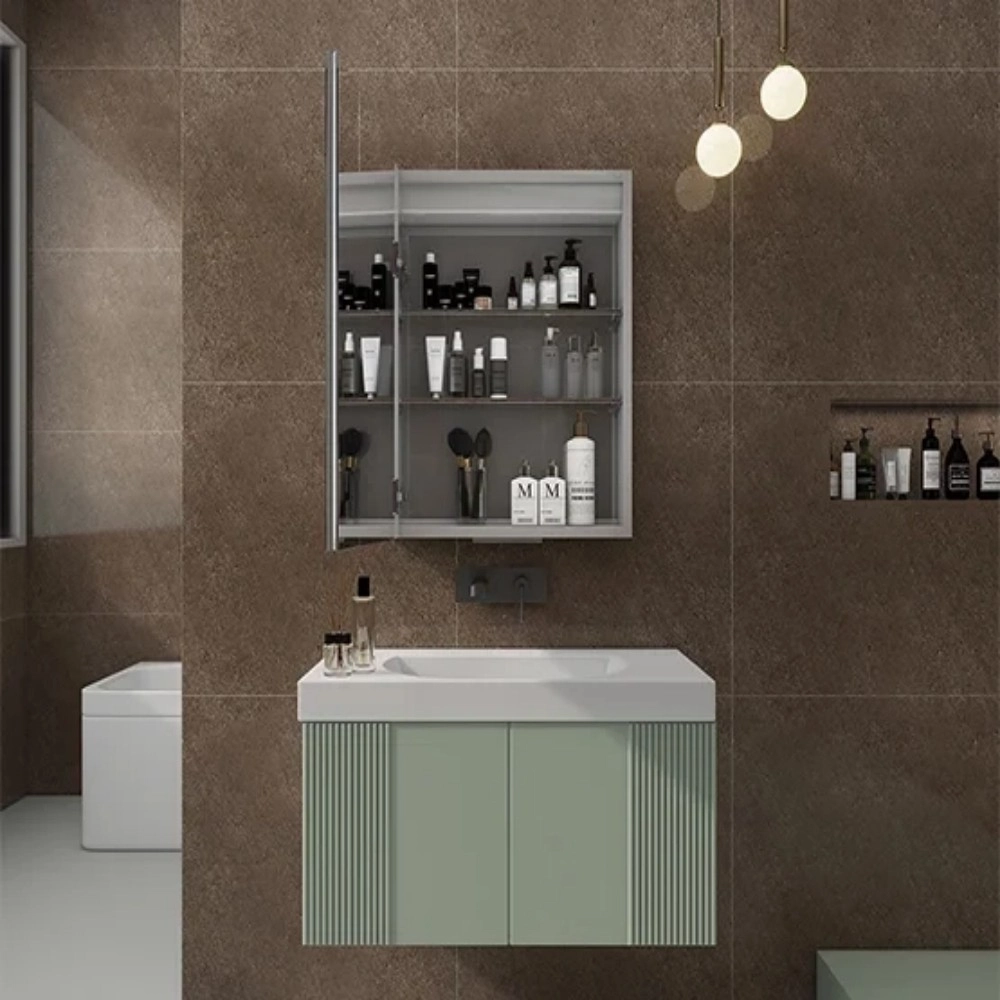
Measure the vanity initially. However, do not presume the cabinet has to equal that exact width. A slightly thinner unit frequently produces even borders. It also provides space for wall sconces or decorative trim. Additionally, measure the room height, the clearance above the faucet, the height of the backsplash, nearby doors, and the space needed to open the cabinet doors.
Follow this measuring method:
1.Draw the planned shape onto the wall surface.
2.Evaluate the viewing level for the main users.
3.Check for clashes with adjacent doors and pull-out drawers.
4.Verify the electrical spot for an illuminated unit.
5.Measure the dimensions again after the wall materials are chosen.
For dual vanities, a single wide cabinet builds a cohesive look. Alternatively, two smaller units establish distinct storage areas.
Choose the Right Depth, Door Count, and Shelf Layout
Single-door cabinets fit well in tight areas. Two-door layouts offer wider reach above mid-sized vanities. Three-door cabinets supply expansive mirror space and extra storage sections. They are ideal for shared bathrooms or hotel developments.
Eternamir Bath supplies surface-mounted medicine cabinets in single-, double-, and three-door setups. These include standard widths ranging from 20-inch single-door units to 60-inch three-door models. Custom sizing is also accessible. Specific products feature rust-proof aluminum frames and double-sided copper-free mirrors with safety backings. They also include adjustable tempered-glass shelves, smudge resistance, and soft-close hinges.
Think about a sample hotel project featuring a 48-inch vanity. A three-door cabinet can separate guest items into distinct sections. At the same time, it provides broad mirror usage. In a compact apartment, a 20- or 24-inch single-door model might look more balanced and prove simpler to install.
Materials and Features That Affect Long-Term Value
Compare Aluminum, Stainless Steel, Steel, and Wood Cabinets
The building material influences the weight, dampness resistance, upkeep needs, and overall cost.
Aluminum is light in weight. It is suitable for damp settings when coated correctly. Stainless steel provides robust rust resistance and a modern building style. Coated steel can weigh toughness against price. However, the coating quality is crucial in wet areas. Wood brings coziness and a furniture style. Yet, it demands proper surface sealing and good airflow.
For project purchasing, evaluate the cabinet frame, the mirror back layer, the hinges, the shelf pegs, the screws, and the rust testing results. Dampness can impact all bare parts.
Decide Which Lighting and Smart Features You Actually Need
Built-in lighting can lessen visual mess and boost brightness around a person’s face. Evaluate the color temperature, the color rendering, the light brightness, the dimming style, and the projected lifespan of the parts. A superior color rendering index makes hues look more realistic. Meanwhile, adjustable color temperatures accommodate different periods of the day.
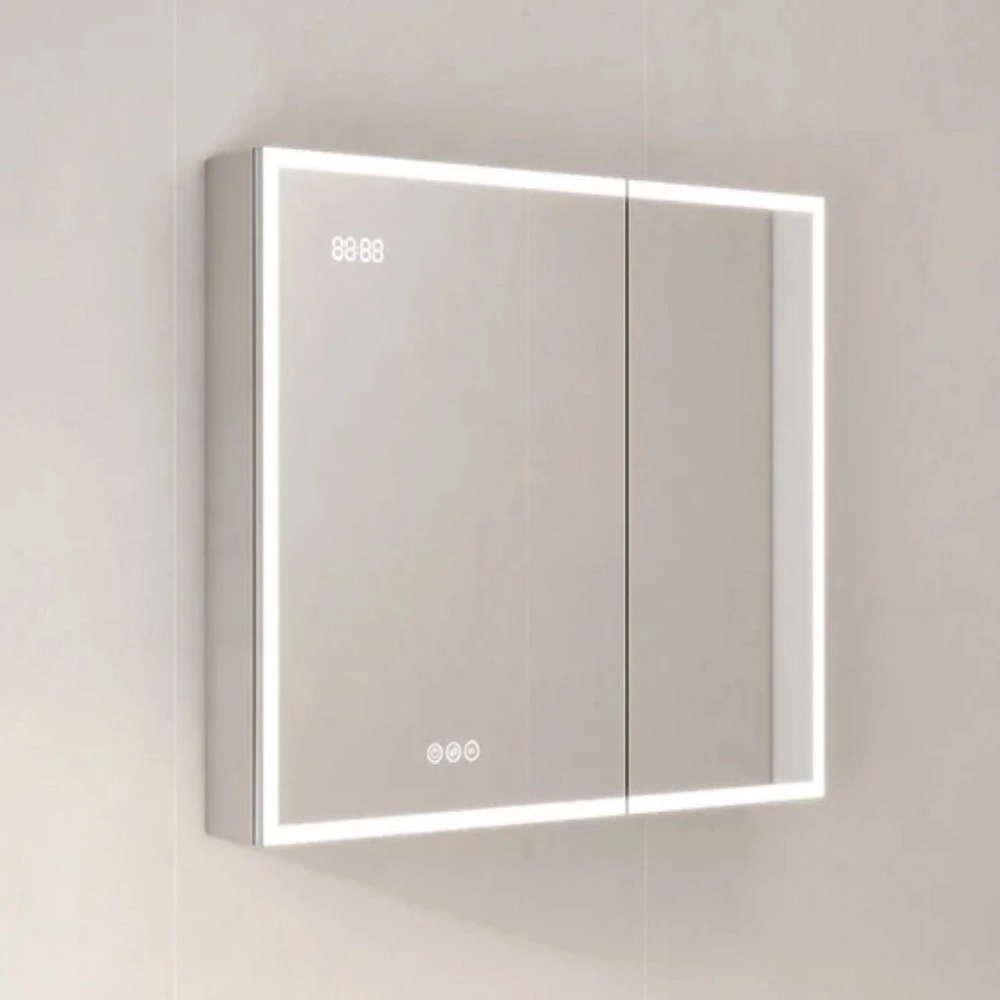
Eternamir Bath medicine cabinet choices feature LED setups with CRI 90+. They offer adjustable color temperatures from 2700K to 6000K. Inner lighting is available on specific designs. You can choose hardwired or plug-in types. Optional features include dimming capabilities, fog removal, a night light, a digital clock, a Bluetooth speaker, or an electrical socket. The availability shifts by model. Therefore, you should verify these details for every purchase.
Do not select every feature by default. A hotel project might focus on dependable lighting, straightforward switches, and simple maintenance. A luxury home product line might warrant fog removal or adaptable light controls.
How to Choose a Medicine Cabinet Manufacturer for Your Project
Evaluate Customization, Testing, Certifications, Lead Times, and Support
For corporate buyers, visual appeal is merely one aspect of assessing a supplier. A trustworthy production partner must also manage the raw materials, the electrical parts, the building process, the quality checks, the boxing, and the customer assistance after the sale.
Examine these five aspects:
1.The accessible dimensions, materials, outer coatings, and installation frameworks.
2.The OEM and ODM skills for unique project designs.
3.The safety certifications needed in the target region.
4.The testing procedures for LED power units, light strips, motion sensors, glass mirrors, and metal hardware.
5.The manufacturing volume, wait times, boxing methods, product warranty, and replacement part availability.
At Eternamir Bath, we manufacture lighted medicine cabinets for residential and hospitality applications and support custom sizes. Our quality process includes at least 72 hours of aging tests for purchased electrical parts, salt-spray sampling for corrosion resistance, lighting and electrical safety checks, and full inspection before shipment. Our facility operates under ISO 9001:2015, while certification options include UL, ETL, CE, SAA, UKCA, and RoHS depending on the product and market.
Since a lighted cabinet merges glass, metal hardware, storage space, and electrical wiring, uniform testing aids in lowering flaws throughout a massive purchase.
FAQ
Q: What size medicine cabinet do I need for my bathroom?
A: Measure the vanity, usable wall area, faucet clearance, lighting position, and door-opening space. Choose a width that looks proportionate while leaving enough room for installation and access.
Q: Is a recessed medicine cabinet better than a surface-mount medicine cabinet?
A: A recessed model provides a cleaner profile but requires a suitable wall cavity. A surface-mounted model is usually easier for renovations and walls with hidden obstructions.
Q: What material is best for a bathroom medicine cabinet?
A: Aluminum is a common choice for moisture resistance and lower weight. Stainless steel, coated steel, and wood can also perform well when their finishes suit the bathroom environment.
Q: Are LED medicine cabinets worth it?
A: They can be valuable when users need integrated facial lighting, adjustable settings, or selected convenience features. Compare light quality, certification, component testing, and maintenance needs.
Q: What should B2B buyers look for in a custom medicine cabinet manufacturer?
A: Review customization, certifications, testing procedures, capacity, packaging, lead time, warranty, technical communication, and experience with the intended residential or commercial application.
