



Energy Saving Medicine Cabinet with Mirror and Lights for Hotels
Time : August 05, 2026 View : 130
Hotel bathrooms operate on a different scale from residential spaces. A few watts become a measurable expense when repeated across dozens or hundreds of rooms every day. An energy-saving medicine cabinet with mirror and lights should therefore be evaluated as an operating asset: lighting quality, runtime, controls, maintenance access, and guest behavior all affect its real cost.
Why Energy Saving Matters for a Medicine Cabinet with Mirror and Lights in Hotels
Separate Rated Wattage from Real Operating Hours
Rated wattage describes maximum electrical load, not annual consumption. A cabinet used for two short grooming periods consumes less than one left illuminated through the night. Hotels should pair listed wattage with realistic operating hours for occupied rooms, vacant rooms, and housekeeping.
Multiply watts by daily operating hours and 365, then divide by 1,000 to obtain annual kilowatt-hours per room. Multiply that figure by the room count and electricity tariff. This creates a consistent comparison baseline without relying on vague efficiency claims.
Count Lighting, Defogging, Standby, and Outlet Loads Independently
A cabinet may contain functions that run for different periods. List mirror lighting, interior lighting, defogging, standby controls, and an integrated outlet separately. Because outlet load depends on the guest’s appliance, do not treat it as permanent cabinet consumption.
Separate load data shows where control changes matter. Efficient LEDs cannot compensate for unnecessary defogger runtime, while a low standby load still accumulates across a large property. Show each function clearly enough for energy modeling and commissioning.
Which Lighting and Control Choices Lower Hotel Bathroom Energy Use?
Efficient LED Task Lighting, Dimming, and Sensible Defaults
Buyers should look beyond whether the cabinet uses LEDs. Light should reach the face evenly and remain useful at a moderate setting. Effective optical design delivers comfortable task lighting without forcing maximum output for shaving, skincare, or makeup.
Dimming adds value when its default is practical. Starting at full brightness may waste energy, while an overly dim default encourages repeated adjustment. Memory behavior should match hotel policy so settings remain predictable after a room reset or power interruption.
Independent Controls That Prevent Unnecessary Feature Runtime
Independent controls let guests or staff use only the required function. Mirror lighting, interior lighting, and defogging should not operate together automatically without a clear reason. A visible control state reduces the chance that a feature stays active after vacancy.
Controls must remain simple. Guests should not need instructions to switch off a light, and housekeeping should be able to restore an agreed room condition. Request a control narrative explaining defaults, memory behavior, and power-restoration responses.
How Can Hotels Save Energy Without Weakening the Guest Experience?
Balance Brightness, Color Rendering, and Glare at the Vanity
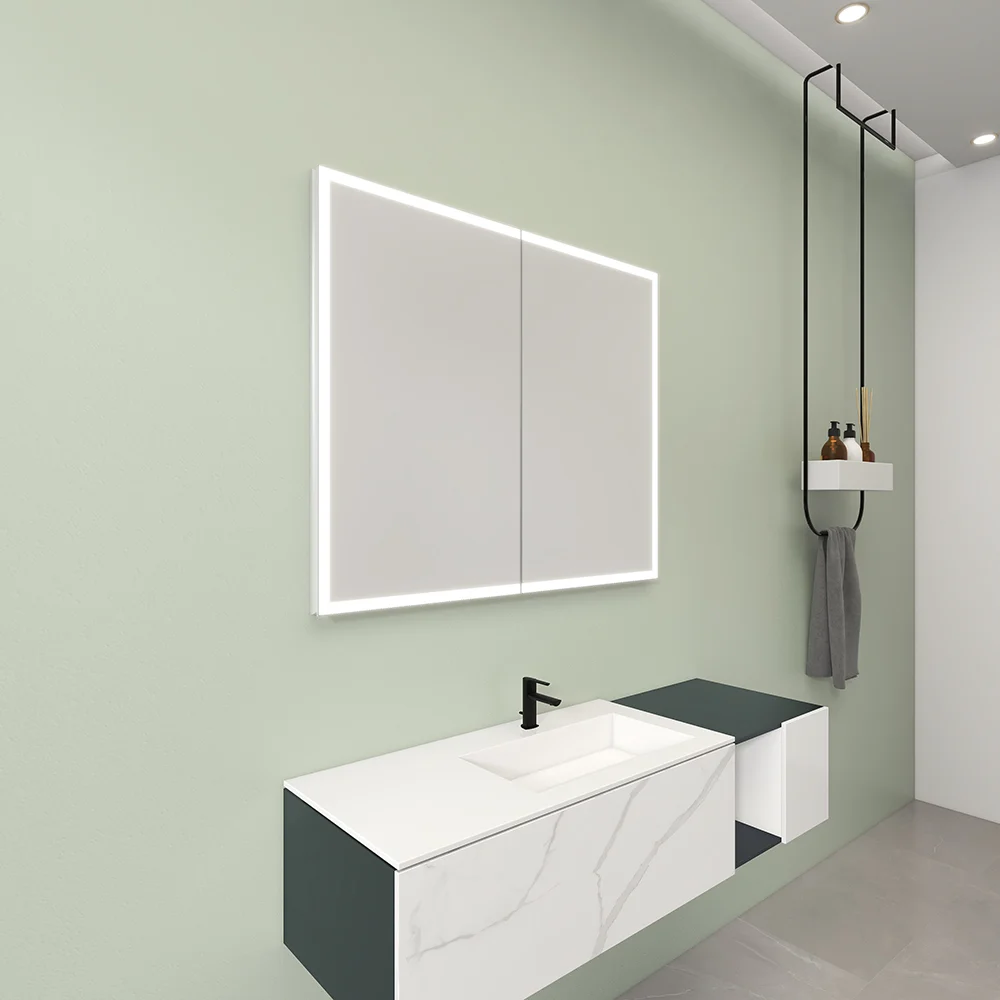
Energy savings should not produce a poorly lit vanity. Face-level illumination reduces shadows from ceiling-only lighting, but an overly bright border may cause glare. Assess normal standing positions and confirm that skin tones and grooming details remain clear.
The Two Doors Bathroom Mirror Cabinet is presented for homes, hotels, luxury apartments, and hospitality projects, combining double-door storage with integrated LED illumination. It illustrates why lighting, storage, and the viewing area should be reviewed as one arrangement.
Plan Morning, Night, and Housekeeping Lighting Needs
One brightness level rarely suits every routine. Morning grooming may require clear task light, while a late-night visit benefits from a lower level. Housekeeping needs enough illumination to inspect the mirror, shelves, controls, and surrounding surfaces.
A mock-up should test these situations separately. The goal is to confirm that the available range supports real use. If guests always choose maximum brightness or staff add inspection lights, the proposed setting lacks balance.
What Does Lifecycle Cost Include for a Lighted Hotel Medicine Cabinet?
LED and Driver Service Life, Replaceable Parts, and Room Downtime
Purchase price is only the first cost. Hotels also pay for replacement drivers, technician visits, spare parts, and room-turnover delays. Long component life has limited value if a failed part cannot be accessed or sourced without removing the cabinet.
Ask which electrical parts are replaceable, where they are located, and whether service is possible from the front. The warranty should distinguish the cabinet, lighting, controls, and labor. Spare-driver planning may reduce downtime.
Cleaning Access, Moisture Resistance, and Maintenance Labor
Performance can deteriorate when controls become difficult to use, diffusers collect residue, or damaged seals expose electrical parts to moisture. Smooth surfaces, reachable shelves, protected edges, and service access help teams keep the cabinet working as intended.
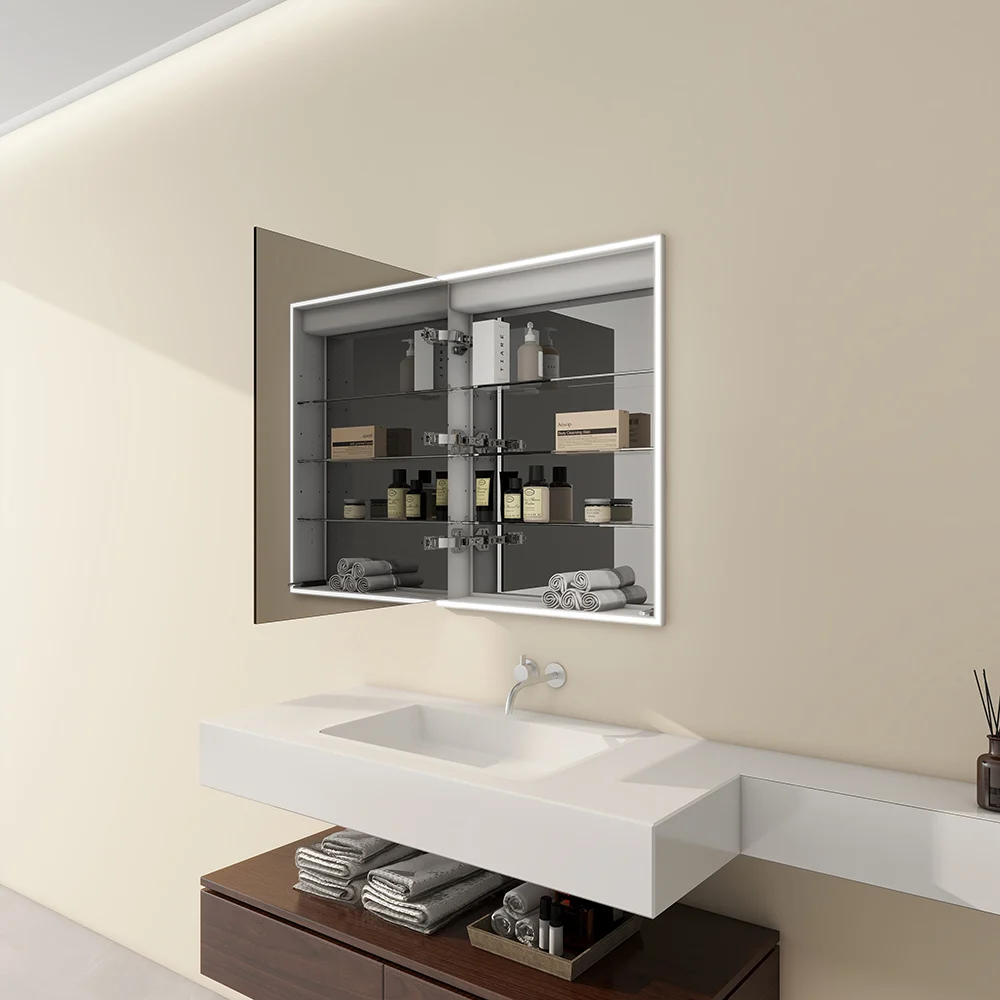
The Space-Saving Double Doors Mirror Cabinet with Flexible Mounting combines adjustable storage, customizable LED lighting, soft-close operation, and surface-mounted or recessed installation options for residential and commercial projects. Those choices allow project teams to consider cleaning, access, and wall conditions before installation rather than after a service problem appears.
How Can Hotels Scale Savings Across Room Types and Daily Operations?
Standardize Settings Without Ignoring Room Categories
Standardization simplifies procurement and maintenance, but identical settings may not suit every room. Compact bathrooms, accessible rooms, and suites can differ in mirror width, viewing distance, daylight, and occupancy. Hotels can standardize controls and maintenance while adjusting cabinet scale and commissioned brightness by category.
The guide to medicine cabinet mirrors with LED lights for hotel projects provides broader selection context. An energy-focused program should then use a room schedule recording connected load, approved settings, and expected operating hours by category.
Commission Controls and Align Housekeeping Routines
Commissioning confirms that installed cabinets behave like the approved sample. Test controls, dimming, memory, defogging, and restoration after power interruption. Record results so later replacements can follow the same standard.
Housekeeping procedures should specify whether lights and optional functions are left off, reset, or placed at a defined level. Maintenance should track recurring control or driver failures because patterns may change lifecycle-cost comparisons for future projects.
How Should Buyers Compare Energy-Saving Medicine Cabinet Proposals?
Estimate Annual kWh and Cost per Guest Room
Use one comparison sheet for every proposal. Include function wattage, assumed runtime, annual kilowatt-hours per room, electricity rate, room count, and replacement costs. Keep assumptions identical across suppliers and list optional functions separately.
At Eternamir Bath, we use verified project requirements to help buyers compare lighting, storage, mounting, and configuration choices without treating “energy saving” as a standalone label. A strong specification links each function to a guest or operating need and gives the hotel a testable value.
Pilot the Medicine Cabinet with Mirror and Lights Before Rollout
A pilot room exposes issues that a data sheet cannot show. Measure power in each mode, observe runtime, inspect glare, and time cleaning or service access. Use the cabinet location and surrounding lighting planned for the project.
Record pilot settings before approving a portfolio-wide order. If controls, brightness, access, or maintenance expectations change, revise the energy model and room schedule. A measured trial is more reliable than applying theoretical savings across hundreds of rooms.
FAQ
Q: How much energy does a medicine cabinet with mirror and lights use in a hotel?
A: Consumption depends on the wattage of each function and how long it runs. Calculate lighting, defogging, standby, and other loads separately, multiply each by realistic daily operating hours, and convert the total to annual kilowatt-hours per room.
Q: Which controls make a hotel medicine cabinet with mirror and lights more efficient?
A: Useful controls include practical dimming, clear on-off states, and independent operation for lighting and optional functions. The best arrangement is simple for guests, predictable after a power interruption, and easy for housekeeping to reset consistently.
Q: Should hotels choose a recessed or surface-mounted lighted medicine cabinet?
A: The energy difference usually matters less than wall conditions, service access, and installation scope. Recessed mounting creates a flatter profile but requires a suitable wall cavity. Surface mounting can simplify renovation work and future access. Local electrical and bathroom requirements still apply.
Q: Can dimming reduce the operating cost of an LED medicine cabinet mirror?
A: Dimming can reduce consumption when users select a lower output for part of the operating time. Savings depend on the driver, control behavior, default setting, and actual usage. Hotels should verify power at several dimming levels in a pilot room.
Q: How should hotels compare the lifecycle cost of illuminated medicine cabinets?
A: Compare purchase price, annual electricity, replaceable lighting and control parts, warranty coverage, maintenance labor, cleaning access, spare-parts availability, and possible room downtime. Apply the same assumptions and evaluation period to every proposal.
