



Medicine Cabinet Color Temperature: 2700K, 3000K, 4000K, and 6000K Planning
Time : October 01, 2026 View : 24
A medicine cabinet color temperature decision affects how a bathroom feels, how finishes appear, and how consistently a hotel or residential project presents from room to room. The kelvin value does not measure brightness; it describes the appearance of white light. Buyers therefore need to select a visual target, check adjacent fixtures, and confirm whether the cabinet offers a fixed, selectable, or tunable setting. This planning guide focuses on 2700K, 3000K, 4000K, and 6000K without repeating a full brightness, CRI, or glare guide.
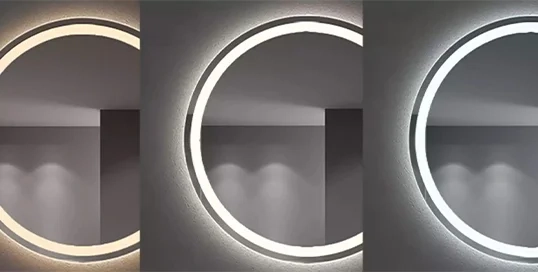
Define Color Temperature Before Choosing a Setting
Correlated color temperature (CCT) describes the apparent warmth or coolness of a light source. Lower values look warmer and more amber; higher values look cooler and more blue-white. Kelvin does not measure brightness, and no single value suits every grooming setup.
Treat medicine cabinet color temperature as part of a coordinated lighting specification. Identify the room palette, then compare the cabinet with ceiling fixtures, sconces, tile, paint, metal finishes, and daylight. The goal is a consistent relationship between sources.
For brightness, CRI, diffusion, and glare, use the broader medicine cabinet lighting guide; this article focuses on CCT selection and documentation.
Compare 2700K, 3000K, 4000K, and 6000K
Match each to the room and task, then confirm the offered setting in the intended finish palette.
|
CCT |
Visual character |
Suitable project context |
Practical check |
|
2700K |
Soft, warm, amber-leaning white |
Residential rooms with warm wood, cream tile, brass, or hospitality schemes designed for a relaxed evening feel |
Check that the mirror does not look overly yellow beside white tile or neutral ceiling light |
|
3000K |
Warm white with more clarity |
Homes, boutique hospitality, and mixed palettes that need warmth without a strongly amber cast |
Compare skin tones, white surfaces, and brushed-metal finishes at the intended dimming level |
|
4000K |
Balanced or neutral white |
General grooming, contemporary bathrooms, and repeated hotel room layouts |
Check that cabinet, ceiling, and vanity lights read as one coordinated white |
|
6000K |
Crisp, cool, blue-white appearance |
Projects that intentionally specify a cool visual language or a strong daylight-like effect |
Review glare, reflections, and whether the room begins to feel clinical or visually harsh |
2700K for Warm, Residential-Looking Rooms
2700K can suit wood, cream surfaces, warm stone, or brass in residential and relaxed hospitality rooms. White tile may look creamier beside neutral ceiling light. Check a sample with the actual finishes in both electric light and daylight.
3000K for Warm but Clear Task Light
3000K stays warm but appears clearer than 2700K, suiting homes and boutique hospitality schemes without a strong amber cast.
4000K for Balanced Grooming and Hospitality
4000K is a neutral planning point for contemporary bathrooms and repeated commercial rooms. It can align with neutral ceiling or vanity fixtures, although warm finishes may look less inviting.
6000K for Crisp, Cool Visuals
6000K creates a crisp, cool appearance for projects using pale surfaces or a daylight-like palette. Warm finishes can look duller, while glossy tile or mirror edges may emphasize glare. Inspect reflections and facial shadows in a representative room.
Coordinate CCT Across the Room and the Project
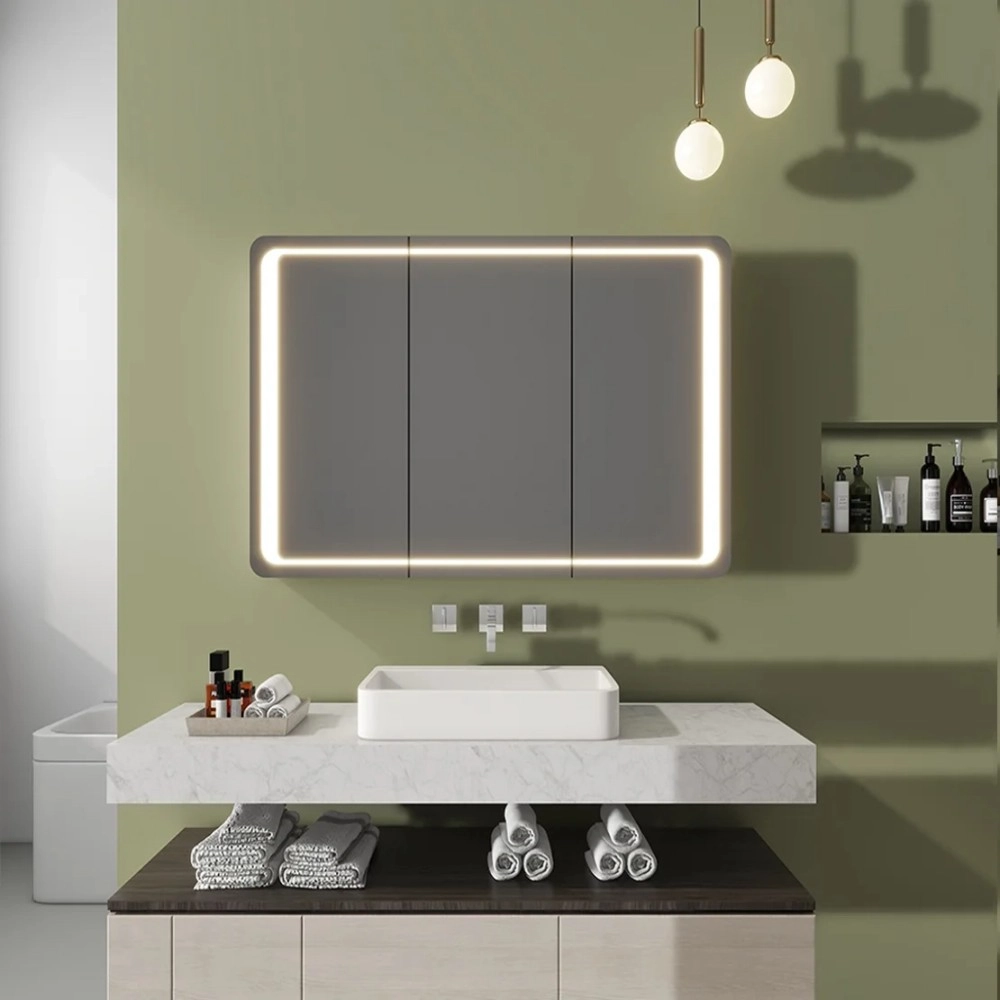
The right setting depends on daylight, adjacent fixtures, finishes, and the cabinet LED. Multi-room projects also need consistent CCT across batches and control states.
Match Adjacent Fixtures and Finishes
Start with the dominant source and surfaces visible in the mirror. A warm cabinet can disconnect from neutral ceiling fixtures, while 4000K or 6000K can split a room with warm decorative lamps. Confirm the complete sample board—incorporating actual tile, paint, countertops, hardware, and mirror edging—and save it alongside the other interior finish selections for the hotel guest room.
Choose Fixed vs Selectable Color Temperature
Choosing between a single, fixed color temperature and a tunable system depends heavily on the project scope and the target demographic. Below is a simple comparison to guide your procurement strategy.
|
Specification |
Fixed-CCT Options |
Tunable White Options |
|
Primary Application |
Large scale hospitality projects |
High-end custom residential villas |
|
Cost Efficiency |
Highly economical for bulk purchasing |
Premium investment for individualized control |
|
User Experience |
Consistent architectural environment |
Adaptable to morning and evening routines |
|
Maintenance |
Streamlined replacement process |
Advanced touch sensor switches required |
Eternamir Bath configurations can include 2700K, 3000K, 4000K, and 6000K options, subject to the selected model. Review this medicine cabinet color temperature reference, then request the exact SKU drawing. Do not transfer one model’s range to a whole family.
Turn a Color Decision into an RFQ Field Set
Once the visual target is chosen, convert it into consistent fields for designers, buyers, installers, and suppliers. Record CCT, fixed/selectable behavior, controls, approval evidence, model, and control context.
Specify the Lighting Configuration
Include the model, size, mounting type, light location, requested CCT, acceptable alternatives, and whether one setting or multiple steps are required. Add controls and any independent defogger or internal-light requirement.
|
RFQ field |
What the buyer should state or request |
|
Target CCT |
2700K, 3000K, 4000K, or 6000K; include an allowed substitute only if the designer approves it |
|
CCT behavior |
Fixed, selectable steps, or tunable range; request the actual switching sequence |
|
Room coordination |
Adjacent fixture CCTs, finish samples, daylight conditions, and room-type schedule |
|
Control and output |
Touch, wall switch, dimming, memory, expected output, and test condition |
|
Evidence package |
Model drawing, data sheet, wiring information, sample photos or sample unit, and market-specific compliance documents |
Verify the Sample, Documents, and Installation Context
Ask for a sample or controlled visual proof before releasing a batch. Compare all planning points when choosing among them, but do not treat a render as a finished-room prediction.
The approval pack should identify the model, CCT behavior, controls, electrical ratings, cable route, and service access. A qualified professional must review wiring, grounding, bathroom location, and local code. Re-approve any change to the LED strip, driver, diffuser, or control because color and behavior may change.
How Eternamir Bath Supports Configuration Review
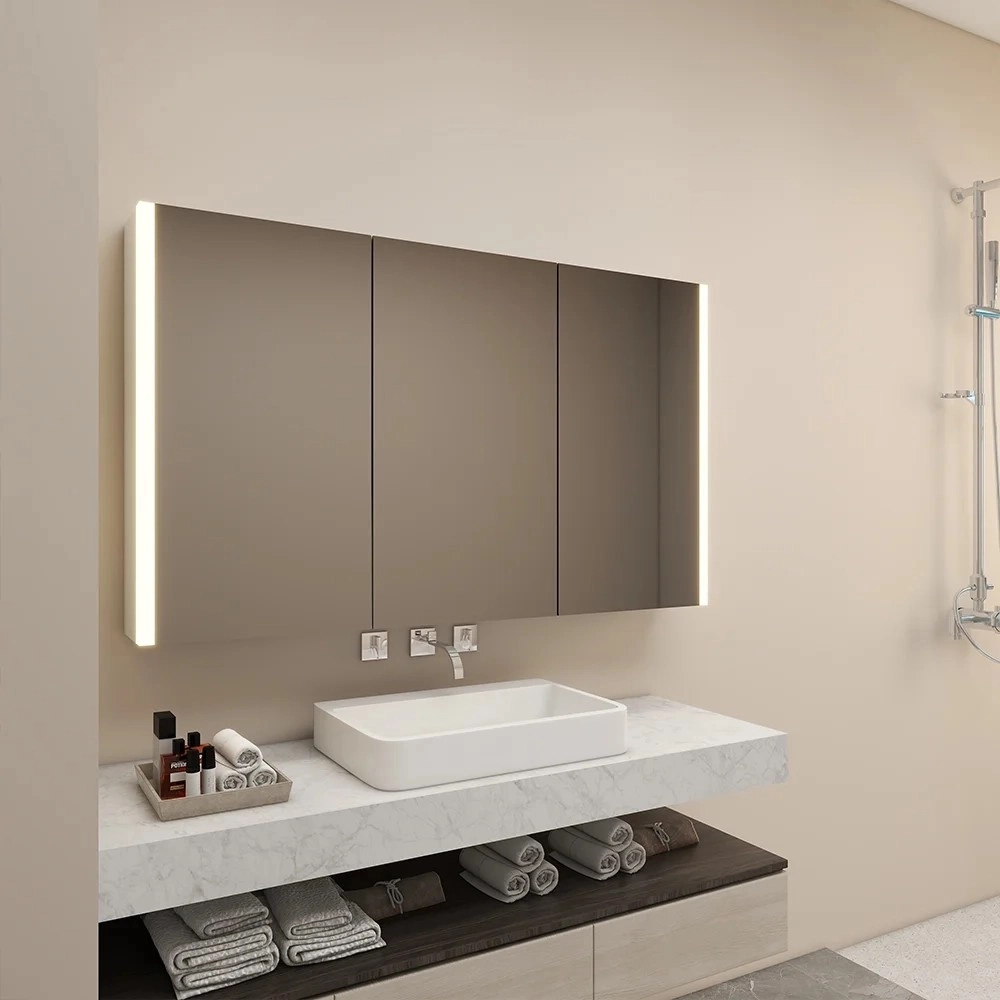
Eternamir Bath develops lighted medicine cabinets and mirror products for residential and hospitality applications, with custom sizes, colors, functions, packaging, and OEM/ODM support. For CCT planning, match an approved configuration to the room schedule and repeat-order documentation.
Our project discussions separate the base cabinet from lighting and control options and identify the drawing, sample, and inspection information needed before production. The Eternamir Bath team can review the destination market and required kelvin setting without treating a general range as model-level approval.
FAQ
Q: Which medicine cabinet color temperature works for a bathroom?
A: There is no universal setting. 2700K and 3000K suit warmer residential or boutique palettes, 4000K offers a balanced neutral starting point, and 6000K creates a deliberately cool appearance. Compare the cabinet with adjacent fixtures and finishes, then approve the exact model and control behavior.
Q: Do recessed bathroom medicine cabinets come with selectable color temperature?
A: Some recessed bathroom medicine cabinets can be configured with selectable or tunable white settings, but availability is model-specific. Ask for the exact kelvin steps, switching sequence, driver information, and control method. Do not assume that every recessed cabinet or every size in a series offers the same range.
Q: How should a medicine cabinet with mirror be specified for hotel rooms?
A: Specify the medicine cabinet with mirror by model, size, mounting, target CCT, control behavior, adjacent room lighting, finishes, sample requirement, and replacement plan. Repeat the same approved fields across the room schedule. A qualified professional should confirm the electrical and installation requirements for the destination market.
Q: Can one medicine cabinet color temperature specification cover 2700K through 6000K?
A: Only when the approved model and control system support that range. A medicine cabinet mirror may use one fixed CCT, several selectable steps, or a narrower tunable range. Request written model-level confirmation, test the chosen settings with the room finishes, and record the allowed configuration before production.
